When the Bilge Pump Won't Quit
Spotting the Difference Between Normal and Trouble
- Short, infrequent pump cycles: normal
- Long, repeated cycles: warning
- Pump never shuts off: urgent
Where Water Gets In
- Stuffing box and shaft seal - old packing leaks, and water drips in with every turn of the prop
- Through-hull fittings - plastic or metal, they all fail eventually
- Hull-to-deck joint - flexing and age open up gaps
- Deck hardware - cleats, rails, and stanchions pull loose, letting water track below
- Windows and portlights - gaskets shrink, frames corrode, and water finds its way inside
When the Problem Isn't Water
- Pump runs with no water in the bilge
- Pump cycles on and off at random
- Other electrical gear acts up - lights flicker, fuses blow
What Happens When You Ignore It
- Batteries - deep cycles kill them fast
- Pump motors - overheating shortens their life
- Wiring - constant current heats and weakens insulation
- Bilge spaces - standing water rots wood and corrodes metal
What to Check First
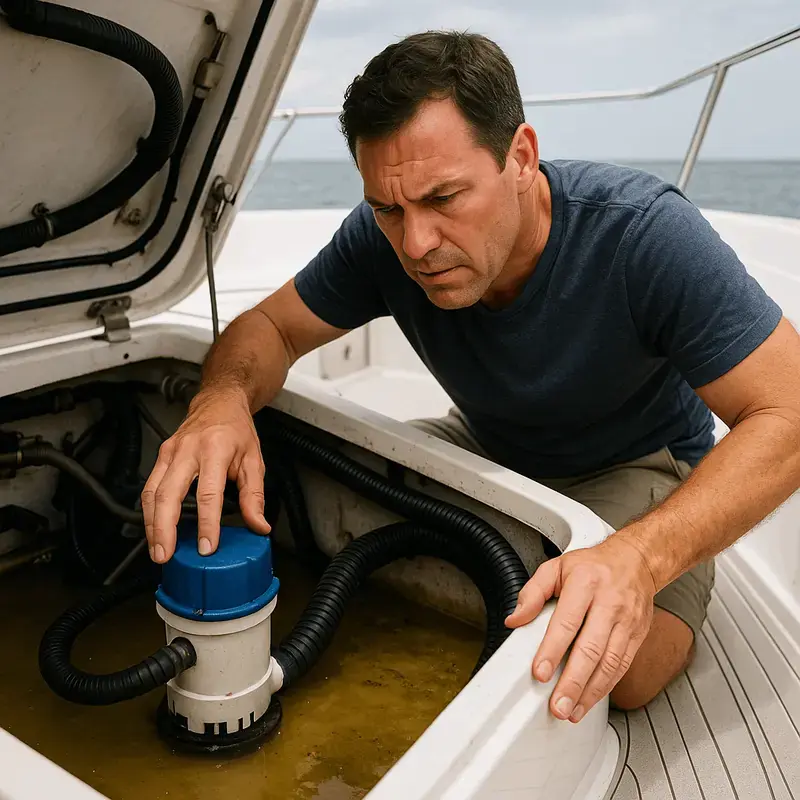
- Check the bilge for water - clear, oily, or dirty
- Test the float switch - lift it by hand and see if the pump stops
- Inspect wiring - look for green corrosion, loose terminals, or cracked insulation
- Trace water trails - follow any dampness to its source
When to Call in the Pros
Get Professional Help Now
Frequently Asked Questions
Is it normal for a bilge pump to cycle on and off frequently?
Every yacht takes on a little water from rain, spray, and condensation, so a healthy bilge pump kicking on, clearing the water, and shutting off is completely normal. The warning sign is the pattern. Short, infrequent cycles are fine. Long, repeated cycles mean water is coming in faster than it should. If the pump never shuts off, that's urgent. Letting it run unchecked wears out the motor, stresses the wiring, and drains the battery, which can leave you with a dead pump and a wet bilge at the same time. Match the cycle pattern to the urgency level.
Where should I look first for a leak when my bilge pump runs constantly?
Water finds the weak spots. Start with the stuffing box and shaft seal, where old packing leaks every time the prop turns. Check through-hull fittings, since plastic and metal both eventually fail, and inspect the hull-to-deck joint where flexing and age open up gaps. Deck hardware like cleats, rails, and stanchions can pull loose and let water track below. Don't forget windows and portlights, where gaskets shrink and frames corrode in Miami's sun and salt. Run your hand along the seams, looking for dampness, salt stains, or streaks. Even a slow drip adds up.
Why does my bilge pump run when there's no water in the bilge?
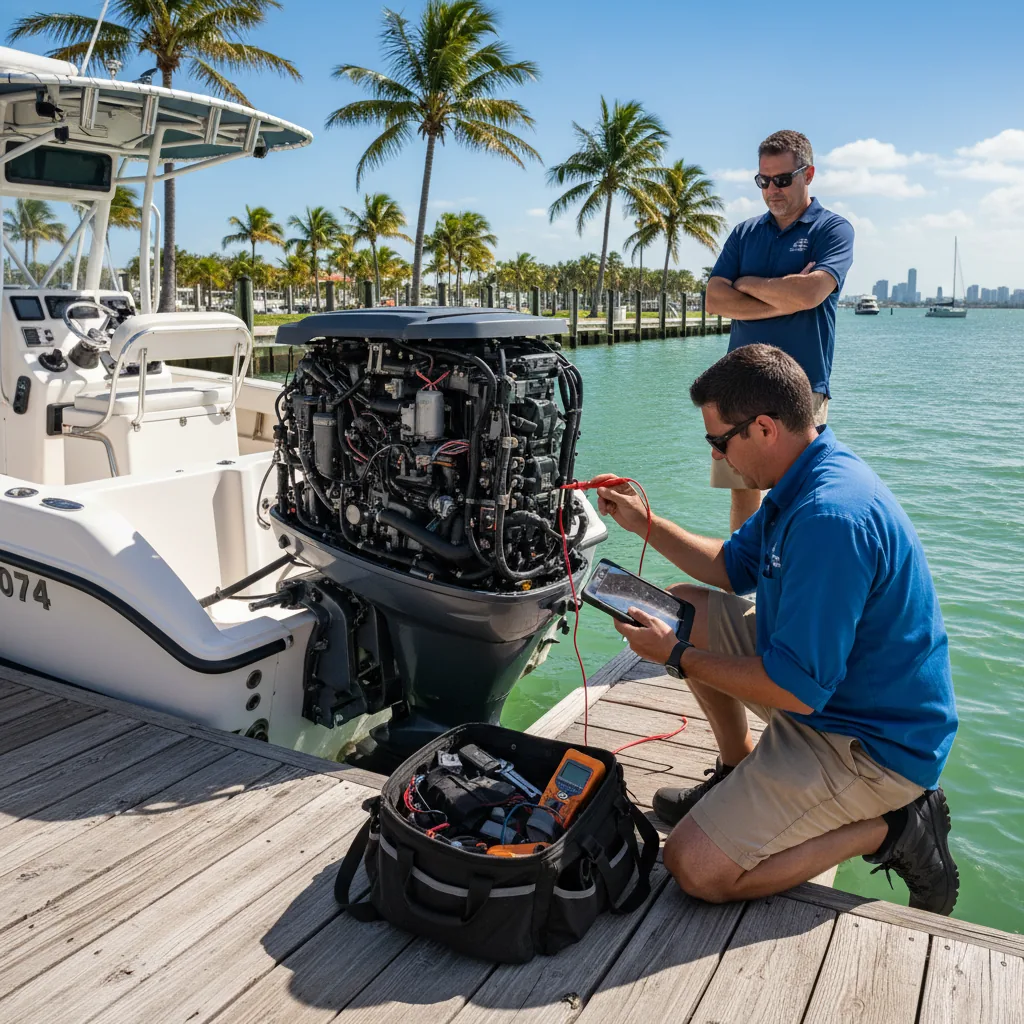
That's an electrical problem, not a leak. Float switches stick in the on position, wires corrode, connections fail, and Miami's salt air attacks every exposed terminal. Insulation cracks and contacts turn green and brittle. Common signs include the pump running with a dry bilge, cycling on and off at random, or other electrical gear acting up like flickering lights or blowing fuses. To check, lift the float switch by hand and see if the pump stops. Inspect wiring for green corrosion, loose terminals, or cracked insulation. A stuck switch or bad wiring can leave you with a dead pump when you need it most.
What damage can a constantly running bilge pump cause?
A lot, and faster than most owners expect. The pump motor burns out from overheating. The battery drains through deep cycles that kill it fast. Wiring weakens because constant current heats and degrades the insulation. In the bilge itself, standing water rots wood, corrodes metal, soaks insulation and flooring, and lets mold take hold. The smell lingers long after the water is gone. A constantly running pump is a red flag whether it's fighting a leak or stuck in a bad electrical loop. Either way, you're burning through equipment and risking much bigger repairs down the line.