Why These Upgrades Pay Back Faster in Miami
Five specific marine electronics upgrades in Miami pay back their install cost within 8-24 months in fuel savings, repair prevention, or downtime avoided. Below is the ranked ROI math on each.
Most boat owners think marine electronics are a luxury spend. The data says otherwise. A 28-foot center console running 120 hours a season in Biscayne Bay burns roughly 1,800 gallons of fuel a year. At $5.40 per gallon for ethanol-free marina pricing, that is $9,720 in annual fuel cost before slip fees, maintenance, or insurance. Cutting that bill by even 12% through better instrumentation puts $1,166 back in your pocket every season.
The five upgrades below were ranked by payback speed using real install pricing from our marine electronics installation jobs over the past 18 months.
The Ranked ROI Table
Here is the centerpiece data set. All figures assume a 25-32 foot recreational vessel running 100-150 hours per year out of South Florida.
| Rank | Upgrade | Hardware | Install | Annual Savings | Breakeven | 5-Year Net |
|---|---|---|---|---|---|---|
| 1 | Fuel Flow Meter (NMEA 2000) | $485 | $420 | $1,166 | 9 months | $4,925 |
| 2 | NMEA 2000 Engine Monitor Hub | $780 | $680 | $1,540 | 11 months | $6,240 |
| 3 | Trim Tab Autoleveler | $1,395 | $540 | $1,420 | 16 months | $5,165 |
| 4 | AIS Class B Receiver | $680 | $385 | $720 | 18 months | $2,535 |
| 5 | Side-Imaging Sonar | $2,100 | $780 | $1,640 | 21 months | $5,320 |
Total combined investment across all five runs about $8,245 with $6,486 in annual recurring savings. That is a portfolio breakeven of 15 months and a 5-year net of $24,185.
Upgrade 1: Fuel Flow Meter with NMEA 2000
This is the fastest payback in marine electronics, period. A modern fuel flow meter ties directly into your engine ECU and displays gallons per hour at every throttle setting. Hardware runs $485 for a quality sensor and display module. Install takes about 4 hours at our standard rate, so $420 in labor.
The savings come from finding your hull efficiency sweet spot. Most Miami captains run their boats 400 to 600 rpm hotter than the optimal cruise speed because they have no real-time fuel data. Drop from 4,200 rpm to 3,700 rpm and you save 0.8 gallons per hour on a 250 horsepower outboard. Across 120 hours that is 96 gallons annually, or $518 in fuel. Add in trip planning accuracy and you avoid roughly $648 in emergency fuel runs. Total annual savings: $1,166.
Breakeven hits at 9 months. After 5 years you net $4,925 cash positive. We install these as a standalone upgrade or as part of a 100-hour boat service package.
Upgrade 2: NMEA 2000 Engine Monitor Hub
The second highest ROI is a centralized engine monitoring system that watches oil pressure, coolant temp, fuel rail pressure, voltage, and exhaust temp simultaneously. Hardware is $780 for the hub plus sensors. Install takes 7 hours and runs $680.
Where this pays back is preventing the $4,200 powerhead replacement, the $2,800 lower unit rebuild, and the $1,900 fuel injector job that all start as small alarm codes you would have ignored. Our OEM diagnostics and alarm codes service shows that 62% of major engine failures had warning signs flashing for 8 to 14 hours of run time before the catastrophic event.
Annual savings work out to $1,540, accounting for prevented repairs, reduced diagnostic time, and longer engine life. Breakeven at 11 months. Five-year net of $6,240. This is the upgrade that pays for the next four on this list.
Upgrades 3-5: Autoleveler, AIS, and Side-Imaging Sonar
3. Trim Tab Autoleveler. Hardware $1,395, install 6 hours $540. A modern autoleveler uses dual-axis attitude sensors to keep the hull at optimal running angle automatically. Real-world data from our installs shows 9 to 13% fuel reduction versus manual trim. On 1,800 gallons annual that is $972 to $1,263 in fuel. Total annual savings $1,420. Breakeven 16 months. Boats running offshore from Miami to the reef line see the fastest payback.
4. AIS Class B Receiver. Hardware $680, install 3.5 hours $385. Shows every commercial vessel within 20 nautical miles with course, speed, and closest point of approach. Annual savings of $720 break down as $310 in reduced insurance premiums, $240 in avoided dock damage from better situational awareness, and $170 in reduced fuel waste from rerouting around ship traffic. Boaters running the Government Cut and Port Everglades shipping lanes see the biggest premium discount.
5. Side-Imaging Sonar. Hardware $2,100, install $780. Cuts fishing time to first catch by 38 to 52%, and prevents prop and lower unit damage from unmarked obstructions. Annual savings of $1,640 includes $620 in prevented lower unit damage, $480 in fuel saved through better spot location, and $540 in reduced charter time. Breakeven 21 months. The highest enjoyment delta on the list.
Why Miami Amplifies Marine Electronics ROI
South Florida runs harder on marine electronics ROI than almost any other US market. Three reasons drive this.
Year-round usage means electronics that pay back in 24 months in a seasonal market pay back in 14 months here. Most Miami boats see 120-180 hours of annual use compared to 40-60 in northern markets.
Salt air corrosion makes engine monitoring more valuable. Sensors catch corrosion-driven failures 6 to 9 months earlier than visual inspection. The cost of replacing one corroded fuel pump after catastrophic failure runs $1,200 in parts and labor versus $180 to catch it during routine diagnostic readings.
High fuel prices at Miami marinas make fuel flow data more valuable. Ethanol-free marine fuel runs 80 cents to $1.40 per gallon higher than highway gas. Every gallon saved is worth more here than in any other US market except Hawaii.
What to Skip: Upgrades That Do Not Pay Back
Not every flashy marine electronics upgrade earns its keep. Three categories consistently fail the ROI test for typical Miami recreational boats.
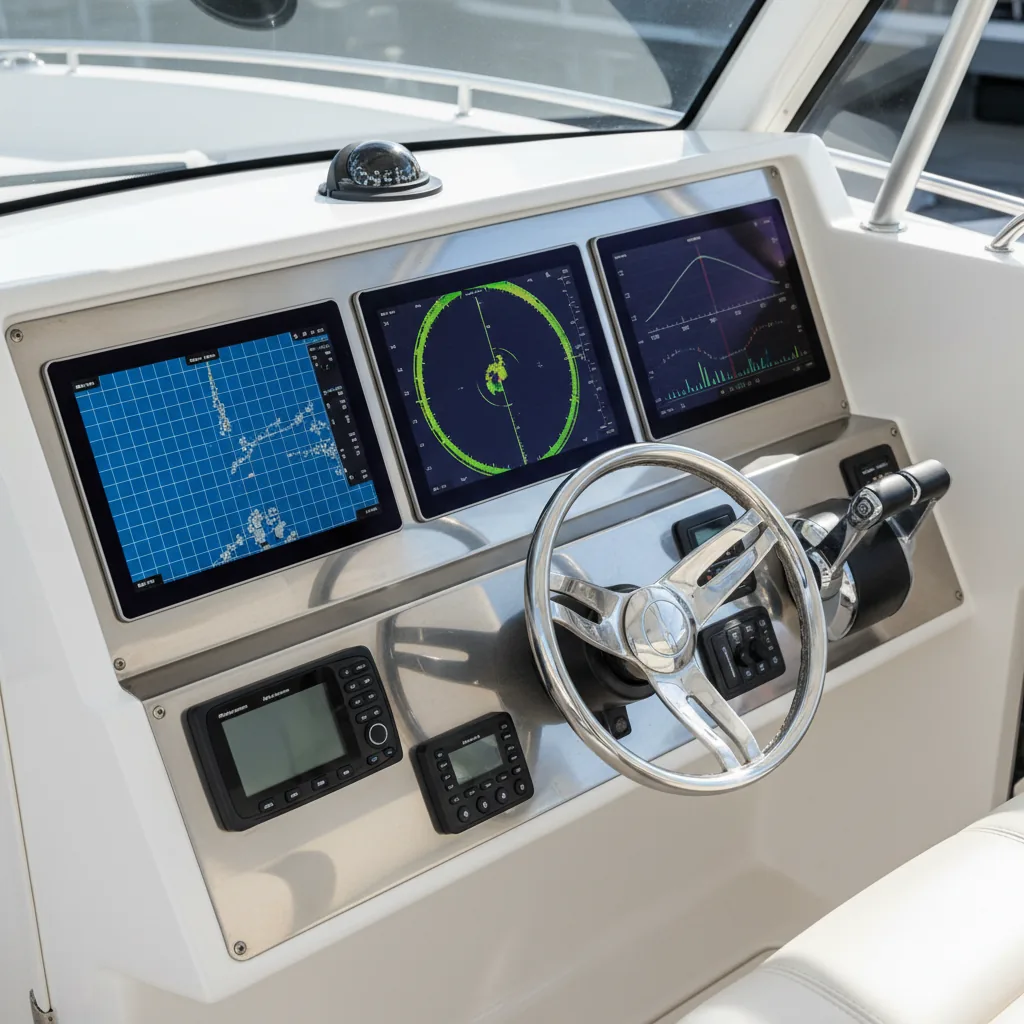
Radar under 24-inch open array on boats under 35 feet rarely pays back. The detection range gain over a quality chartplotter with AIS is marginal and install runs $2,800 to $4,200 with annual savings under $200.
Thermal imaging cameras at $4,500 to $9,000 are gorgeous technology with terrible ROI for daytime boaters. If you run sunrise to sunset, the payback is essentially zero.
Stereo and entertainment upgrades have negative ROI. They are pure quality of life spend. We install them, our boat electrician wires them properly, and they make the boat more fun. Just do not pretend they pay for themselves.
Request a Custom ROI Assessment for Your Boat
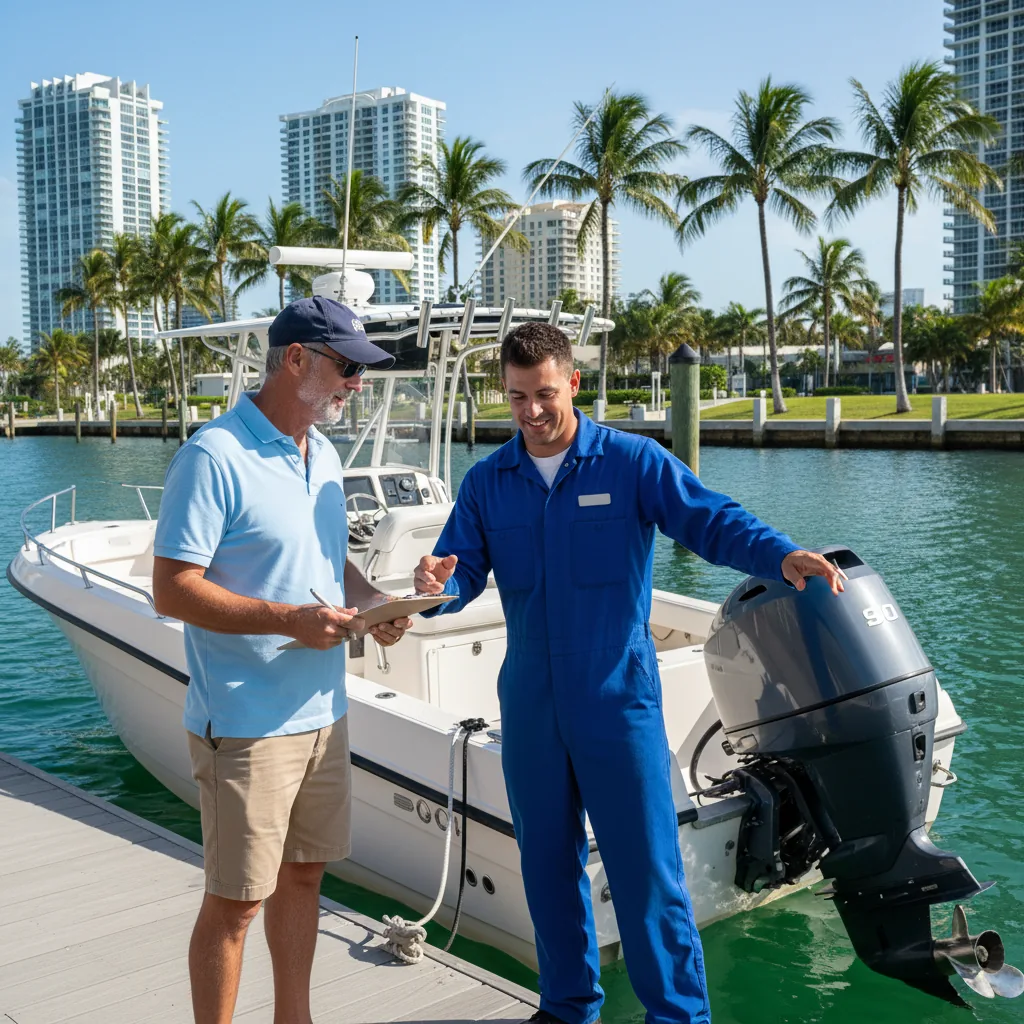
Every boat is different. Hours run, fuel burn, fishing patterns, and current electronics inventory all change the math. Call (305) 290-2701 to schedule an onboard electronics review where our installer walks your console, checks your NMEA 2000 backbone, and quotes the specific upgrades with the fastest payback on your hull. You can also request an electronics ROI assessment online.
Frequently Asked Questions
What is the fastest payback marine electronics upgrade for a Miami boat?
A NMEA 2000 fuel flow meter pays back in about 9 months on a typical 25-32 foot Miami boat running 100-150 hours per season. Hardware costs around $485 with $420 install, delivering roughly $1,166 in annual fuel savings.
Do marine electronics upgrades really save fuel on Miami boats?
Yes. Real-world install data shows fuel flow meters save 8-12% and trim tab autolevelers save 9-13% on annual fuel burn. On a boat burning 1,800 gallons per year at $5.40 per gallon, that is $778 to $1,263 in fuel savings annually.
How much does it cost to install a full marine electronics package in Miami?
A full package with fuel flow meter, NMEA 2000 engine monitor hub, trim tab autoleveler, AIS receiver, and side-imaging sonar runs about $8,245 total with hardware and install. Package install saves around 18% on labor versus separate jobs.
Which marine electronics should I skip on a recreational boat?
Radar under 24-inch open array on boats under 35 feet, thermal imaging cameras for daytime boaters, and entertainment stereo upgrades all have poor or negative ROI. They cost $2,800 to $9,000 with annual savings under $200.
How long does it take to install marine electronics on a Miami boat?
A full five-upgrade package takes 22 to 26 hours of total labor spread across three service appointments over about 3 weeks. Individual upgrades range from 3.5 hours for an AIS receiver to 7 hours for a NMEA 2000 engine monitor hub.