Small Cracks Hide Big Problems in Miami
Hull damage on Miami boats speaks its own language. A crack might whisper or scream, but it always tells a story. The trick lies in knowing how to read the signs before they become chapters about sinking boats in South Florida's waters.
Surface blemishes can mask structural failures. What looks like a simple scratch might signal deeper issues spreading through layers of fiberglass. The difference between cosmetic and critical often comes down to inches - or less.
Soft Spots Never Get Harder
A solid hull flexes under pressure but always returns to shape. Soft spots don't bounce back. They spread, weaken, and fail. Each wave hitting a compromised hull forces water deeper into the damage, especially in Miami's salt-heavy environment.
Water trapped in core materials acts like a cancer. It moves through tiny spaces, breaks down bonding agents, and turns solid laminate into soggy cardboard. The damage multiplies with every passing week in South Florida's humidity, which is why early fiberglass repair almost always costs less than waiting.
- Soft spots grow larger over time
- Deck core soaks up water like a sponge
- Delamination spreads between layers
- Support structures weaken invisibly
- Repair costs multiply with delay
Stress Patterns Tell Stories
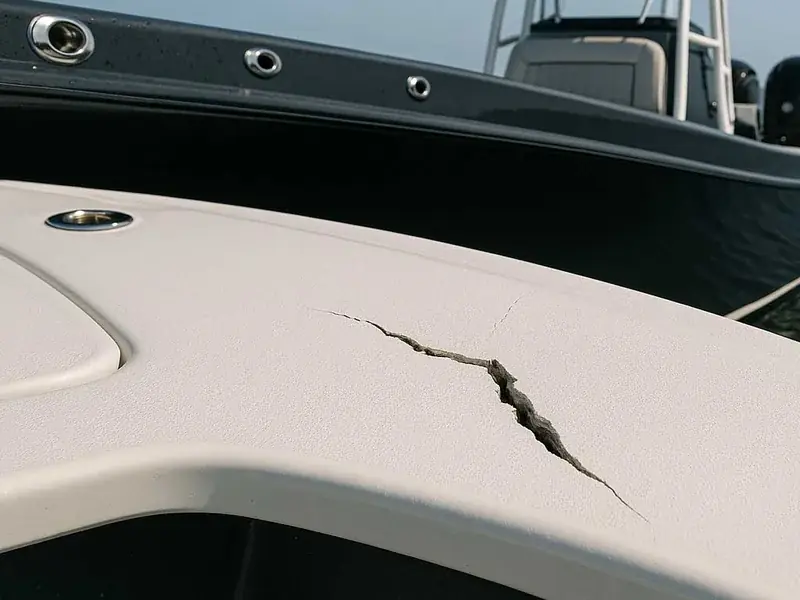
Cracks follow forces. Straight lines mean impact damage. Spider webs signal stress points. Radiating patterns point to structural problems. Each type demands different repair approaches, especially for boats navigating Miami's busy waters, and surface-only damage is often handled with focused boat gelcoat repair before it migrates into the laminate.
Location changes everything. A crack near hardware mounts means one thing. The same crack in open sections means another. Context determines danger levels more than size alone.
Water Always Finds A Way
Hull breaches invite constant water intrusion. Every wave adds pressure. Every wake forces more moisture inside. Small fixes now prevent big problems later in Miami's marine environment.
Prevention beats repair costs every time. Small fixes now prevent big problems later. But that only works when you catch issues early and address them properly.
- Check suspect areas after each trip
- Mark and measure existing damage
- Document changes in size or depth
- Test surrounding areas regularly
- Monitor for spreading problems
The Tap Test Never Lies
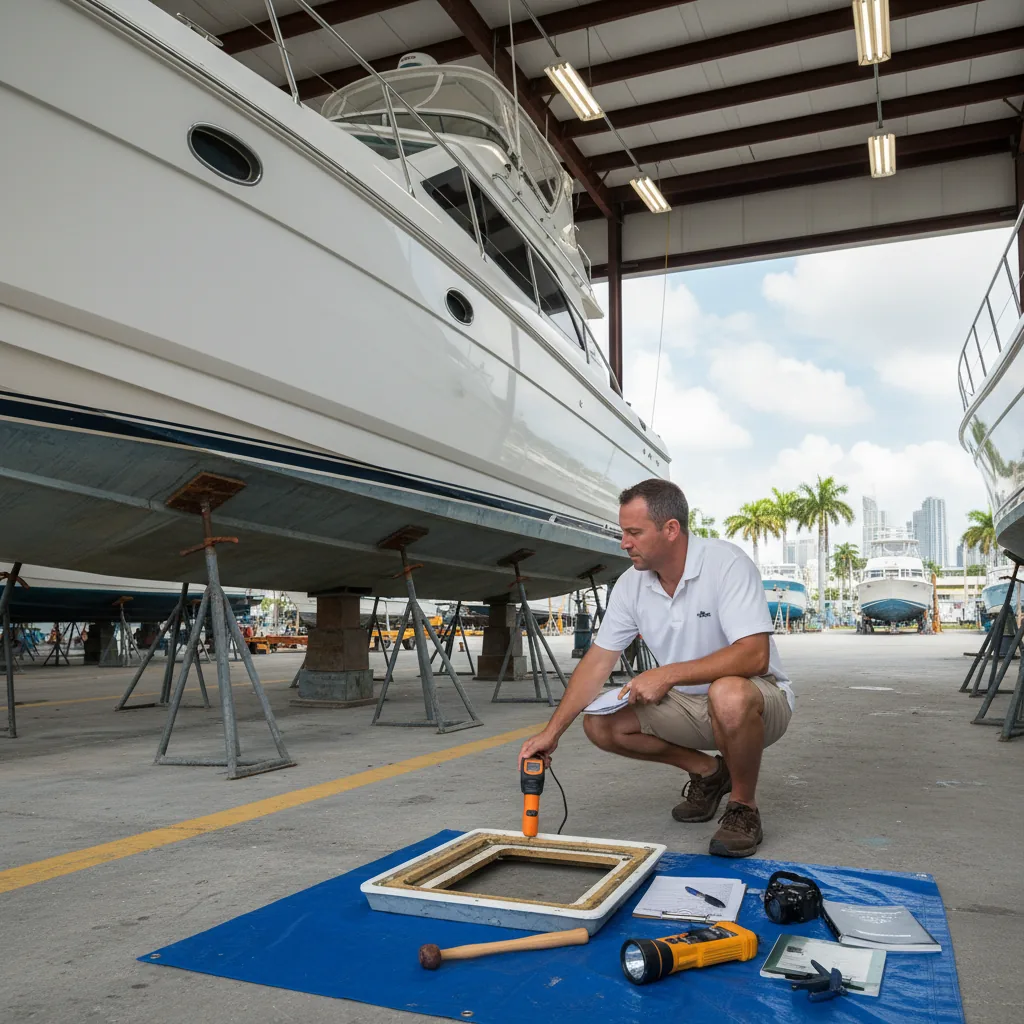
Solid fiberglass rings sharp and clear. Damaged areas sound dull and dead. This simple test reveals problems before they become visible. Professional surveyors in Miami rely on it because it works.
Different materials produce different sounds. Learning these variations helps spot trouble early. The difference between good and bad structure shows up in sound before sight.
Time Makes Every Problem Worse
Hull damage never fixes itself. Every day without repair means more water intrusion, more structural weakness, and more expensive fixes. Quick action saves both money and safety on Miami's waters.
Smart boat owners in South Florida know the warning signs. They check regularly and act quickly when problems appear, often scheduling professional boat inspections to verify what they suspect. This approach keeps small issues from becoming major failures.
When To Call For Help in Miami
- Cracks longer than 6 inches need professional inspection
- Soft spots larger than your palm spell trouble
- Any damage below the waterline demands attention
- Structural cracks require immediate repair
- Multiple cracks mean system problems
Hull integrity determines everything else about a boat. Strong hulls make safe boats. Weak ones make expensive lessons. The choice between minor repair now and major reconstruction later isn't really a choice at all.
Your hull carries every other system on your boat. It faces constant stress, regular impacts, and relentless water pressure. Treating small problems with big concern keeps boats floating and owners boating in Miami.
Worried About Your Boat's Hull Integrity?
When it comes to hull damage, early intervention prevents catastrophic failures. Our hull mechanics can spot problems before they compromise your boat's safety. Call 305-290-2701 for thorough hull inspection in Miami waters. Because with structural issues, tomorrow's repairs always cost more than today's fixes.
Frequently Asked Questions
How can I tell if a soft spot on my boat hull is serious?
A solid hull flexes under pressure but always returns to shape. Soft spots don't bounce back, and that's the giveaway. They spread, weaken, and eventually fail. Each wave hitting a compromised hull forces water deeper into the damage, especially in Miami's salt-heavy environment, and water trapped in the core acts like a cancer, breaking down bonding agents and turning solid laminate into soggy cardboard. Any soft spot larger than your palm spells trouble. The damage multiplies week by week in South Florida humidity, so finding one means it's already past the point where waiting is acceptable.
What's the tap test and how do I use it on my hull?
The tap test is the simplest way to find hidden hull damage before it becomes visible. Solid fiberglass rings sharp and clear when you tap it with a hard object like a coin or small mallet. Damaged areas sound dull and dead, like tapping on wet cardboard. Different materials produce different baseline sounds, so the trick is learning your boat's normal tones and listening for the variations. Professional surveyors in Miami rely on this test because it works, revealing problems before they show up on the surface. The difference between good and bad structure usually shows up in sound long before sight.
What do different crack patterns on a hull mean?
Cracks follow forces, and the pattern tells you what happened. Straight lines usually mean impact damage. Spider web patterns signal stress points where the laminate is being cycled or overloaded. Radiating patterns that fan outward from a single point indicate structural problems that go deeper than the gelcoat. Each type demands a different repair approach. Location matters as much as pattern. A crack near hardware mounts means one thing, while the same crack in an open section of hull means another. Context determines danger level more than size alone, especially on boats running Miami's busy waters.
When does hull damage need professional inspection rather than a DIY fix?
Some damage is past the point where waiting or self-repair makes sense. Cracks longer than 6 inches need professional inspection. Soft spots larger than your palm spell trouble that won't get better. Any damage below the waterline demands attention because every wave forces more water into the breach. Structural cracks require immediate repair, not a patch job, and multiple cracks indicate a system problem rather than isolated damage. Hull integrity carries every other system on the boat. Treating these warning signs with appropriate concern is the difference between a minor repair now and a major reconstruction later.