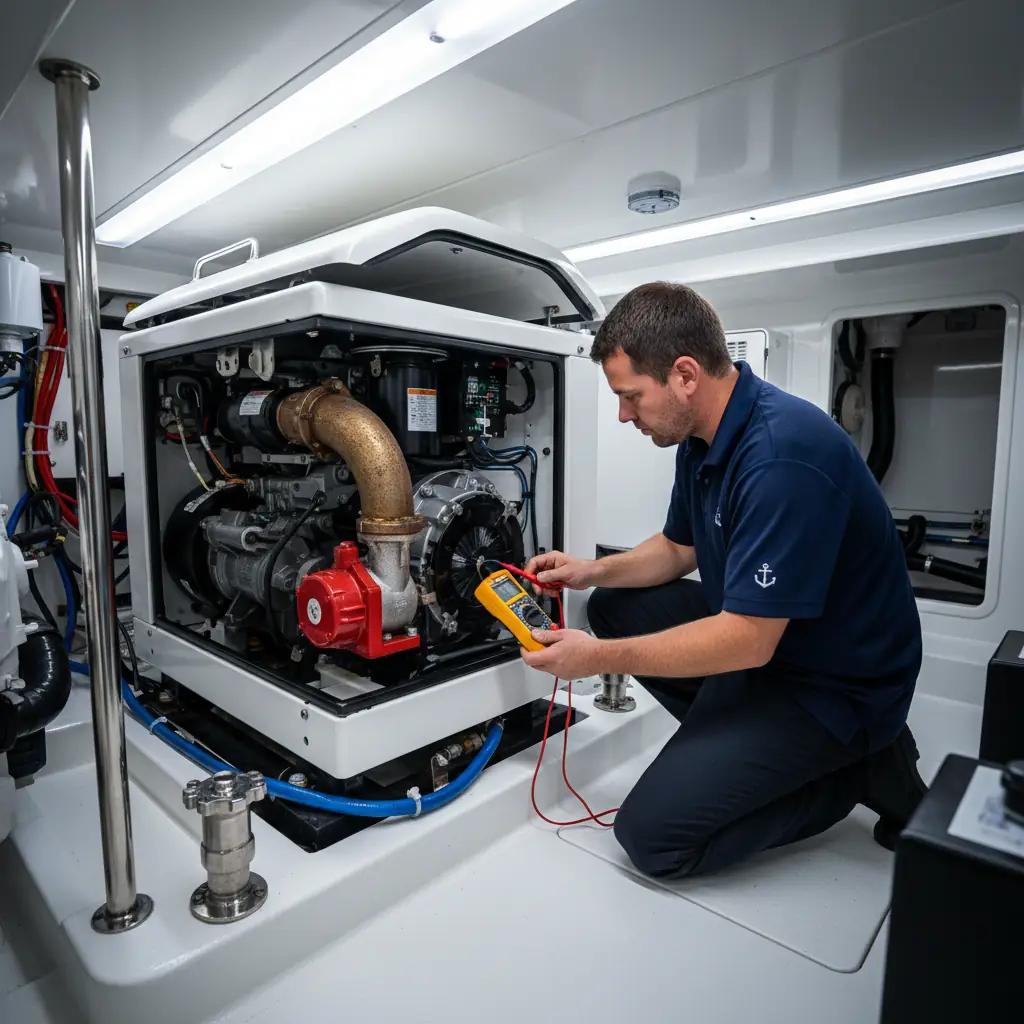
Marine Generator Repair in Miami
Onan, Kohler, Northern Lights, Westerbeke, Fischer Panda, and Phasor service at your dock or marina.
Miami Marine Generator Specialists
When a marine generator fails offshore or at anchor, the consequences reach far beyond inconvenience. Air conditioning, refrigeration, watermakers, and navigation electronics all depend on reliable onboard power. Our team provides mobile marine mechanics service throughout the Miami area, diagnosing and repairing gensets aboard your vessel without requiring you to haul out or trailer. From a Onan that won't crank to a Kohler with unstable voltage, we carry the parts and diagnostic tools to resolve the problem at the dock. Call (305) 290-2701) to schedule service.
Why Marine Generators Matter More Than Owners Realize
On any vessel 35 feet and larger, the generator is the backbone of the electrical system away from shore power. Air conditioning draws between 1,500 and 3,500 watts per unit. A refrigerator-freezer combination runs continuously. A reverse-osmosis watermaker requires 500 to 1,200 watts to function. Add chart plotters, radar, autopilot, satellite communications, and entertainment systems, and the combined load quickly exceeds what an alternator and battery bank can sustain underway.
When the genset fails offshore or at anchor overnight, the cascade is fast: the AC shuts down first, then the watermaker, then refrigeration. Fish spoil. Ice melts. Electronics start pulling reserve power from the house bank. In the Miami heat, a dead generator transforms a comfortable liveaboard into an emergency. Our marine inboard engine repair team treats generator failure with the same urgency as a main engine failure, because on the water, the outcomes can be similar.
Brands We Service in Miami
Onan (MDKAV, MDKBT, MDKBL)
Onan diesel gensets are the most common unit we see aboard Miami sportfishers and center consoles. The MDKAV and MDKBT series are reliable when properly maintained, but end bell bearing failures and exhaust elbow corrosion are both signature problems in our saltwater environment. Fuel system contamination from ethanol-blended diesel is also a recurring issue on boats that sit unused between fishing seasons.
Kohler (5EFOZD, 9EFOZD, 13.5EFOZD)
Kohler units are found across cruisers, motoryachts, and sportfish platforms. End-of-shaft seal failure is a common repair we see on the EFOZD series, often presenting as coolant loss with no obvious external leak. Voltage instability under load is the other frequent complaint, typically tracing back to the AVR or brush assembly.
Northern Lights (M673, M753, M843, M944)
Northern Lights generators are built for commercial and long-range yacht applications and carry some of the longest service lives in the industry when properly maintained. We service the full M-series lineup. Raw water cooling system maintenance is critical on these units, and heat exchanger fouling from Biscayne Bay sediment is the most common cause of overheating we diagnose.
Westerbeke
Westerbeke gensets are popular on sailboats and smaller cruisers because of their compact footprint and low RPM operation. The raw water cooling circuit on Westerbeke units is particularly sensitive to impeller neglect. We recommend impeller replacement every season regardless of hours on boats berthed in Miami's warm water, where biofouling accelerates faster than manufacturers anticipate.
Fischer Panda AGT
Fischer Panda units appear on high-end yachts and expedition vessels that prioritize quiet operation and compact installation. Parts lead times on Fischer Panda can run longer than domestic brands, so we recommend keeping a spare impeller and AVR aboard. Our team is familiar with the AGT series and can source components through our supplier network when local stock is unavailable.
Phasor
Phasor generators are built on Kubota industrial diesel blocks and are common on charter vessels and commercial sportfishers in Miami. The underlying Kubota engine is extremely robust, and most failures we see on Phasor units trace to the generator end rather than the prime mover. Brush wear and capacitor degradation are the most frequent electrical faults.
Common Marine Generator Problems We Diagnose
Generator Won't Start
No-start conditions account for the majority of our generator service calls. The most common causes are fuel starvation from a clogged primary or secondary filter, water contamination in the fuel system, low oil pressure triggering the shutdown circuit, and cold start solenoid failure on diesels. We carry a digital fuel pressure tester and can isolate the fault in most cases within the first hour of diagnosis.
Voltage Dropping or Unstable
Voltage instability under load typically points to the automatic voltage regulator, worn brushes, or a failing capacitor in brushless designs. On Kohler and Onan units we also check for loose exciter connections and rotor winding resistance out of specification. Unstable voltage is hard on sensitive electronics and can cause false alarms on networked NMEA systems. Our OEM diagnostics and alarm code reset service addresses electronics faults that appear downstream of generator voltage problems.
Overheating and High Oil Temp Shutdown
Overheating is the second most common failure mode we see. Raw water pump impeller failure, heat exchanger scaling from Miami's hard bay water, and exhaust elbow corrosion are the three primary causes. A seized impeller can destroy a heat exchanger within minutes. We cover the full cooling circuit as part of any overheating diagnosis, including zinc anode condition and hose integrity. Our marine plumbing service team handles exhaust system and through-hull work that intersects with generator cooling circuits.
AVR and Electrical Failures
The automatic voltage regulator is the most commonly replaced electrical component on marine generators. Heat cycles, salt air, and vibration degrade AVR boards faster than in land-based applications. We stock common AVR units for Onan and Kohler and can cross-reference equivalent replacements for Northern Lights and Westerbeke when OEM parts are backordered.
Sound Shield and Vibration Mount Failure
Vibration isolation mounts harden and crack over time, particularly in Miami's heat. Failed mounts transmit noise and vibration into the hull and can cause fatigue cracking in nearby through-hulls and fittings. Sound shield foam degrades from heat and fuel vapor exposure. We inspect mounts and sound attenuation materials as part of every major service.
Carbon Monoxide Alarm Trips
A CO alarm trip in the vicinity of a running generator is an exhaust leak until proven otherwise. We treat CO alarm calls as priority service. The most common source is a cracked or corroded exhaust elbow allowing hot exhaust gas to enter the engine compartment before the wet section of the exhaust cools it. A marine inspection that includes exhaust system integrity check is the appropriate follow-up after any CO event.
Marine Generator Service Intervals
250-Hour Service
The 250-hour interval is the baseline maintenance cycle for all diesel marine generators. This service includes engine oil and filter replacement, primary and secondary fuel filter replacement, and raw water impeller inspection with replacement if the impeller shows any sign of compression set or cracking. We also check belt tension, inspect all hose clamps, and test voltage output under load.
500-Hour Service
The 500-hour service adds a thermostat replacement, zinc anode inspection and replacement, and a diesel injector check. We flush and pressure-test the heat exchanger, inspect the exhaust elbow for wall thinning, and perform a full electrical inspection including brush measurement on brush-type generators. This is the interval where most age-related failures are caught before they become breakdowns. Combining generator service with a 100-hour boat service on the main engine is an efficient way to consolidate both visits.
1,000-Hour Service
At 1,000 hours we perform a heat exchanger complete removal and acid flush, valve adjustment or inspection depending on engine design, and a top-end inspection including cylinder compression test. End bell bearing replacement on Onan units typically falls at or before 1,000 hours. This service is the equivalent of a major service interval and is the appropriate time to address any soft faults that have been monitored since the 500-hour visit.
The Exhaust Elbow Problem
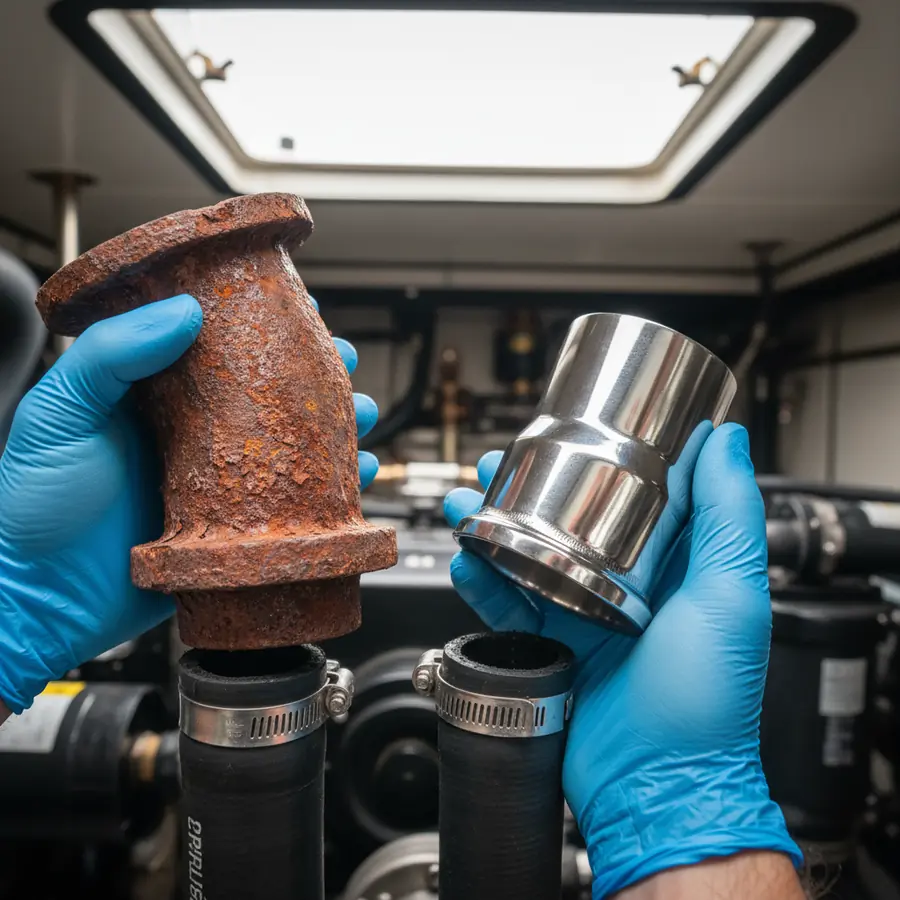
The exhaust elbow is a cast iron or stainless fitting that connects the engine exhaust outlet to the wet exhaust system. Raw seawater is injected at the elbow to cool the exhaust gas before it travels through the hose and out the transom. In Miami's saltwater environment, the elbow interior corrodes from the inside out. Wall thickness drops from the original 5 to 6 millimeters to under 2 millimeters over 5 to 7 years, often without any external sign of failure.
When an exhaust elbow cracks or perforates, two things happen. First, raw exhaust gas escapes into the engine compartment, creating a carbon monoxide hazard. Second, and more catastrophically, raw seawater can back-flow into the engine during shutdown when the siphon break fails or is absent. Water in the cylinders causes hydrostatic lock and destroys the engine on the next start attempt. We have seen complete engine losses on generators that were otherwise running normally the day before failure.
We recommend exhaust elbow replacement at every 500-hour service or every five years in saltwater operation, whichever comes first. The elbow costs a fraction of the engine repair it prevents. On Onan MDKAV and MDKBT units, we keep common elbow part numbers in stock for same-visit replacement.
Why Saltwater Air Wrecks Generators Faster
Miami's marine environment accelerates component degradation on every system aboard, and generators are not exempt. Electrical contacts on AVR boards and relay terminals corrode faster than manufacturers' service interval schedules anticipate. Salt deposits on terminal blocks create resistance that causes voltage irregularities before any visual evidence appears. Cooling passages foul with calcium and magnesium from Biscayne Bay water at a faster rate than freshwater engines. Rubber components including impellers, hoses, and vibration mounts soften and crack faster in Florida's heat and UV environment than in temperate climates.
Owners who follow hour-based service intervals set for freshwater or temperate climates frequently find themselves behind on maintenance for Miami conditions. We recommend calendar-based service in addition to hour tracking: at minimum a full inspection annually regardless of hours, and impeller replacement every season on any boat berthed in saltwater. After a major storm, running a generator as emergency power during hurricane prep can add significant untracked hours and stress to the cooling system.
Schedule Your Generator Service in Miami
Our mobile technicians serve marinas and private docks across Miami-Dade and Broward counties. We carry common parts for Onan, Kohler, Northern Lights, Westerbeke, and Phasor to minimize return visits. For complex repairs including exhaust elbow replacement, AVR sourcing for Fischer Panda units, or end bell bearing work, we provide a written estimate before proceeding.
To request generator service, call (305) 290-2701) or use our online contact form. We respond to all generator service inquiries within one business day and prioritize calls involving CO alarms or no-start conditions offshore.
Know the Signs
Signs Your Marine Generator Needs Service
If you notice any of these warning signs, contact our team right away. Early diagnosis saves you time and money on repairs.
Generator won't start or struggles to crank
Voltage drops under load, causing AC compressor cycling or brownout
Visible coolant or fuel leak in the genset compartment
Black or white smoke from generator exhaust
Saltwater in the bilge near the generator
Carbon monoxide alarm tripping while generator is running
Sound louder than usual or vibration pattern has changed
Last service was over a year ago or hours exceed 250 since last oil change
Our Process
Our Marine Generator Service Process
Diagnostic and Load Test
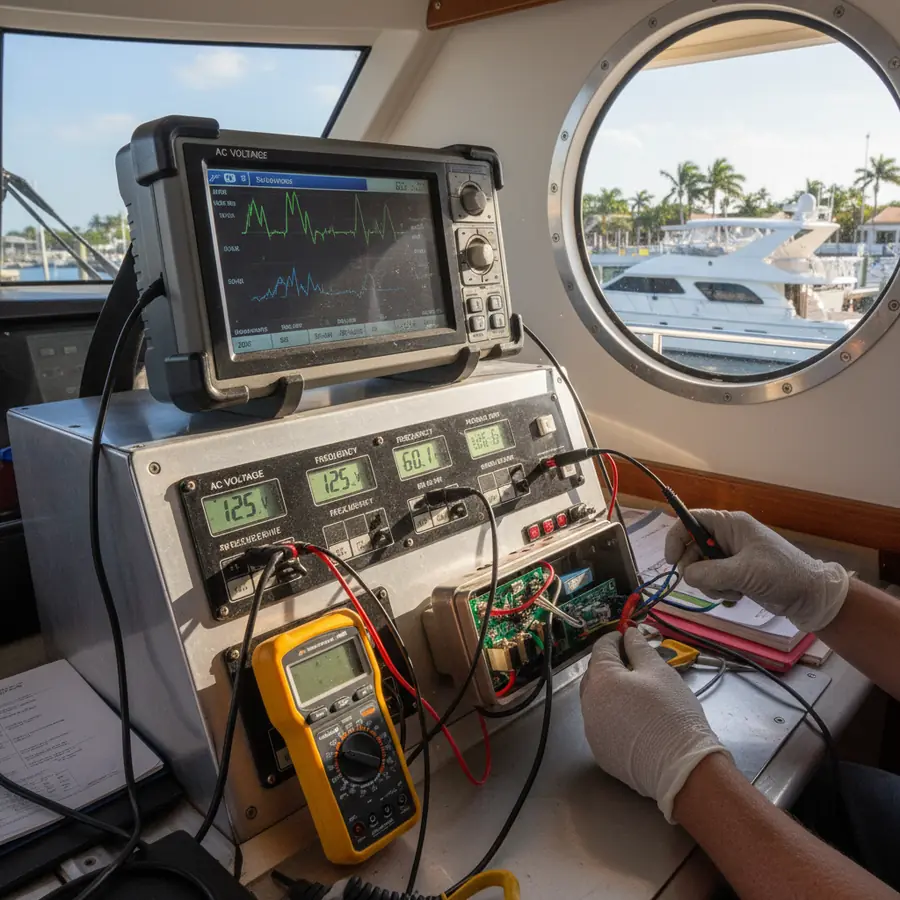
We connect a calibrated load bank and run the generator through its operating range, logging voltage, frequency, oil pressure, coolant temperature, and exhaust back-pressure. This establishes a baseline and surfaces intermittent faults that disappear at idle.
Cooling and Fuel Systems
We inspect and service the raw water circuit including impeller, heat exchanger, thermostat, and exhaust elbow wall thickness. Fuel system work covers filter replacement, injector check, and fuel quality assessment. We flush and pressure-test cooling passages on 500-hour and above services.
Electrical and AVR Service
We test the automatic voltage regulator under load, measure brush length on brush-type generators, inspect all terminal connections for corrosion, and verify proper grounding throughout the genset installation. Faulty AVR units are replaced with OEM or equivalent-rated components.
Sea Trial and Documentation
After service, we run the generator under realistic load conditions to confirm stable voltage and temperature. We provide a written service record noting current hour count, all parts replaced, measurements taken, and any deferred items requiring attention at the next interval.
Miami Marine Generator Specialists
Serving Miami Boat Owners Who Depend on Reliable Onboard Power
Why Choose Us
What Our Marine Generator Service Covers
Onan, Kohler, Northern Lights, Westerbeke, Fischer Panda, and Phasor service
Exhaust elbow replacement, the single most common Miami genset failure
Raw water pump and heat exchanger service including acid flush
AVR, brush, and end bell bearing repair and replacement
Mobile service at your dock or marina throughout Miami-Dade and Broward
Annual service plans with documented hour logs and interval tracking
Marine Generator Repair FAQ
Common questions about marine generator repair in Miami
More Services
Related Boat Repair Services
Inboard Engine Repair
Inboard and marine diesel service for cruisers, sportfishers, and express yachts. MerCruiser, Volvo Penta, Yanmar, and Cummins.
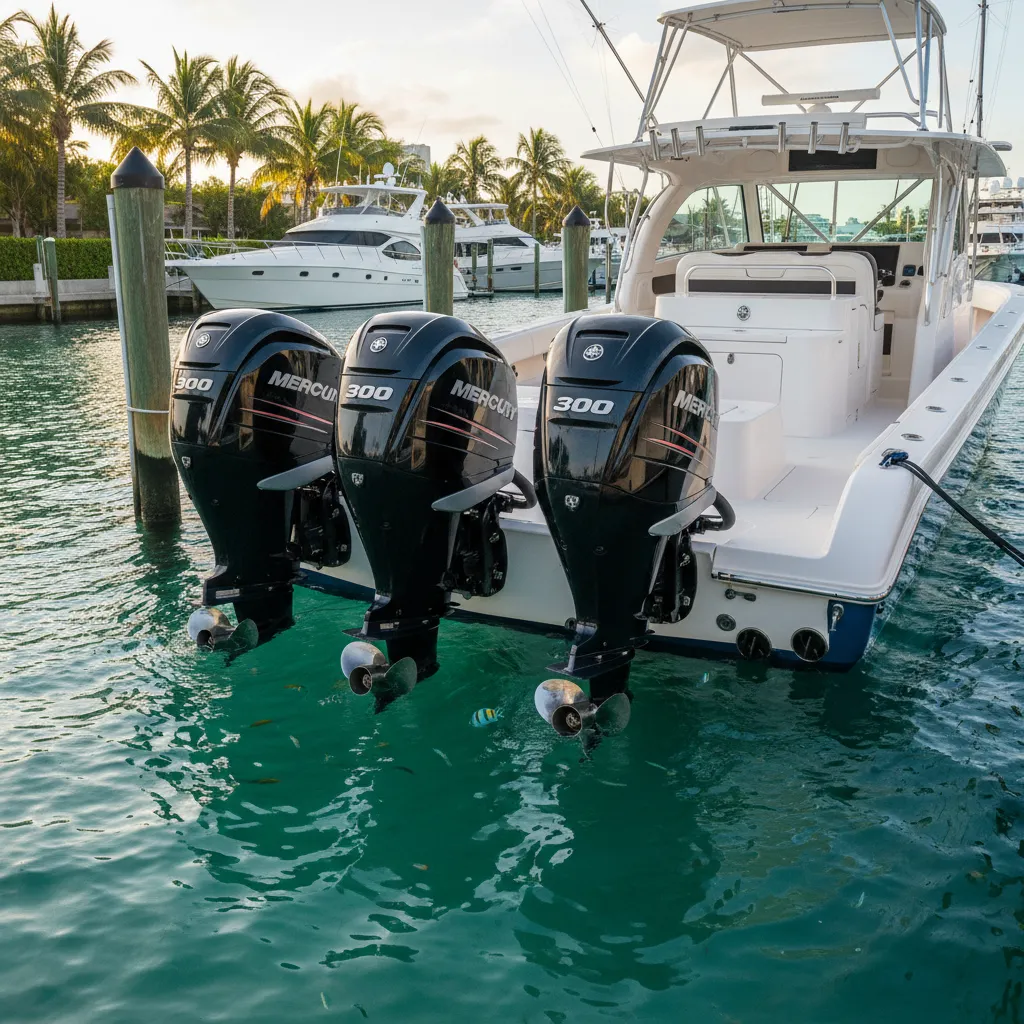
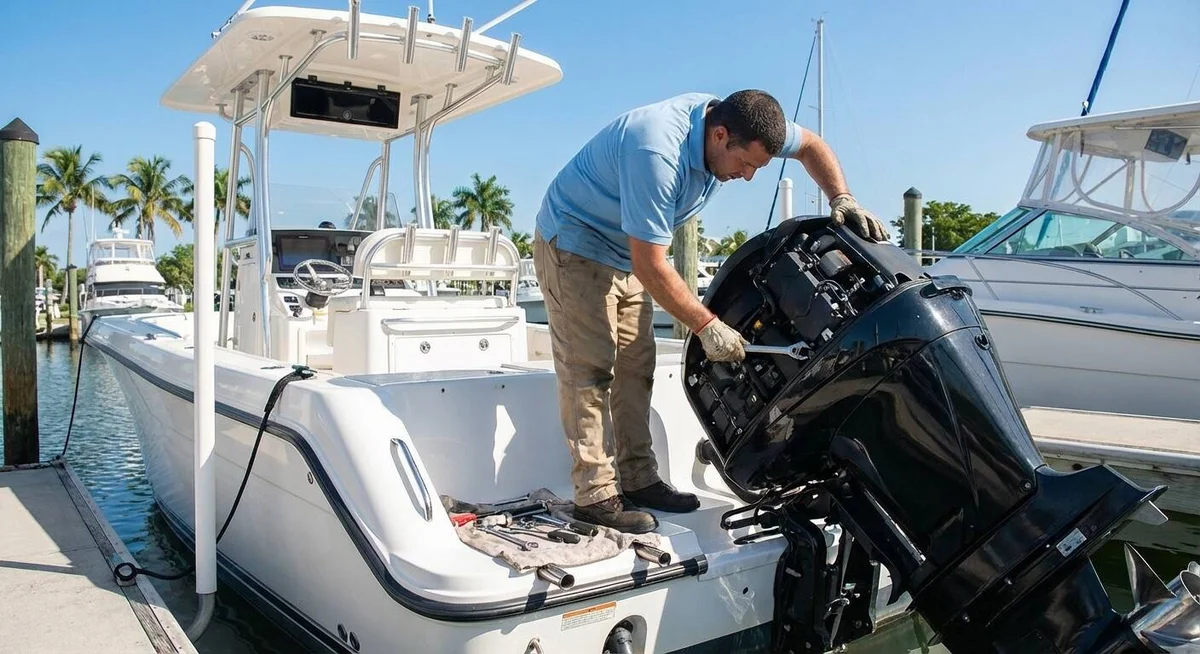
Outboard Engine Repair
Certified Yamaha, Mercury, Suzuki, Honda, and Evinrude outboard service. 2.5hp to 600hp, 4-stroke and 2-stroke at your dock.
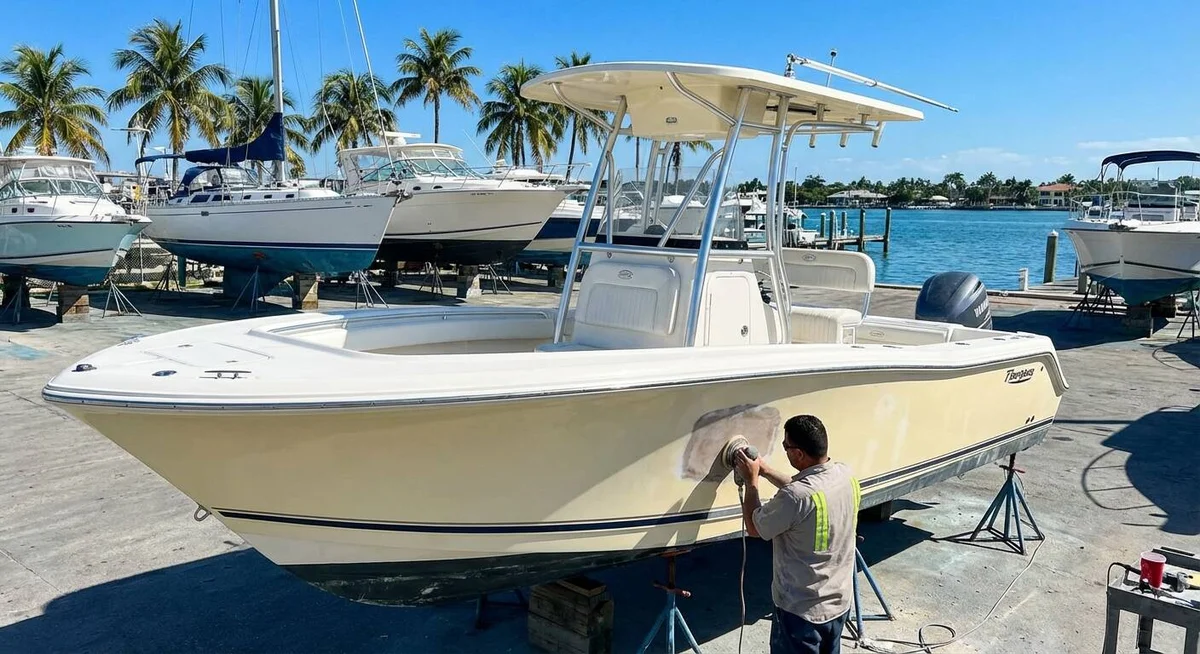
Fiberglass Repair
Hull cracks, structural damage, and stress fractures. Saltwater-grade resin and cloth repairs for Miami boats damaged by impact or wear.
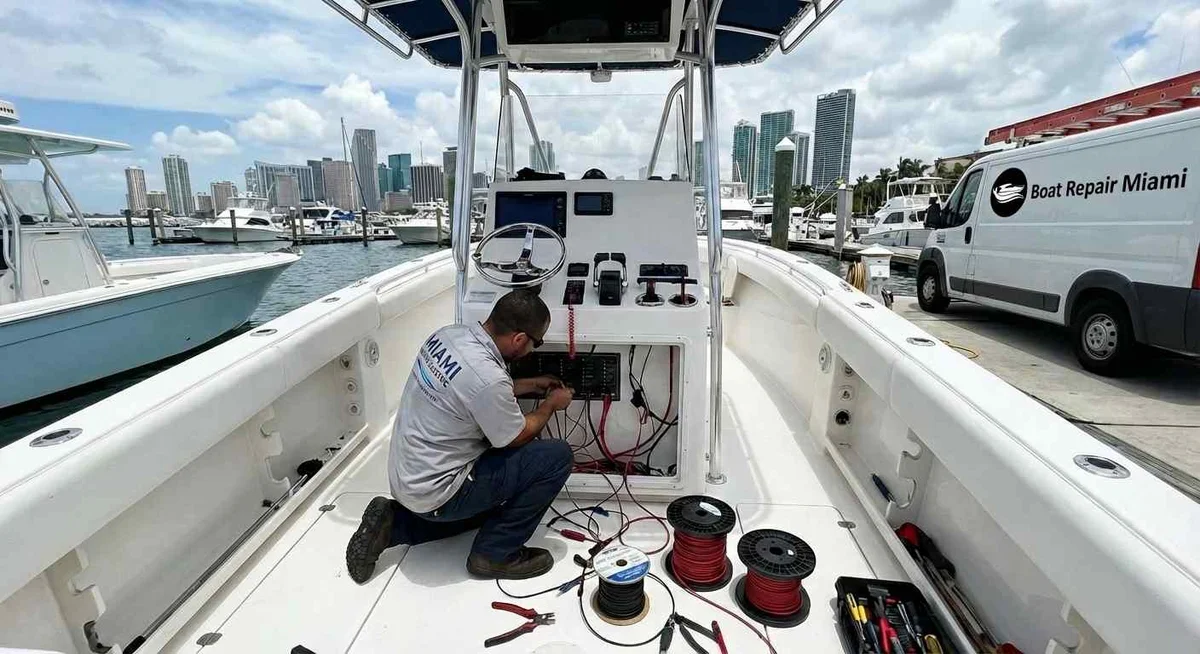
Boat Electrician
Marine electrical troubleshooting, rewiring, battery systems, and navigation wiring. Certified boat electricians servicing your dock.
Boat Cleaning
Mobile wash, wax, and detail service for boats kept in Miami marinas. Salt rinse, compound, and UV protection routines.
Boat Inspections
Pre-purchase surveys and used-boat inspections across South Florida. Engine, hull, electrical, and mechanical evaluations before you buy.
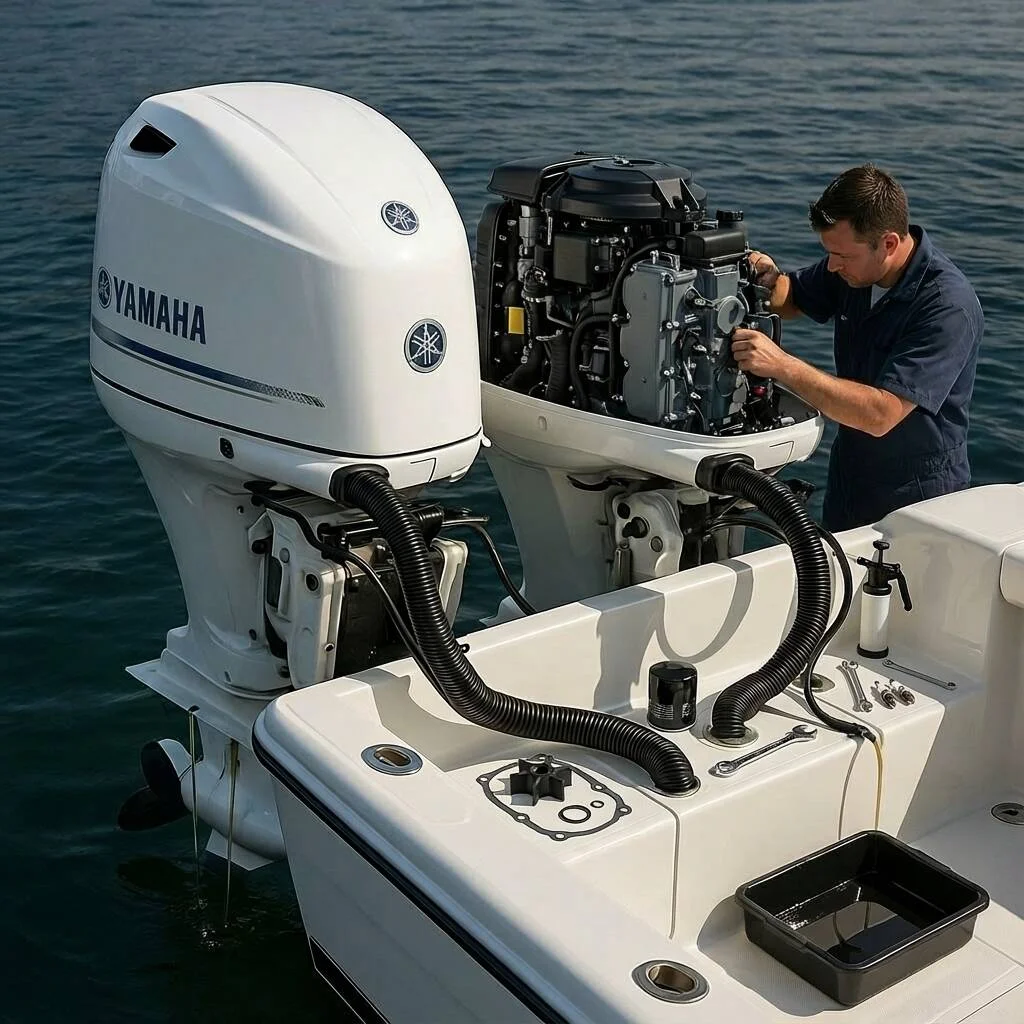
100-Hour Service
Manufacturer-recommended 100-hour maintenance for outboards. Oil, filters, gear lube, spark plugs, anodes, and water pump inspection.
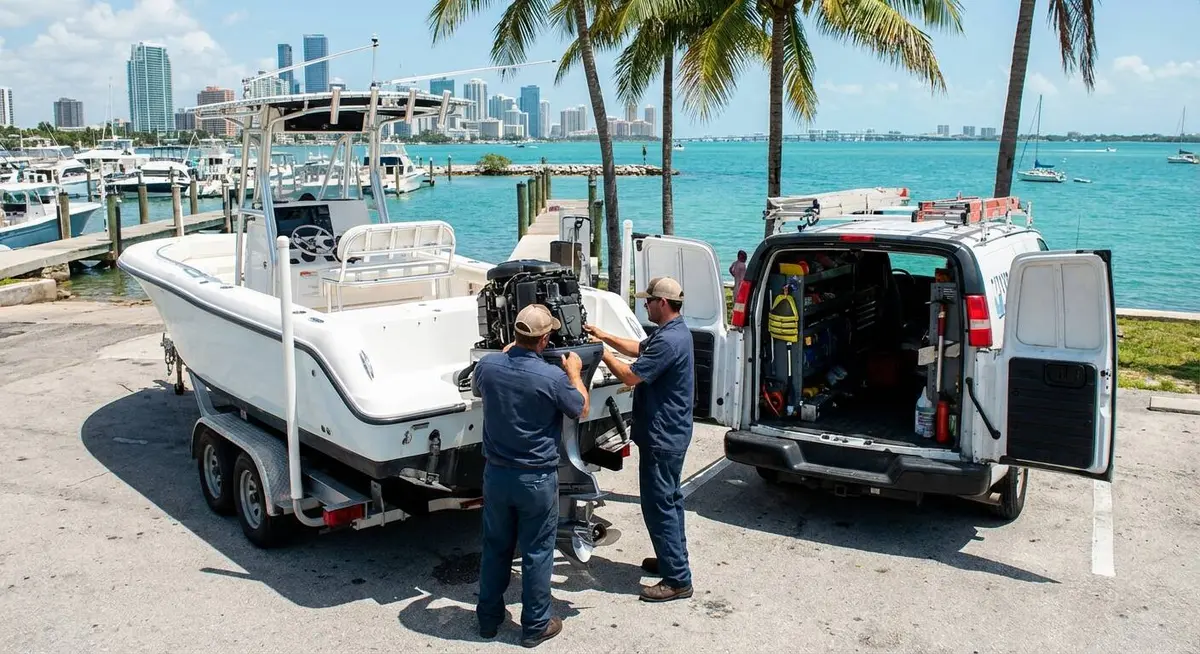
Mobile Marine Mechanics
Factory-certified mechanics come to your dock 24/7 for engine, electrical, and fuel system service. On-site repair across South Florida.
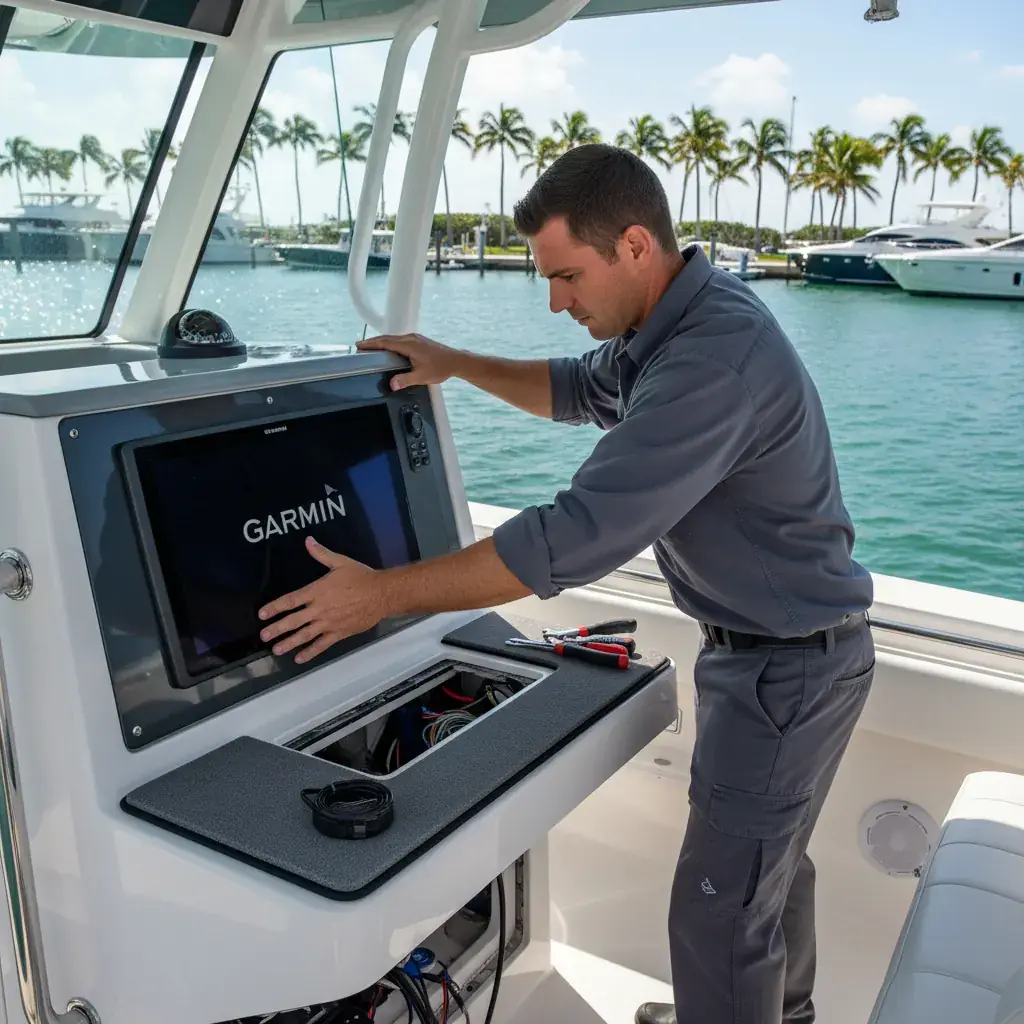
Marine Electronics Installation
Chartplotters, radar, VHF, fishfinders, and NMEA 2000 networks installed. Garmin, Raymarine, Simrad, Lowrance, Humminbird.
Bottom Painting
Antifouling paint, prep sanding, and haul-out coordination for Miami boats kept in the water year-round. Interlux and Pettit applicators.
Boat Detailing
Premium wax, polish, compound, and ceramic coating. Restore UV-faded gelcoat and protect your hull from Miami sun and salt.
Hurricane Prep
Pre-storm tie-down, haul-vs-dock planning, and post-storm assessment. Protect your boat from Atlantic hurricane season in South Florida.
Marine Plumbing & Bilge Pumps
Bilge pump installation, freshwater systems, marine heads, livewells, and seacock service. Fix leaks before they sink the boat.
Boat Steering Repair
Hydraulic and cable steering repair, helm pump replacement, and throttle controls. SeaStar, BayStar, and Uflex certified.
Propeller Repair
Prop reconditioning, balancing, pitch correction, and damage repair. Stainless and aluminum props restored to factory spec.
Windlass Installation
Anchor windlass install, rope/chain rode, remote switches, and rebuild service. Lewmar, Maxwell, Lofrans, and Quick systems.
Boat Trailer Repair
Wheel bearings, surge brakes, lights, axles, and winches. Saltwater-ready boat trailer service to keep you legal on the road.
Gelcoat Repair
Spider crack repair, color-matched gelcoat, dock rash restoration, and blister repair. Restore the factory finish on your hull.
Lower Unit & Gearcase
Gearcase rebuild, seal replacement, water pump service, and gear oil changes. Fix milky oil before it destroys your lower unit.
OEM Diagnostics & Alarm Codes
Factory-level engine diagnostics with YDIS, CDS G3, SDS, and HDS. Read, clear, and fix alarm codes other shops cannot.
Pre-Delivery Inspection
Independent PDI for new boat buyers. Catch dealer-prep issues, missing options, and warranty items before you sign.
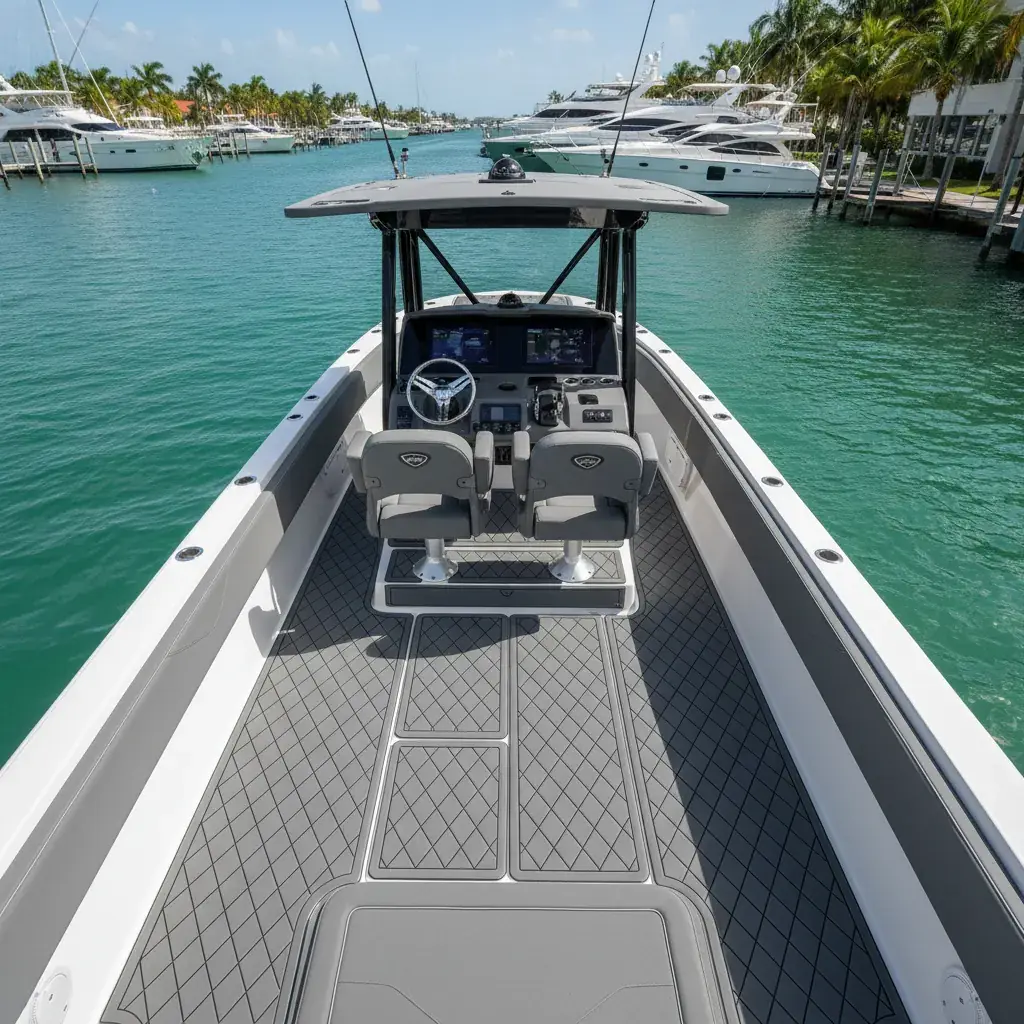
SeaDek / EVA Flooring
Custom SeaDek install, CNC-cut patterns, EVA foam flooring, and logo inlays. Quieter decks that stay cool in Miami sun.
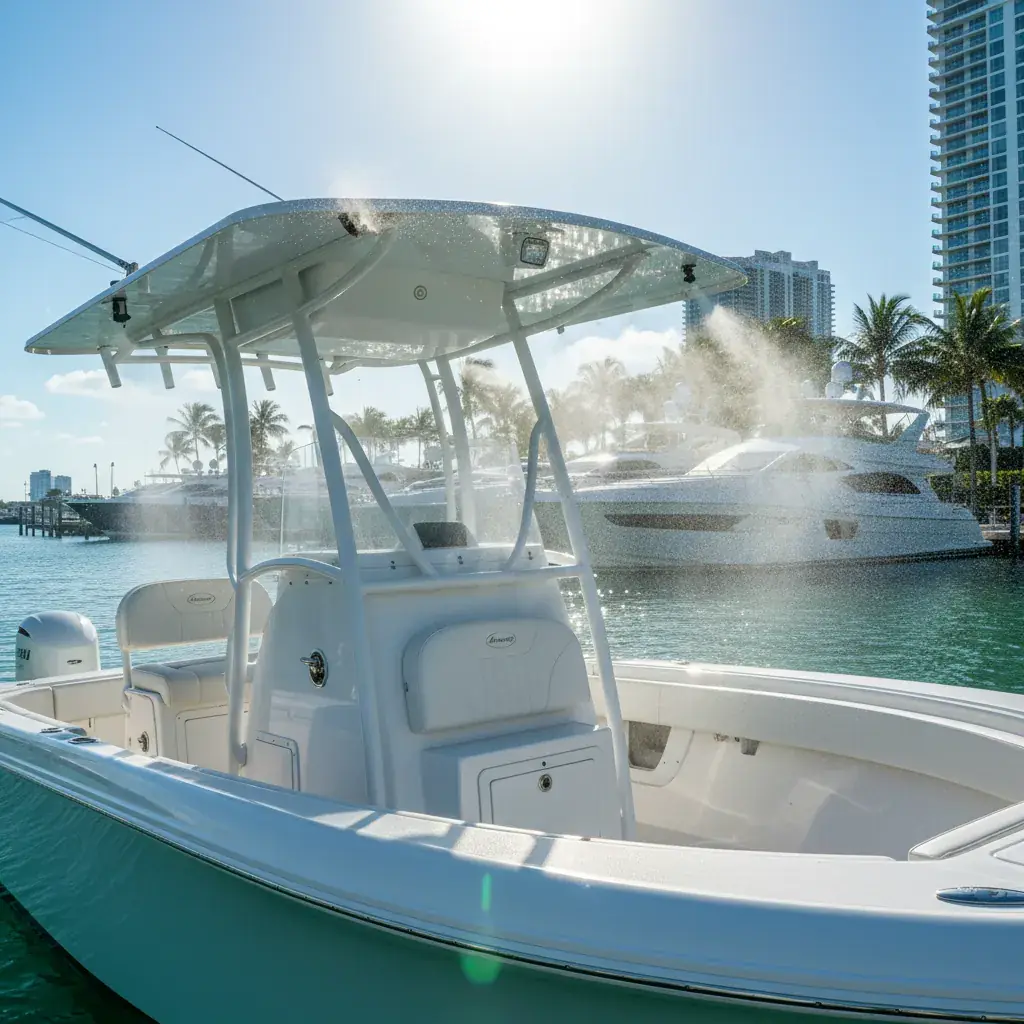
Misting System Installation
Dock, T-top, and flybridge misting systems that drop cockpit temps 15-20°F. Beat Miami summer heat on the water.
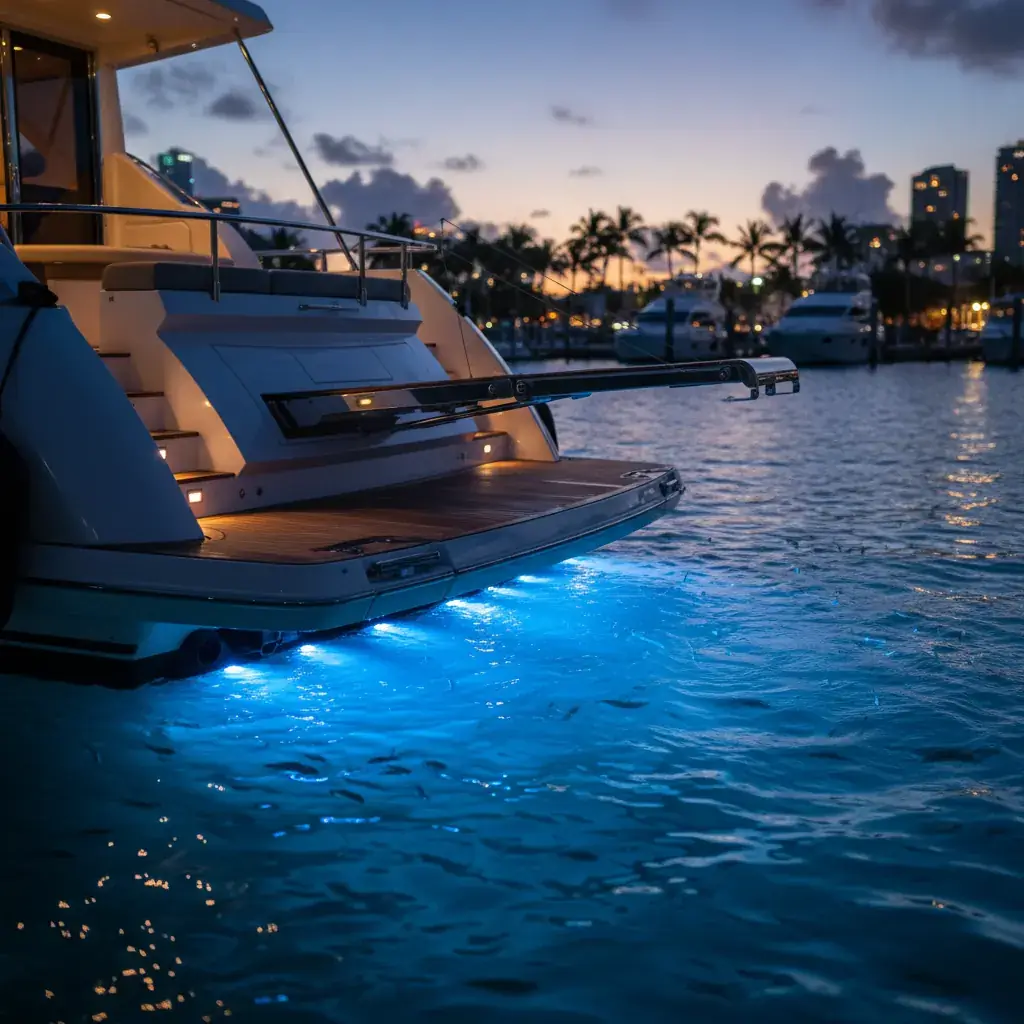
Marine LED Lighting
Underwater transom lights, deck LEDs, courtesy strips, and nav lighting. Shadow-Caster, Lumitec, and Lumishore installers.
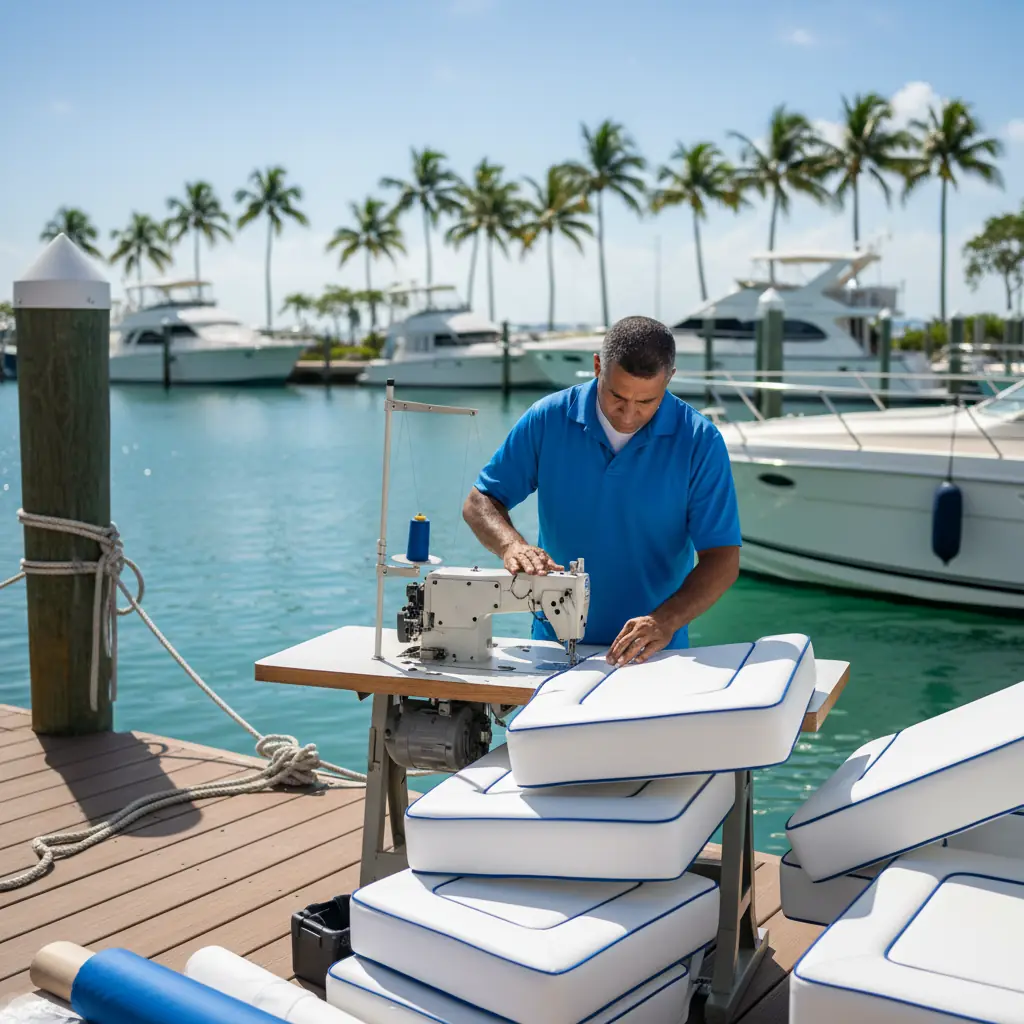
Marine Upholstery
Boat seat repair, yacht cushion replacement, vinyl restoration, and canvas work. Mobile service across South Florida.
300-Hour Service
Full 300-hour outboard service: valve lash, impeller, VST filter, thermostats, spark plugs, and ECU scan for Miami four-stroke engines.
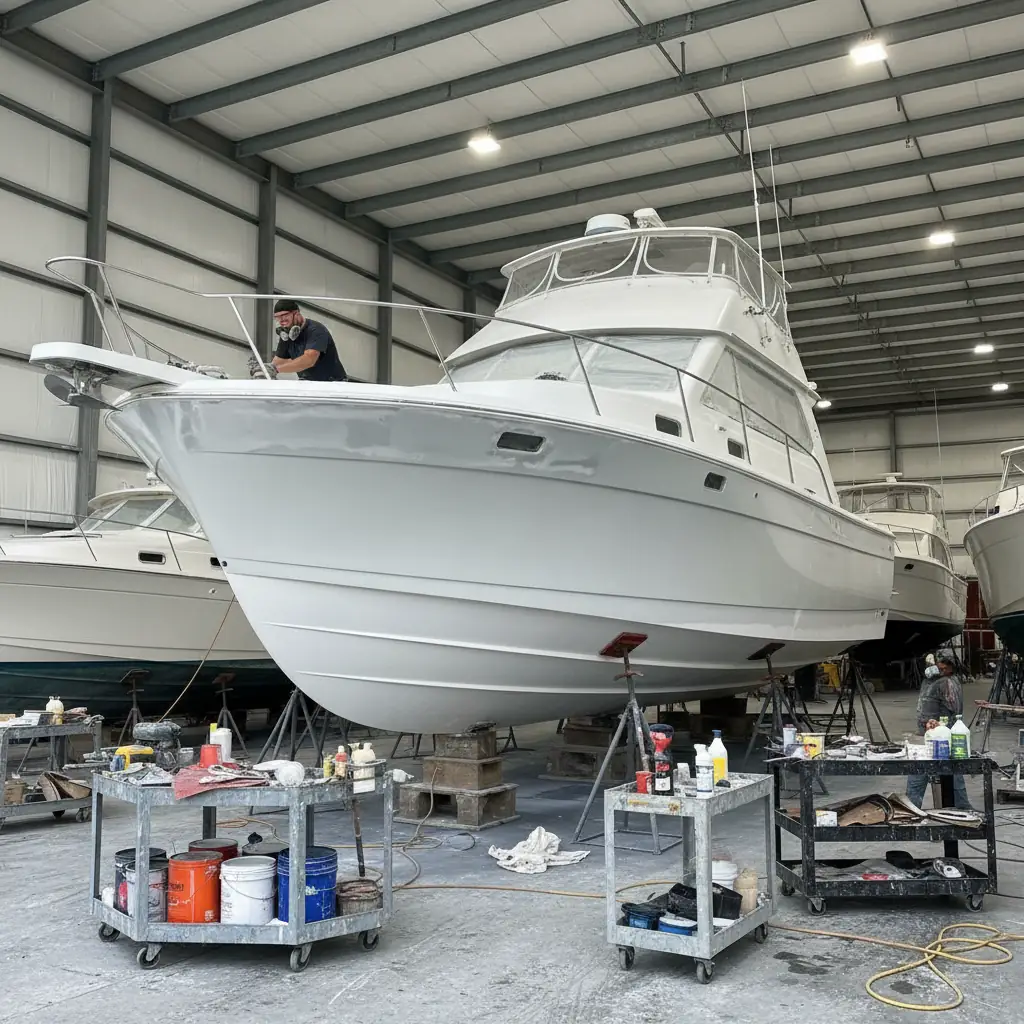
Boat Restoration
Miami boat restoration: hull rebuilds, refits, classic yacht work, fiberglass, paint, electrical, upholstery. Written scope on every project.
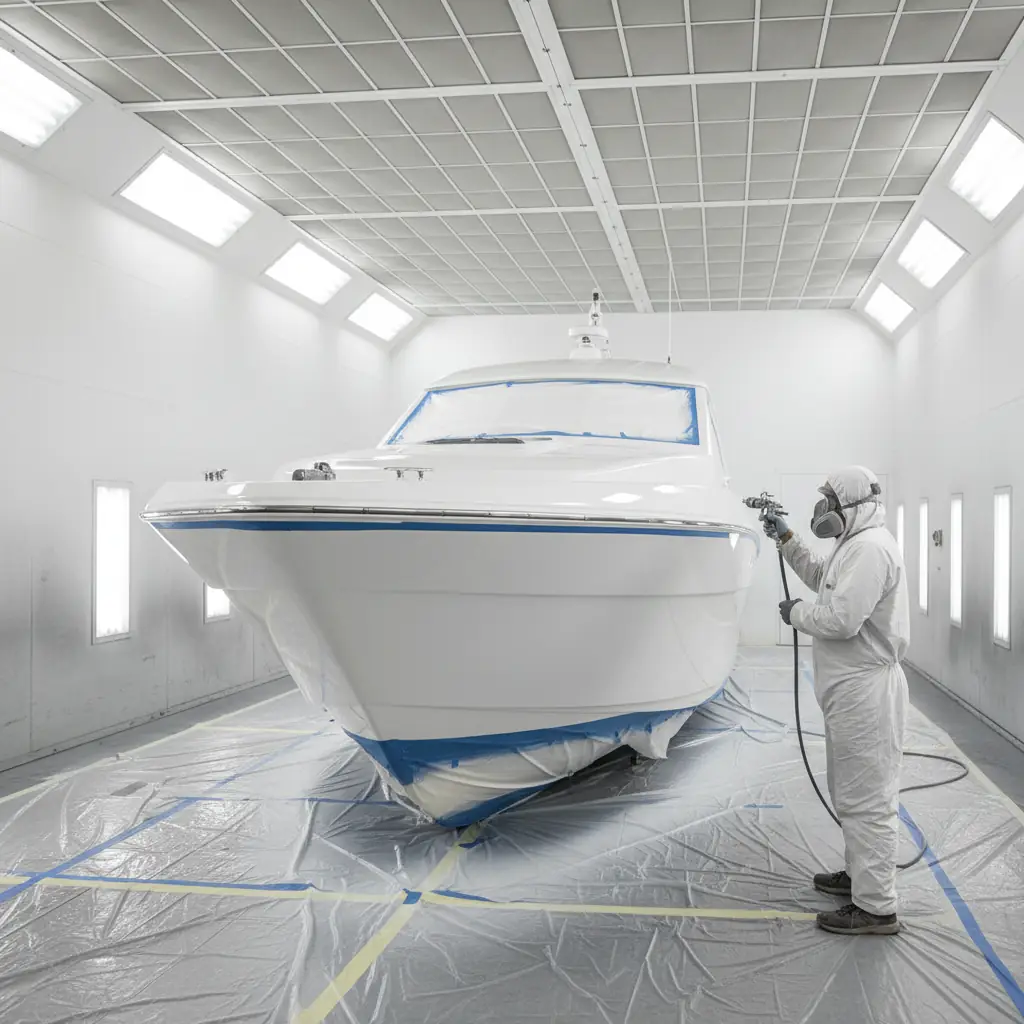
Yacht Topside Painting
Awlgrip and Awlcraft 2000 topside paint for Miami yachts. Full repaints, spot refinishes, and color changes done right.
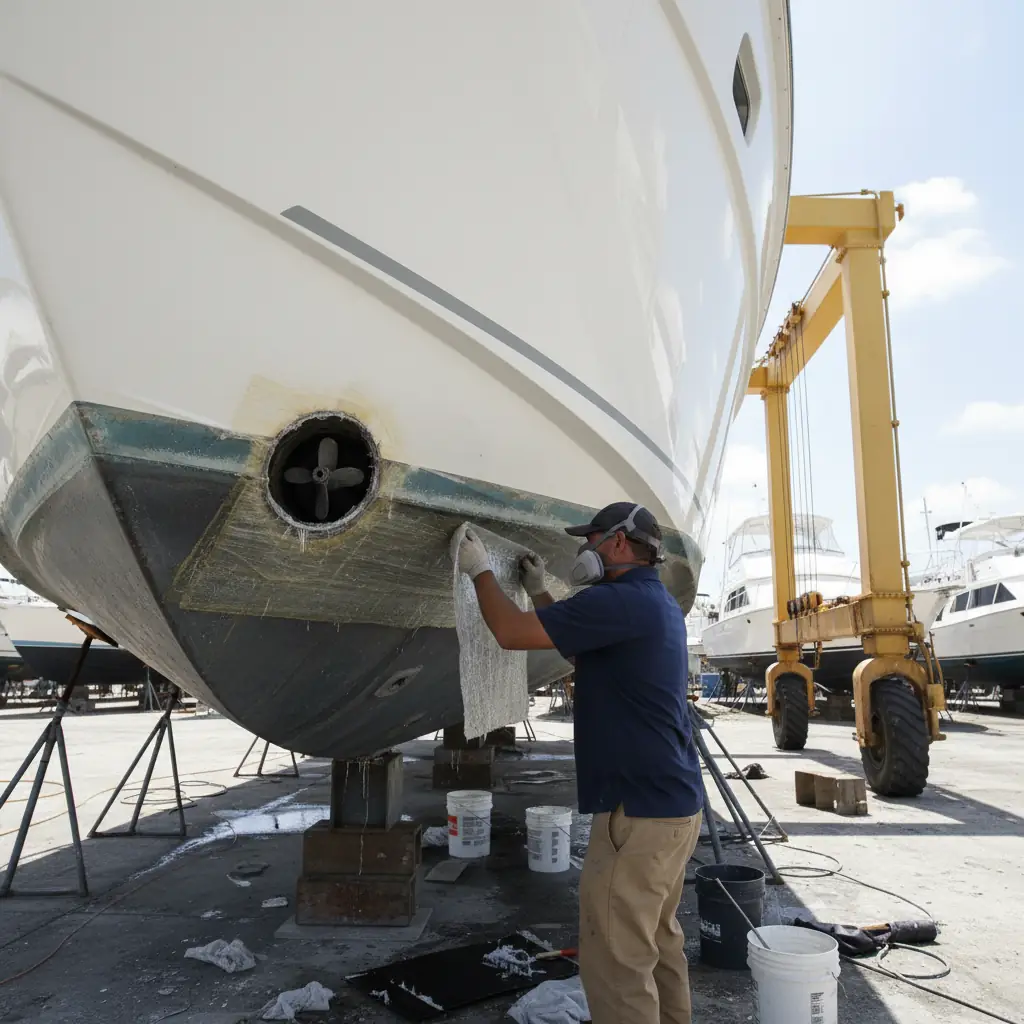
Bow Thruster Installation
Bow and stern thruster installation in Miami. Side-Power, Vetus, Lewmar. Tunnel and retractable mount. Joystick docking integration.
Need Marine Generator Repair in Miami?
Our certified marine mechanics are ready to help. Call us today for fast, reliable service anywhere in the Miami area.