Why Miami's Rainy Season Is Different
Miami gets two flavors of wet weather from mid-May through October. The first is the classic afternoon thunderstorm that rolls in around 3 p.m., dumps an inch of rain in twenty minutes, and moves on. The second is the multi-day tropical system that parks over South Florida and soaks everything.
Both cause problems, but for different reasons. Fast storms overwhelm scuppers and cockpit drains before water can escape. Slow tropical soakings saturate canvas, seep into fittings, and run batteries flat as bilge pumps cycle for days.
Boats kept in Miami also deal with high humidity between storms. Moisture never fully leaves the cabin, which accelerates mildew, corrosion, and wiring failures. Prepping for the season is less about one big fix and more about closing every small gap where water can enter or pool.
Bilge Pumps and Drainage Checks
Your bilge pump is the single most important piece of rainy-season gear. Before May arrives, pour a bucket of water into the bilge and watch the float switch trigger. If the pump hesitates, runs dry, or fails to shut off, replace it now rather than after a storm.
Check the battery feeding the pump too. A healthy house battery should hold above 12.4 volts at rest. Pumps that run for hours during tropical downpours can drain a weak battery to the point where it no longer triggers the switch. A dead battery and a clogged bilge is how boats sink at the dock.
Clear every cockpit scupper, deck drain, and anchor locker drain. Leaves, fishing line, and sunscreen residue build up fast. Our marine plumbing and bilge pump service covers pump replacement, float switch testing, and drain clearing if you want a second set of eyes before the rains start.
Electrical Water Intrusion Points
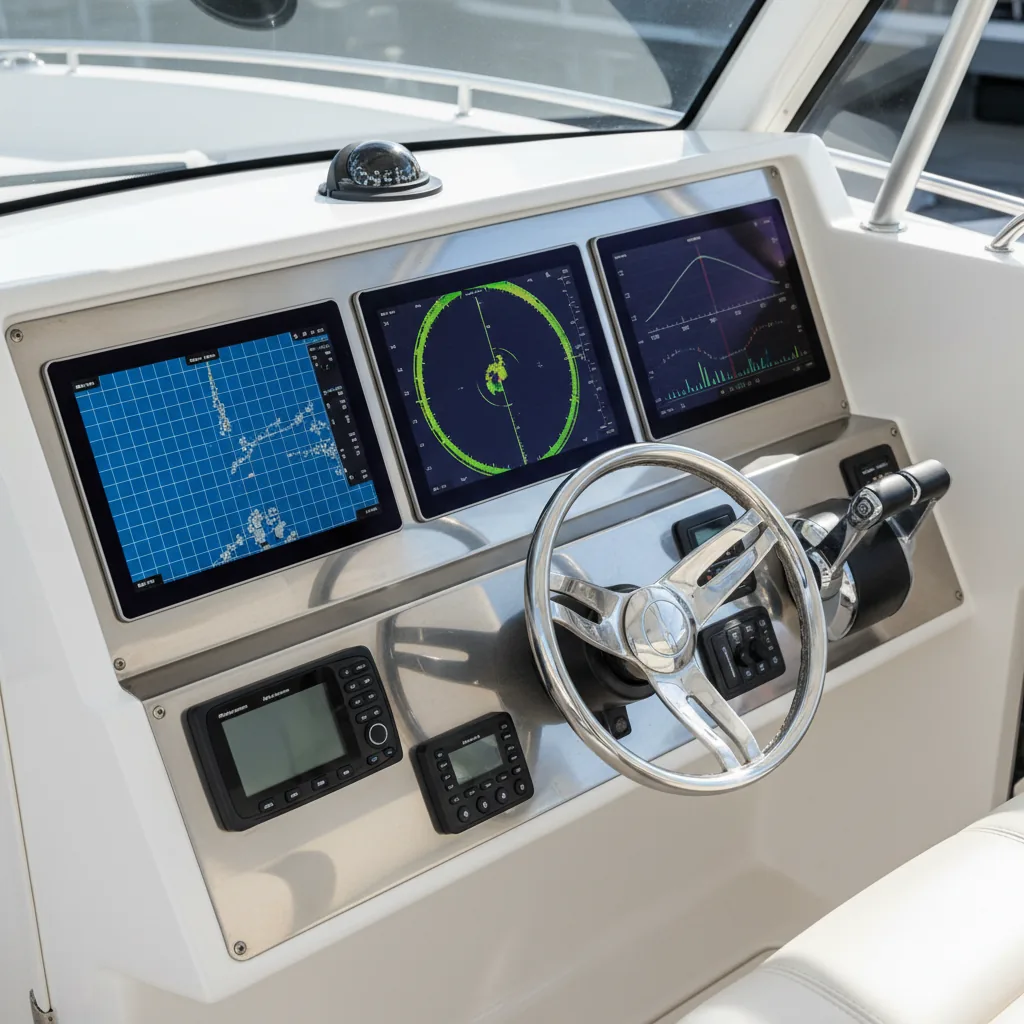
Rainwater and 12-volt systems do not mix. Most rainy-season electrical failures trace back to four spots: the battery switch compartment, the helm wiring chase, stereo and chartplotter cutouts, and navigation light bases. Each one collects water that wicks into connectors and corrodes terminals.
Pop the cover on your battery switch and look for green or white powder on the posts. That is corrosion from humid, salty air, and it gets dramatically worse once the rain starts. Clean terminals with a wire brush, then coat them with dielectric grease to slow future buildup.
At the helm, check that every wire passing through a bulkhead has a proper grommet or sealant. Pay attention to older stereo cutouts where the factory seal has dried out. A marine electrician can pressure-test suspect areas and re-seal penetrations before the season gets serious.
Canvas, Covers, and Upholstery
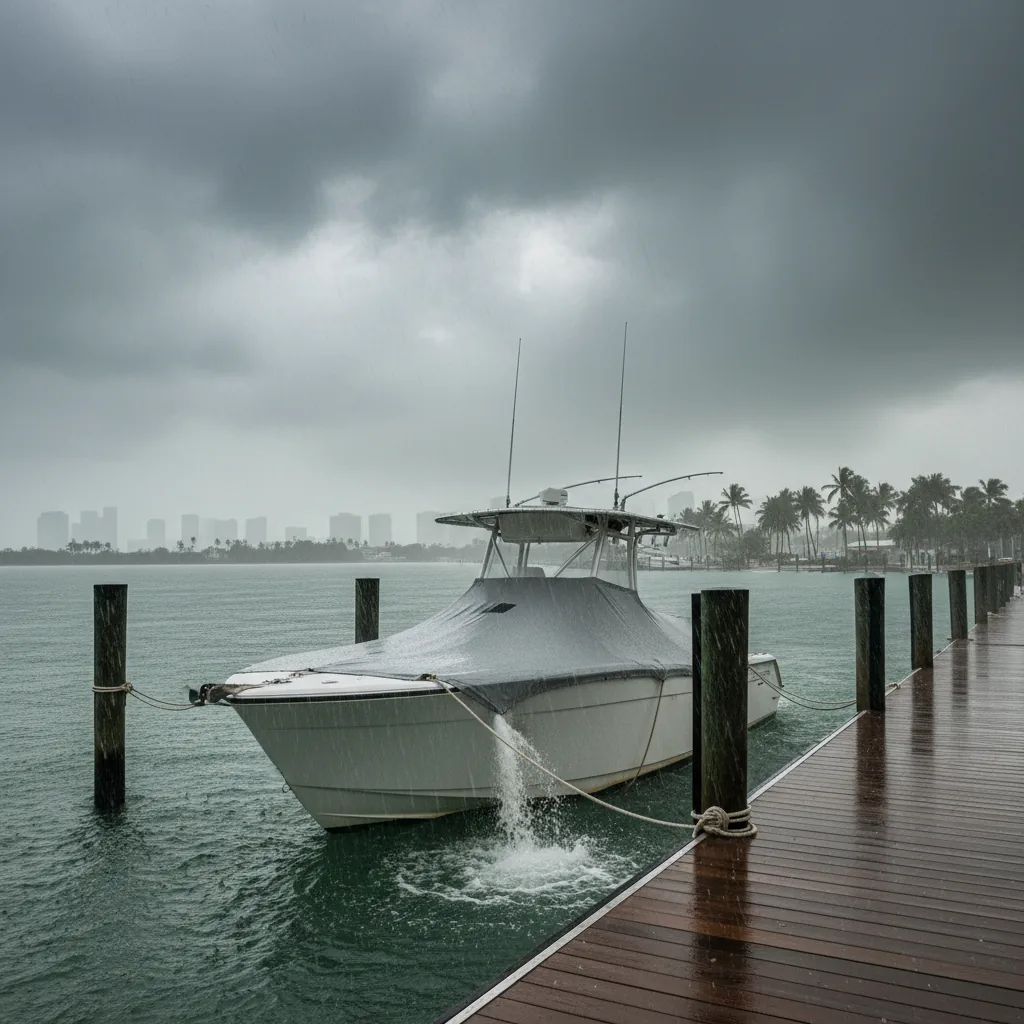
A sagging or torn canvas cover is worse than no cover at all. Water pools in the low spot, stretches the fabric further, and eventually tears through or soaks the upholstery below. Walk around your boat and press on every section of canvas. Anywhere it holds a puddle shape needs a new support pole or a tighter tie-down.
Re-treat canvas with a fluoropolymer waterproofing spray every spring. Factory coatings wear off after two or three Miami summers, and un-treated canvas absorbs water like a sponge. Wet canvas gets heavy, mildews fast, and transfers moisture straight into cushions.
Check zippers, snaps, and grommets. A single failed snap lets wind lift the cover and drive rain underneath. Boats kept in exposed slips around Key Biscayne take the worst of the afternoon storms, so reinforce weak points before they fail. Inside the cabin, crack a hatch or run a small dehumidifier to keep humidity below 60 percent.
Pre-Season vs Weekly Inspections
Split your prep into two routines. The pre-season pass happens once in late April or early May and covers the big items: bilge pump replacement, battery load test, canvas waterproofing, drain clearing, and sealing any electrical penetrations you found last year. Budget a full day for this, or schedule a mobile mechanic to knock it out in one visit.
The weekly routine is shorter but matters just as much. Open the boat, check the bilge for standing water, look at the battery voltage, wipe down any condensation inside lockers, and inspect the cover for new sags or tears. Ten minutes a week catches problems while they are still cheap to fix.
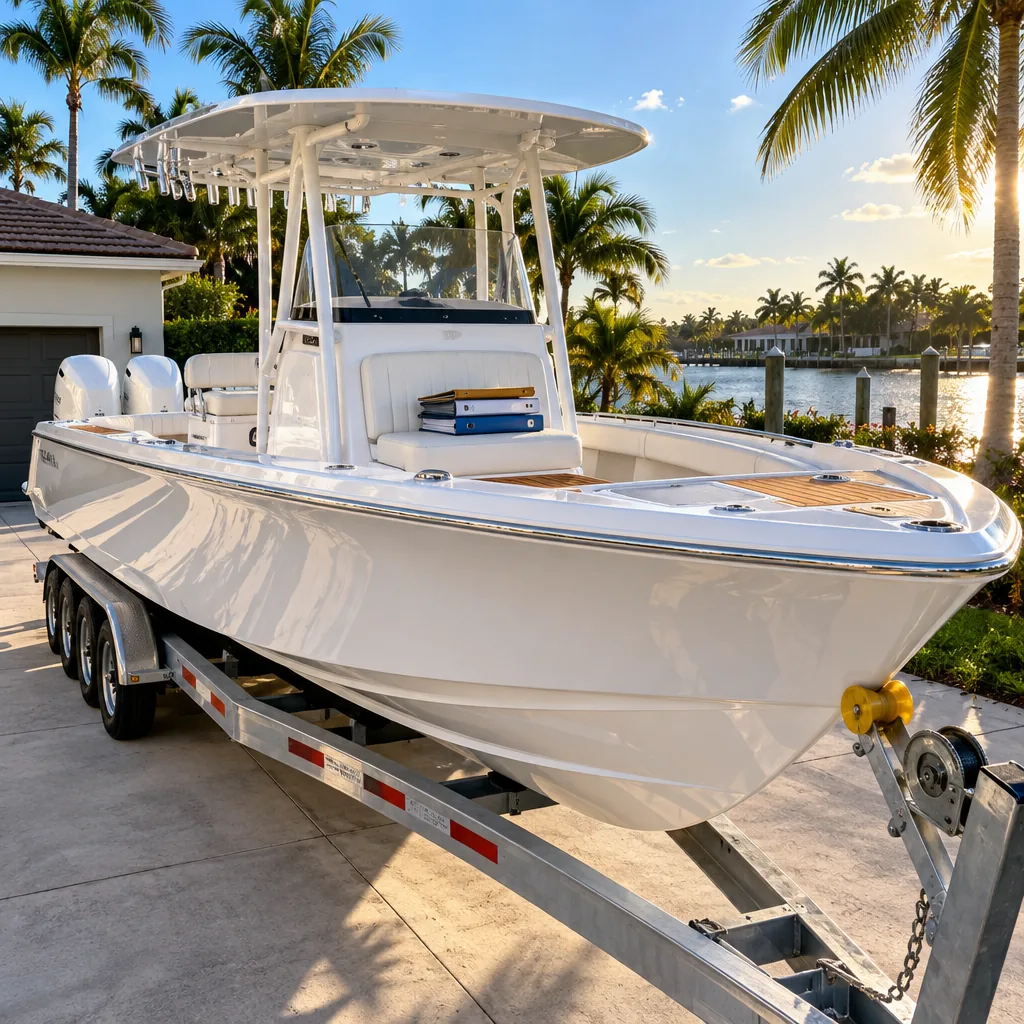
If you store your boat out of the water on a trailer, add trailer checks to the weekly pass. Waterlogged bunk carpet, rusted rollers, and blocked frame drains all show up fast once the rain starts. A quick detail and inspection between storms also removes salt and organic buildup that holds moisture against gelcoat.
When to Call for Help
Some jobs are worth doing yourself. Clearing drains, spraying canvas, and checking battery voltage are all owner-level tasks. Other jobs need a marine pro, especially anything involving sealed electrical compartments, pump wiring, or suspected hull leaks you cannot trace.
We run a mobile operation across South Florida, so we come to your slip or dry storage rather than pulling you out of the water. If you are unsure whether your boat is ready for the first big storm, a pre-season inspection pays for itself the first time a tropical wave stalls over Miami.
Call us at (305) 290-2701 to schedule a rainy-season prep visit. We will test the pump, check the electrical, walk the canvas, and leave you with a short list of anything that needs attention before the rain gets serious.
Need a Pre-Season Inspection Before May?
If your last bilge pump test was sometime last summer, you are gambling with the next tropical wave. We run the full pre-season pass in one mobile visit: pump and float switch test, drain clearing, electrical reseal, canvas waterproofing, battery load check. Marinas across Miami-Dade and Broward, scheduled around your weather windows. Reach us at (305) 290-2701 or book a rainy-season prep visit and we will get on the schedule before the first big storm.
Frequently Asked Questions
When does Miami rainy season actually start and end?
The wet season officially runs from May 15 through October 15, though afternoon storms can start in late April and linger into early November. Peak rainfall happens in August and September, which also overlaps with the active part of hurricane season.
How often should my bilge pump cycle during a rainstorm?
A properly sealed boat should see the pump cycle a few times during a heavy storm, then stop once water drains through scuppers. If your pump runs constantly or every few minutes between storms, you have a leak or a drainage problem that needs attention.
Is rainy season prep the same as hurricane prep?
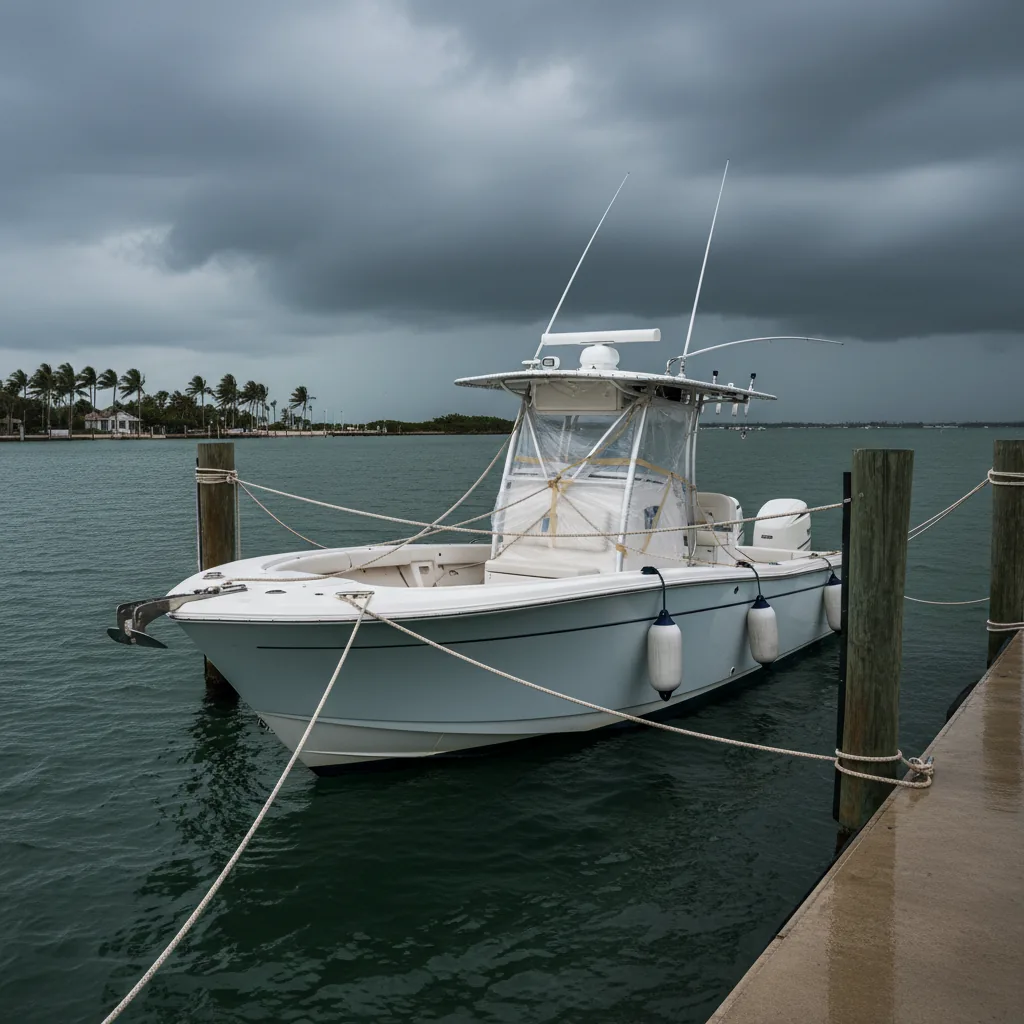
No. Rainy season prep focuses on daily and weekly water resilience: bilge, drains, canvas, and electrical seals. Hurricane prep is a separate checklist that covers haul-out decisions, extra lines, and stripping canvas. We handle both, but they are different jobs.
Should I leave my canvas cover on or off during storms?
Leave a well-fitted, properly tensioned cover on. It sheds water faster than an open cockpit drains. A loose or sagging cover, however, should come off before a storm because pooled water will tear it or collapse support poles onto the deck below.
Can you service my boat at the dock during rainy season?
Yes. We are a mobile service and work at marinas, private docks, and dry storage facilities across Miami-Dade and Broward. We schedule around weather windows and can usually complete pre-season prep in a single visit.