The Short Answer: What a Miami Boat Really Costs in 2026
Owning a 30-foot boat in Miami runs roughly $18,000 to $42,000 per year in 2026, depending on storage, usage hours, and engine maintenance. The wide spread comes down to where you keep it, how often you run it, and whether you stay ahead of preventive service or chase problems.
A trailered single-engine center console kept in a Homestead driveway sits at the low end. A twin-outboard 30-footer in a wet slip at a Coconut Grove marina, run 150 hours a year, sits at the high end. Most owners we service through our mobile marine mechanics program land somewhere in the middle, between $24,000 and $32,000 annually.
The numbers below reflect quotes pulled from Miami-Dade and Broward marinas, marine insurance carriers, and our own service-pricing data through early 2026. Treat them as realistic ranges, not promises. Your actual costs depend on your boat, your habits, and how aggressively South Florida weather works on your hull.
Storage and Slip Fees: The Largest Single Line Item
Storage is the biggest variable in any Miami boat budget. Wet slips at full-service marinas inside Biscayne Bay command a premium because demand never softens. Dry stack and trailer storage cut costs sharply but limit spontaneous use.
Slip fees at Dinner Key Marina and other Coconut Grove facilities averaged roughly $28 to $38 per foot per month in early 2026. A 30-foot slip runs $840 to $1,140 monthly, or $10,080 to $13,680 per year before electric and liveaboard fees. Mid-range marinas in North Miami and Hollywood ran closer to $22 to $28 per foot.
Dry stack storage in Miami priced between $700 and $1,200 per month for boats under 32 feet in 2026, with launch fees included at most full-service yards. Trailer storage at home costs nothing beyond your driveway, but you trade convenience for hauling fees every time you launch. Owners in Miami often split the difference with monthly dry-rack memberships that include unlimited splashes.
| Storage Type | Low Range | Mid Range | High Range |
|---|---|---|---|
| Wet slip (30 ft) | $7,200/yr | $10,800/yr | $13,680/yr |
| Dry stack | $8,400/yr | $10,800/yr | $14,400/yr |
| Trailer at home | $0 | $300/yr ramp fees | $1,200/yr storage lot |
Insurance, Registration, and Fuel: The Predictable Costs
Marine insurance in South Florida tightened again in 2026 after another active storm year. Carriers underwriting Miami-Dade boats raised rates 8 to 14 percent on renewal for most policies we tracked. A 30-foot center console valued at $85,000 to $110,000 typically carried annual premiums of $1,400 to $2,400 with full agreed-value coverage and named-storm protection.
Florida registration runs $79 to $129 annually for boats in the 26 to 39 foot range, depending on length and propulsion. Add roughly $30 for the title trust fund and minor county fees. These costs are flat regardless of how often you run the boat.
Fuel is the cost most owners underestimate. A twin 250-horsepower outboard setup burns 18 to 24 gallons per hour at cruise. With Miami marina fuel running $5.40 to $6.10 per gallon for ethanol-free 90-octane in spring 2026, every hour offshore costs $100 to $145 in fuel alone. A typical owner logging 100 hours per year spends $10,000 to $14,500 just on gas. Run 150 hours and that climbs past $20,000. Owners running closer to Fort Lauderdale inlets often see lower gallons-per-hour because of shorter idle time at no-wake zones.
Maintenance, Service Intervals, and Engine Hours
Engines need scheduled service whether you run them or not. Saltwater corrosion does not pause for slow seasons. Skipping intervals is the single most expensive habit we see, because it turns $500 maintenance items into $5,000 repairs.
For twin outboards on a 30-foot center console, expect 100-hour boat service two to three times a year at most usage levels. Each visit runs $650 to $1,100 per engine for oil, filters, gear lube, plugs, and inspections. That works out to roughly $2,600 to $6,600 annually on routine engine maintenance alone. Add a 300-hour service every other year for valve adjustments, water pump impellers, and thermostats, typically $1,400 to $2,200 per engine.
Other recurring items hit on irregular schedules. Anodes need replacement every 6 to 12 months at $150 to $400 per service. Trim tab and steering hydraulics typically need a fluid flush annually. Propellers ding on coral and lobster traps, and a single boat propeller repair averaged $180 to $450 in 2026.
Bottom Paint, Detailing, and Cosmetic Upkeep
Miami's warm, nutrient-rich water grows barnacles and slime faster than most US markets. Bottom paint is not optional for wet-slipped boats, and the wrong product fails inside a season. Quality ablative paint applied correctly lasts 18 to 30 months depending on usage and water temperature.
A full boat bottom painting service on a 30-footer ran $2,400 to $4,200 in 2026, including haul-out, pressure wash, sanding, and two coats. Spread across 24 months, that averages $1,200 to $2,100 per year. Skip it and fuel economy drops 15 to 25 percent within months, which costs more than the paint itself.
Above the waterline, monthly washdowns from a professional service run $180 to $320 per visit in most Miami marinas. Owners who book through our boat detailing program typically budget $2,400 to $4,000 annually for monthly wash and quarterly compound and wax.
Hurricane Prep, Surveys, and Unplanned Repairs
Two costs catch new owners off guard: hurricane season prep and the inevitable surprise repair. Both are real budget lines, not edge cases.
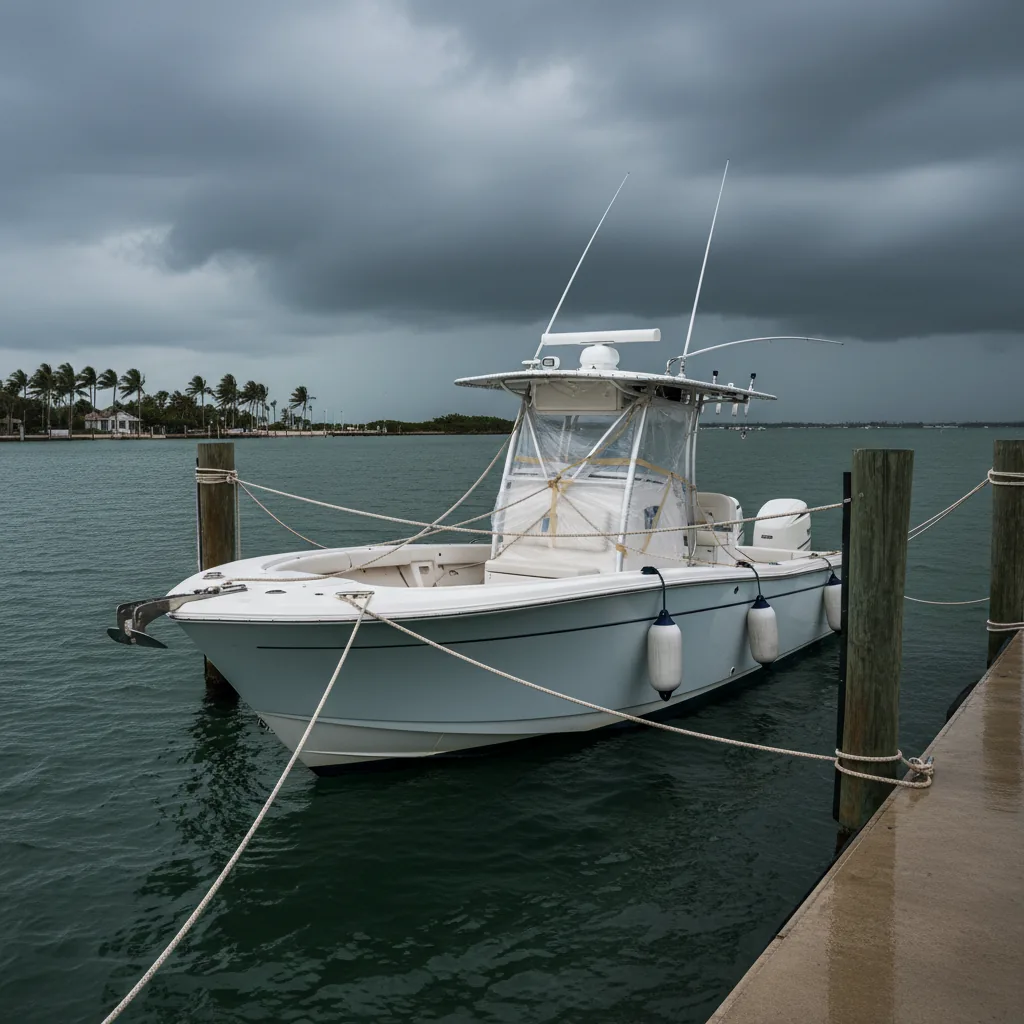
Most marinas in Miami-Dade require a written storm plan and proof of preparation. Hauling and blocking ahead of a named storm runs $400 to $900 for a 30-footer in 2026, with prices climbing as warnings approach. Owners using our boat hurricane prep service for tie-down, electronics removal, and dewatering typically spent $350 to $750 per event.
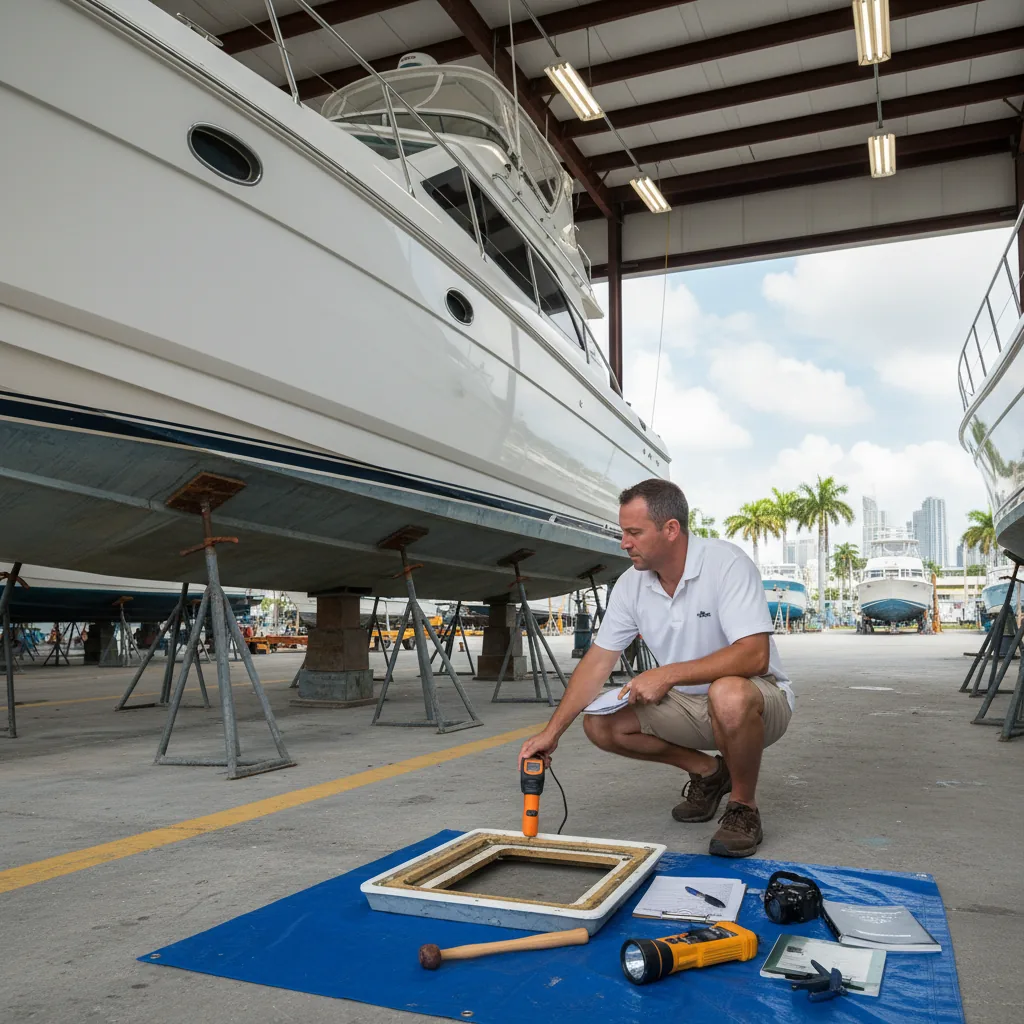
A pre-purchase or insurance-required survey is another scheduled expense. Boat inspections by a SAMS or NAMS surveyor priced at $20 to $28 per foot in 2026. For a 30-footer that is $600 to $840, typically required every 3 to 5 years by insurers. Then there is the surprise category. Across the boats we service, owners spent an average of $1,800 to $4,500 per year on unplanned repairs. Owners in Fort Lauderdale who run regular diagnostic scans tend to catch these earlier and spend roughly 30 percent less on emergency work.
| Category | Annual Low | Annual Mid | Annual High |
|---|---|---|---|
| Storage | $0 | $10,800 | $14,400 |
| Insurance + registration | $1,500 | $1,900 | $2,500 |
| Fuel (100 hrs) | $8,000 | $11,500 | $14,500 |
| Engine service | $2,600 | $4,400 | $6,600 |
| Bottom paint (amortized) | $1,200 | $1,600 | $2,100 |
| Detailing | $0 | $2,800 | $4,000 |
| Hurricane prep | $200 | $900 | $2,000 |
| Survey (amortized) | $150 | $220 | $280 |
| Unplanned repairs | $1,800 | $3,000 | $4,500 |
Build a Maintenance Plan That Fits Your Annual Budget
The biggest cost lever in any Miami boat budget is preventive service, not slip selection. Owners who lock in scheduled engine work, bottom paint cycles, and storm prep at the start of each year almost always spend less than owners who pay reactively. Lock in your 2026 numbers before the summer running season pushes shop calendars full. Call Boat Repair Miami at (305) 290-2701 to talk through your hours, engine setup, and storage situation. We can request a yearly maintenance estimate that maps your annual cost against your real usage so the numbers stop being a guess.
Frequently Asked Questions
How much does it cost to own a 30-foot boat in Miami per year?
In 2026, expect $18,000 to $42,000 annually for a 30-foot boat in Miami. Storage type, engine hours, and maintenance discipline drive the spread. Trailer-kept boats run cheapest; wet-slipped twin outboards at busy marinas cost the most.
What is the cheapest way to store a boat in Miami?
Trailer storage at home is the cheapest, often under $300 per year in launch fees. Dry stack at $700 to $1,200 per month is the next step up. Wet slips at full-service marinas are the most expensive at $22 to $38 per foot monthly.
How often should I service my outboard engines in Miami?
Plan on 100-hour service two to three times per year for active boats, plus annual flushes and anode replacement. Saltwater corrosion in South Florida accelerates wear, so calendar-based service matters as much as hours.
Is boat insurance more expensive in Miami than other Florida cities?
Yes. Miami-Dade premiums ran 10 to 20 percent higher than Tampa or Jacksonville in 2026 due to named-storm exposure and theft rates. A 30-foot center console valued near $100,000 typically insures for $1,400 to $2,400 annually.
How much should I budget for unexpected boat repairs each year?
Most Miami owners spent $1,800 to $4,500 on unplanned repairs in 2026. Owners who run regular diagnostic checks and stay current on preventive service tend to land at the lower end of that range.