What a Marine Exhaust Manifold Actually Does
A marine exhaust manifold is a water-jacketed cast iron casting bolted to the side of a gasoline inboard or sterndrive engine. Hot exhaust gas flows through the inner passage. Raw salt water flows through an outer jacket that cools the casting and the exhaust riser above it.
The water and the exhaust gas meet at the riser and exit the boat together through the transom. This design keeps engine bay temperatures safe on a fiberglass boat. It also means the manifold is constantly exposed to salt water on one side and 1,200 degree exhaust gas on the other.
When the thin wall between those two passages cracks or develops a pinhole, salt water leaks into the exhaust stream. From there it runs straight back into the cylinders through the open exhaust valves. This is the core failure mode behind most boat engine repair jobs we see on older Miami sterndrives.
The Accelerated Salt Corrosion Clock
Automotive exhaust manifolds last the life of the vehicle. Marine manifolds in freshwater often last 10 to 15 years. Miami saltwater manifolds rarely make it past 7 years, and many fail at the 4 or 5 year mark.
Salt water attacks cast iron from the inside out. Every trip deposits chloride ions in the water jacket. Between trips the manifold sits warm and wet, which is the perfect environment for rust to grow inward toward the exhaust passage.
The outside of the manifold can look fine while the inside is paper thin. This is why visual inspections alone miss most cracks. Boats that sit on a lift in Key Biscayne or at a Miami marina are on the shorter end of that lifespan because of constant salt air exposure even when not running.
Warning Signs You Need to Catch Early
The earliest sign is a puff of white steam from the exhaust at cold startup that clears within a minute. That steam is salt water sitting in a cylinder overnight, boiling off as the engine warms. It is easy to miss if you are not looking for it.
Other early signs include a rough idle for the first two minutes, unexplained coolant or raw water loss, and a slight miss on one cylinder under load. Advanced signs include milky oil on the dipstick, a cylinder that will not fire, and the engine refusing to crank because water has filled the combustion chamber.
A proper boat inspection with compression and leak down testing will catch a failing manifold before it destroys the engine. If you are buying a used Miami boat, insist on this test before closing.
What Actually Happens Inside the Engine
Once a crack forms, salt water drips into the exhaust port every time that valve opens. Some of it exits with the exhaust. Some of it runs backward into the cylinder when the engine shuts down and the exhaust cools.
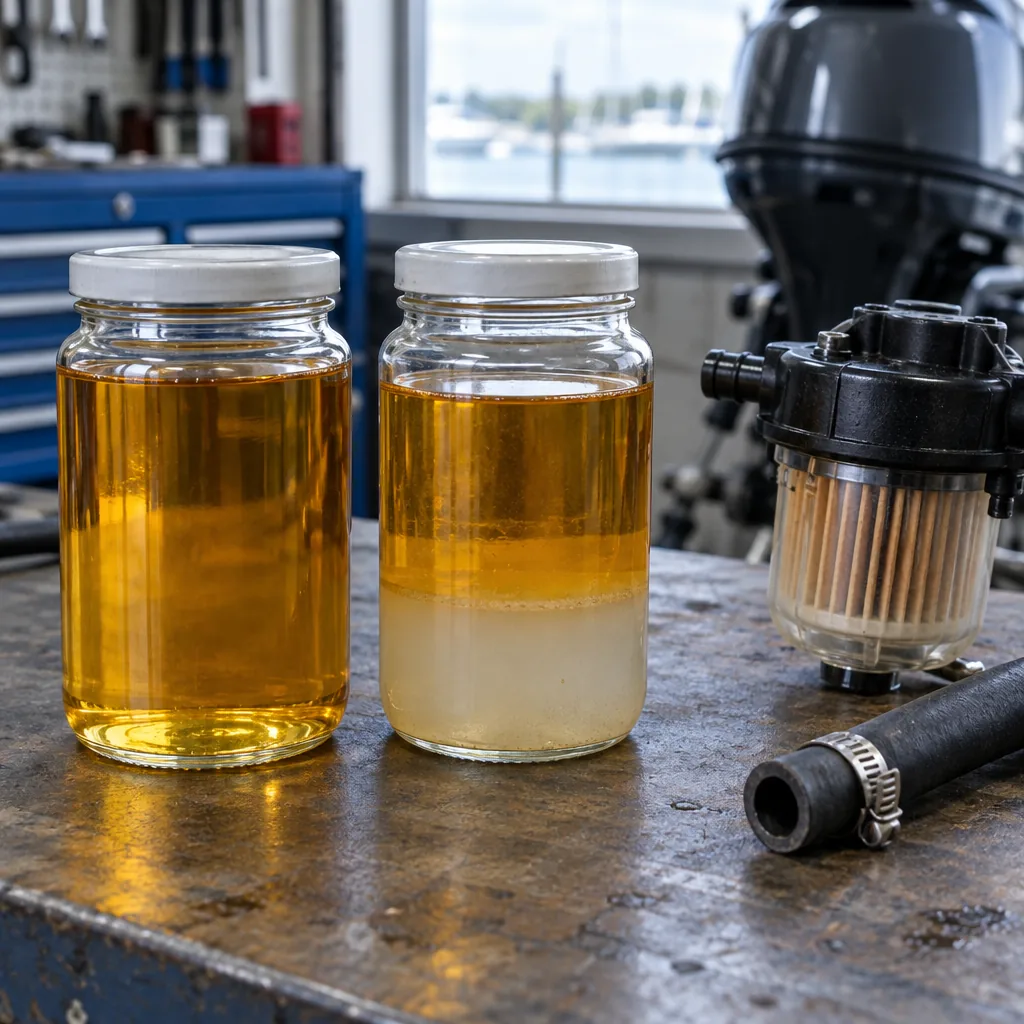
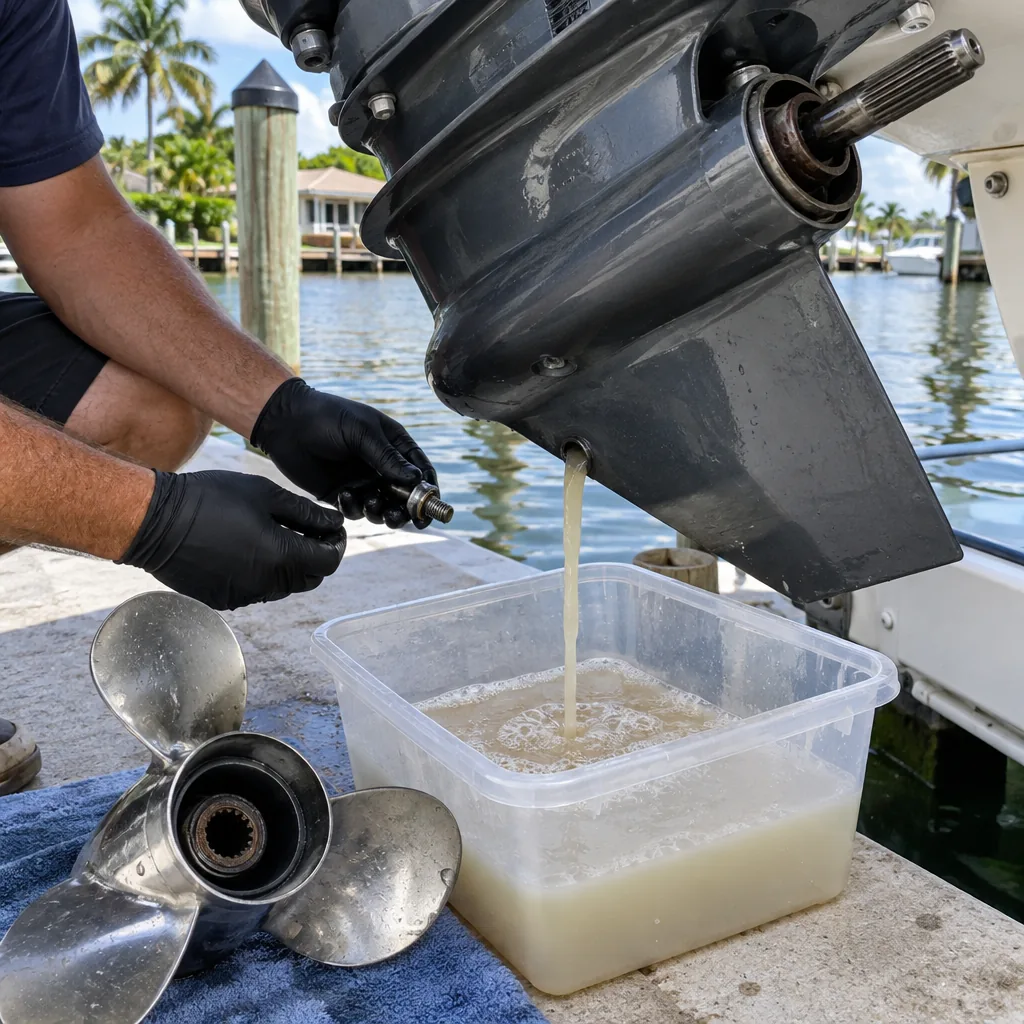
Salt water sitting on top of a piston for a few days rusts the top ring, the cylinder wall, and the exhaust valve seat. Compression drops on that cylinder. The engine idles rough and loses power. Salt water also wicks past the rings into the oil pan and turns the oil into a milky emulsion that cannot lubricate bearings.
The final stage is hydrolock. Enough water collects in a cylinder that the piston cannot compress it on the next start attempt. The connecting rod bends or breaks. At that point the powerhead is finished. Our OEM diagnostic scans can catch misfire codes from a flooded cylinder before it reaches this stage on modern engines.
The Cost of Waiting Versus Fixing
Replacing one manifold and riser set on a small block gas engine runs $600 to $1,500 installed. A full set on a V8 sterndrive is $1,400 to $2,800. The job takes most of a day and is straightforward for any competent marine mechanic.
A hydrolocked engine is a different conversation. A bent rod means the short block comes out. A rebuilt powerhead or long block installed runs $6,000 to $12,000 depending on the engine. A replacement crate engine can push past $15,000 with labor and accessories.
The math is not close. Fixing a $1,200 manifold today is a tenth the cost of rebuilding a powerhead in 90 days. Our mobile marine mechanics handle manifold swaps at your dock or lift without hauling the boat out, which keeps the total job affordable.
How We Confirm a Crack in One Visit
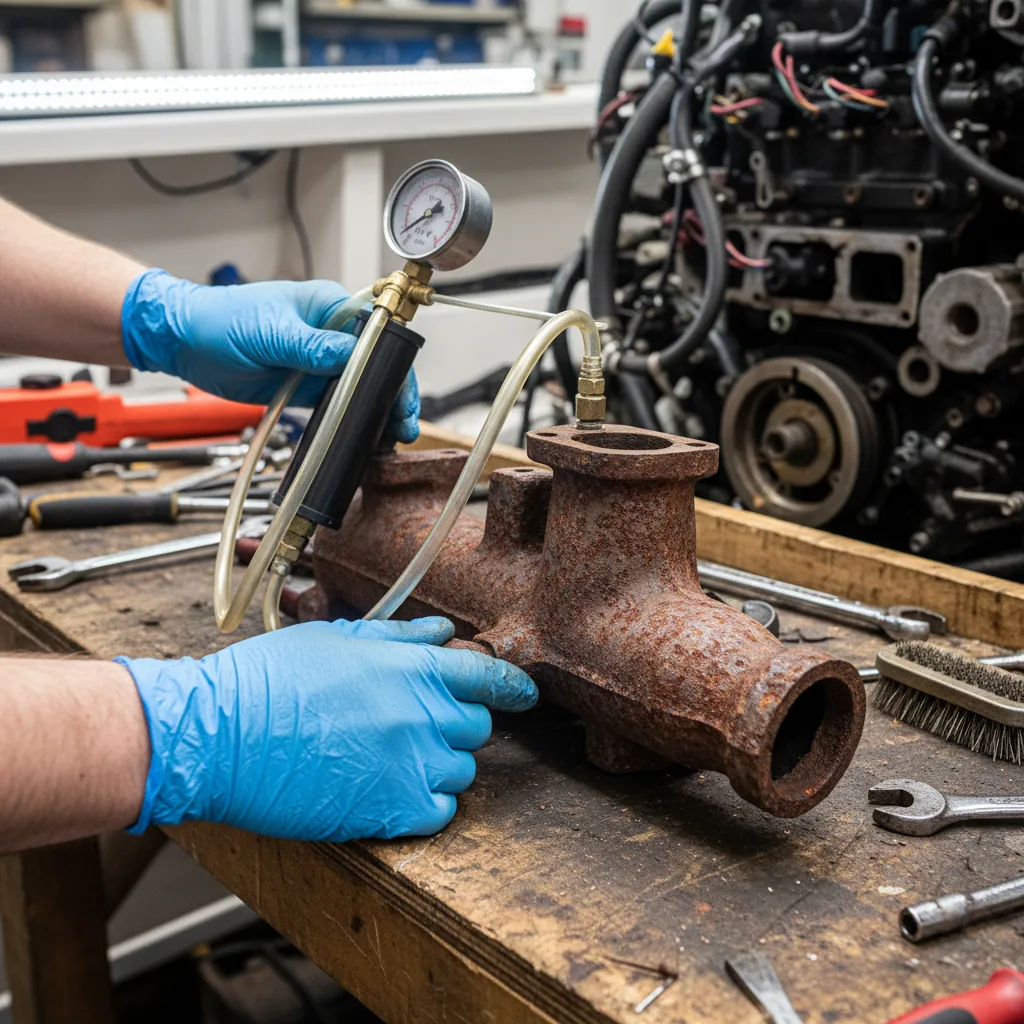
Confirmation takes about an hour with the right tools. We start with a water jacket pressure test. The manifold is isolated, capped, and pressurized to 15 to 20 psi. A jacket that cannot hold pressure for 15 minutes has a crack or pinhole somewhere in the casting.
Next we pull the spark plugs and run a borescope into each cylinder. Rust streaks, wet plugs, or standing water on a piston crown confirm the leak path. We also check the oil for emulsification and pull a compression reading on every cylinder to see how much damage has already occurred.
If you are in Miami and your boat is showing any of the warning signs above, do not take it out again until it is tested. Call us at (305) 290-2701 and we will bring the test kit to your slip the same week. Catching a cracked marine exhaust manifold early is the difference between a one day repair and a new engine.
Pressure-Test Your Manifold Before the Next Trip
If you saw any of the warning signs above on your last run, do not take the boat out again. A water-jacket pressure test plus a borescope check through each spark plug hole takes one hour at your dock and tells you definitively whether the manifold is leaking salt water into the cylinders. Manifold and riser replacement runs $600 to $2,800. The alternative, an engine that hydrolocks and bends a rod, runs $8,000 and up. Reach us at (305) 290-2701 or schedule a manifold inspection in Miami, Key Biscayne, or Fort Lauderdale this week.
Frequently Asked Questions
How long can I run a boat with a cracked exhaust manifold?
Not long. Once salt water enters the cylinders, corrosion begins within hours. Many engines hydrolock within 30 to 90 days of the first symptom. Do not take the boat out again until it is inspected.
How much does it cost to replace a marine exhaust manifold in Miami?
Most gasoline inboard and sterndrive manifolds cost $600 to $1,500 per side installed. A full manifold and riser set for a V8 typically runs $1,400 to $2,800. Waiting until the powerhead fails can push repairs past $8,000.
Why do marine exhaust manifolds fail faster in Miami than in freshwater?
Raw salt water runs through the water jackets of Miami boats every trip. Salt accelerates internal cast iron corrosion. Most Miami manifolds last 4 to 7 years versus 10 or more in freshwater lakes up north.
Can a mechanic confirm a cracked manifold without pulling the engine?
Yes. A pressure test of the exhaust water jacket and a borescope inspection through the spark plug holes can confirm a crack in about an hour. We do both dockside as part of our mobile diagnostic service.
Is white smoke at startup always a cracked manifold?
Not always, but it is the most common cause on Miami saltwater boats over four years old. Head gasket failure and condensation can also cause white smoke. A pressure test tells the difference.