A Boat Monitoring System Is Onboard Sensors Plus a Hub That Alerts Your Phone
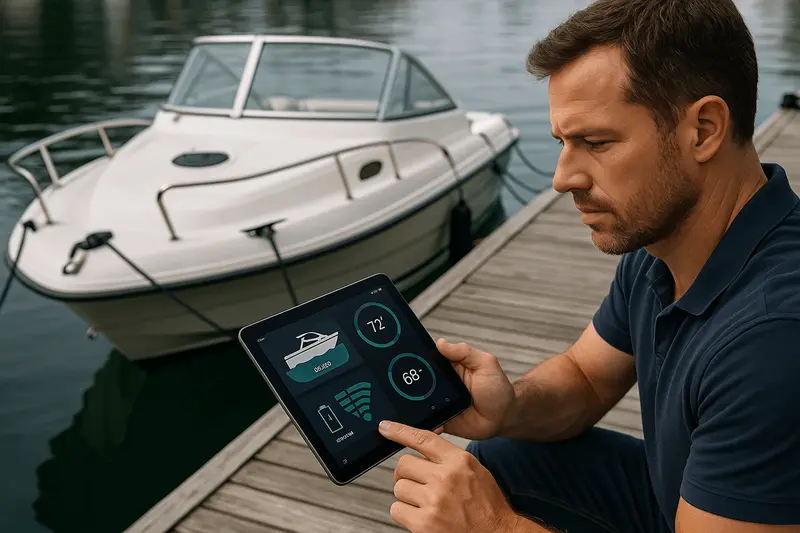
A boat monitoring system is a set of sensors on the boat connected to a hub that sends readings and alarms to your phone over a cellular, satellite or Wi-Fi link. It watches bilge high water and pump cycles, battery voltage, shore power, GPS position, hatches and motion, and temperature and humidity. Some systems also read engine data from the boat's NMEA 2000 network.
That is what the smart boat label means in practice. Instead of finding out about a problem when you walk down the dock, the boat tells you when something changes between visits.
The reason most South Florida owners add one is simple. A boat that sits in a slip or on a lift for weeks can take on water, lose charging power or move without anyone noticing. Choosing the right sensors and wiring them properly is part of a marine electronics installation, and those choices decide whether the system is useful or just noisy.
What Each Sensor Actually Watches
Bilge high water and pump cycles. A high-water sensor mounted above the pump's normal switch-on point alerts you when water rises higher than the pump should allow. A pump-cycle input logs every time the pump runs. A sudden jump in cycles points to a leak days before the water ever reaches the high-water sensor.
Battery voltage. The hub reads house and start battery voltage and alerts when either drops below a threshold you set. A falling house bank on a boat plugged into shore power usually means the charger has stopped working.
Shore power loss. A shore power sensor tells you when the dock pedestal trips, a cord is unplugged or the inlet fails. On a boat that depends on its charger to keep the pumps running, this alert often comes before any battery warning.
GPS position and geofence. The hub reports where the boat is and alarms if it leaves an area you draw on a map. That covers theft, a boat dragging anchor and a boat that breaks free of its lines or lift in a storm.
Security, temperature and humidity. Door, hatch and motion sensors report entry into the cabin or console. Temperature and humidity sensors flag a failed air conditioner, a cooler gone warm or a closed-up cabin heading toward mildew.
Engine data. Hubs that join the NMEA 2000 backbone can pass along engine hours, warning indicators and fuel flow. Garmin's OnDeck compatible sensors list shows both the hub's own inputs and the NMEA 2000 data it can upload.
Cellular, Satellite or Wi-Fi, and Why Most Systems Need a Subscription
Most remote boat monitoring runs on cellular. The hub carries its own modem and connects to a carrier network, so it keeps reporting wherever the boat has a cell signal, from a Homestead marina to a Jupiter lift. Some manufacturers offer a satellite add-on for boats that cruise beyond cell coverage or sit at remote moorings.
Wi-Fi-only devices are simpler, but they depend on the marina network or a router aboard. When the marina Wi-Fi goes down, or shore power fails and takes the router with it, the system goes quiet at the moment you most need it. For a boat that sits unattended, a cellular or satellite link is the safer choice.
Because the hub uses a carrier network, most systems require a monthly or annual service plan on top of the hardware. Plans and prices change, so check the manufacturer's current subscription page before you buy.
Choosing a System for a Slip, a Lift or a Trailer
In a wet slip. A boat living in the water needs bilge high water, pump cycles, battery voltage and shore power as the core four. In Miami marinas, where boats often sit plugged in for weeks between trips, the shore power and charger alerts matter as much as the bilge alarm.
On a lift. A boat on a lift is not taking on water through a hull fitting, but rain still fills the bilge if scuppers or drain plugs are blocked. The bigger risks are a lift that fails or a boat that moves in high wind, so geofence and a tilt or motion sensor earn their place.
On a trailer. A trailered boat mostly needs theft protection. GPS tracking with a geofence around the driveway or storage yard, plus a backup battery in the hub, covers most of it.
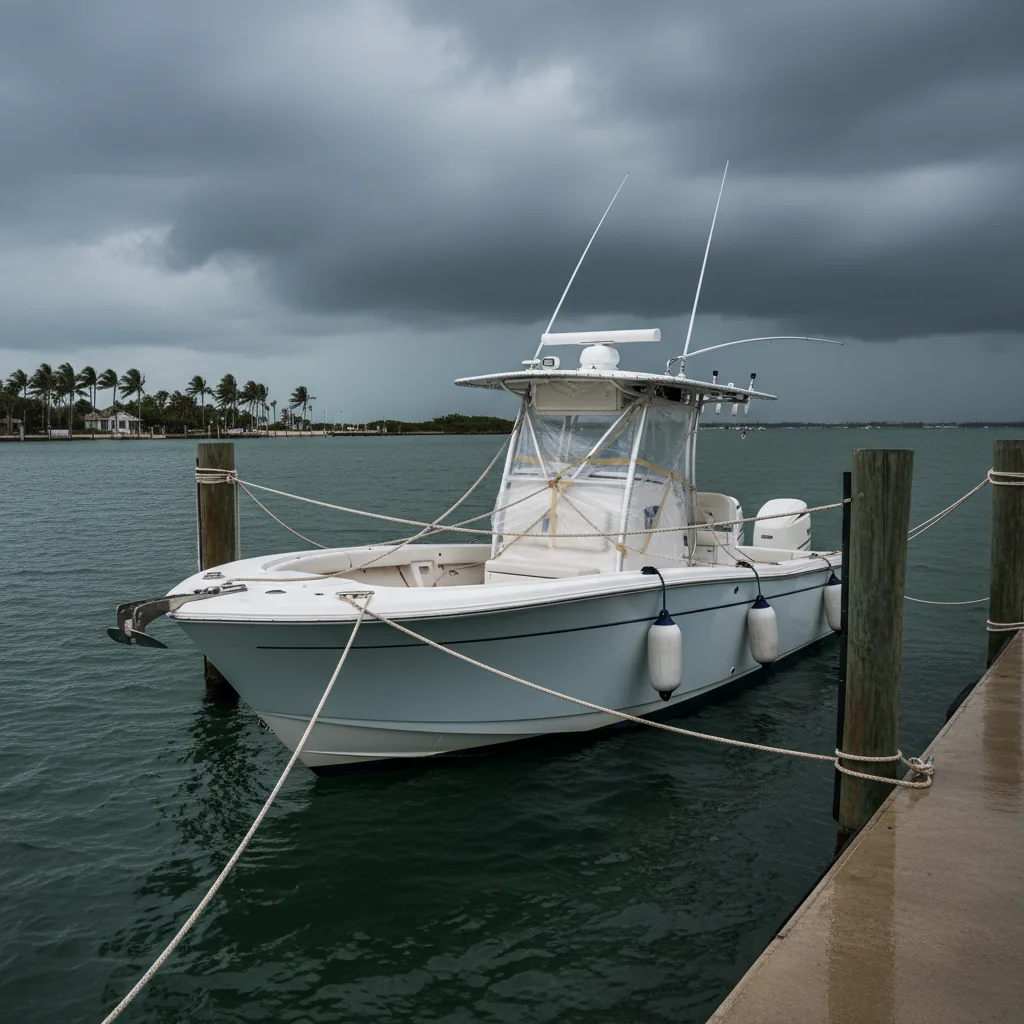
Through hurricane season. Atlantic hurricane season runs June 1 to November 30. Owners in Fort Lauderdale and Miami who leave before a storm can use the geofence and battery readings to judge how the boat is riding it out. A hub with its own backup battery keeps reporting after the boat's power is gone.
For boats that sit for weeks. The longer the gap between visits, the more you need trend data rather than alarms alone. A pump that cycles twice a day for a week and then twelve times a day is telling you something long before the bilge is full.
Marina Monitoring Covers the Dock, Not Your Bilge
Many marinas run their own monitoring, with gate access, dock cameras, security patrols and sometimes power metering at the pedestals. Those systems protect the property and help staff spot obvious trouble. They do not tell anyone that your bilge pump has cycled thirty times since Tuesday or that your house bank is at 11 volts.
Owner-installed monitoring covers what happens aboard. The two work together, and sharing your alert contacts with the dockmaster puts someone nearby on the response list.
Systems Owners Ask About by Name
This is not a ranking, and the right choice depends on your boat and your electronics.
Siren Marine. Siren sells its Connected Boat hubs with wired and wireless sensors for battery, bilge and high water, shore power, temperature, security and GPS geofencing, and it needs a cellular plan. In 2026, Siren announced on Yamaha's newsroom that the Siren 3 Pro will ship standard with Yamaha Digital Electronic Control outboard kits starting in program year 2027. Owners get outboard hours and maintenance reminders in the app.
Garmin OnDeck. The OnDeck Hub reads bilge pumps, battery voltage, shore power, temperature, security and GPS. It can also upload NMEA 2000 data, and each hub requires its own Garmin service plan.
GOST. GOST focuses on security, combining high-water, shore power, motion, door and bilge sensors with satellite tracking and optional onboard cameras.
InteliSea. InteliSea is a hardwired, PLC-based monitoring and control system for larger yachts, closer to a ship's alarm panel than a plug-in hub. It is a different class of project from the cellular systems above.
Installation Basics That Decide Whether Alerts Can Be Trusted
Power draw. The hub draws current around the clock, so it should be wired to a battery that stays charged, not one that is switched off when you leave. Some hubs, Garmin's among them, switch to an internal backup battery when the boat's supply voltage drops. That backup is what keeps alerts coming after the house bank is flat.
Bilge sensor placement. The high-water sensor goes above the float switch's normal activation height but well below anything that would be damaged by water. Set too low, it alarms on every pump run, and set too high, the warning arrives late. The pump-cycle input should come from the pump's own circuit so it counts real runs, which is why monitoring often goes in alongside bilge pump service.
Wiring and fusing. Every new circuit should be properly fused at the power source, run in marine-grade tinned wire and sealed against moisture. Taps into the bilge pump or battery circuits must not change how those circuits work. A boat electrician can tie sensors into existing panels without creating new failure points.
NMEA 2000 integration. Connecting the hub to the backbone needs a free tee, a drop cable and attention to the network's power and terminators. Garmin notes that its hub does not upload NMEA 2000 data while running on its backup battery, so engine data stops when the main batteries die.
An Alert Does Not Stop Water Coming In
A monitoring system tells you about a problem. It does not fix one. A high-water alarm at 2 a.m. still needs someone to reach the boat, find the leak and keep the pumps ahead of it.
Before you rely on a system, decide who responds when you cannot. That might be a dockmaster, a neighbor on the same pier or a service provider, and their number belongs in the alert list. If your pump is already cycling more than it should, the steps in what to do when your yacht's bilge pump runs constantly come before any new electronics.
Test the system after installation and every few months after. Lift a float switch by hand, unplug the shore cord and watch the alerts arrive on your phone. A sensor that has never been tested is an assumption, not protection.
Book a Monitoring Installation Consultation Before the Boat Sits Again
If your boat spends weeks in a slip or on a lift between trips, the right first step is a walk-through. We look at where the bilge float sits, how the pump and charger are wired, and whether your NMEA 2000 network has room for a hub. Then we match the system to what a slip, lift or trailer actually needs watched.
Call (305) 290-2701 or request a monitoring installation consultation online. We serve boats across Miami-Dade, Broward and Palm Beach at the dock, lift or driveway where they live.
Frequently Asked Questions
What is the best boat monitoring system?
The best boat monitoring system is the one that covers the risks your boat actually faces and works with the electronics already aboard. A boat in a wet slip needs bilge, battery and shore power alerts first, plus GPS if it could break free in a storm. A trailered boat mostly needs GPS tracking, and a boat with a Garmin or Yamaha setup may integrate more easily with that brand's system.
Do boat monitoring systems need a subscription?
Usually, yes. Systems that send alerts over a cellular or satellite network need a service plan from the manufacturer, on top of the hardware cost. Wi-Fi-only devices may not, but they stop reporting when the marina network or shore power goes down. Check the manufacturer's current plan page for pricing, since plans change.
Can a boat monitoring system read my engine data?
Yes, on systems that connect to the boat's NMEA 2000 network. Garmin's OnDeck documentation lists engine hours, engine warning indicators and fuel flow among the NMEA 2000 data it can upload. Yamaha says Siren 3 Pro will report outboard hours and maintenance reminders on its Digital Electronic Control kits.
Will a boat monitoring system drain my batteries?
Rarely, when it is wired correctly. The hub draws a small, constant current, and some models switch to a lower-power state when shore power is off. Problems come from wiring it to a battery that is switched off or never charged, so it should feed from a bank that a charger or solar panel keeps topped up.
Is remote boat monitoring worth it for a boat on a lift?
Usually, yes, though the priorities change. A lifted boat is not leaking through its hull fittings, but rain can still fill a bilge with blocked drains, and a lift can fail or the boat can shift in high wind. GPS geofencing, a motion or tilt sensor and battery voltage alerts cover most of those risks.