Report the Loss Fast and Photograph Everything Before Cleanup
Report the damage to your insurer as soon as you can safely reach the boat, and photograph every bit of it before anything is cleaned or moved. Then get a written survey and a repair estimate before you agree to any settlement, because those 2 documents are what you negotiate with. Those three steps protect a boat claim more than anything else you do after a storm.
Nearly every marine policy requires prompt notice of a loss, and prompt means days, not weeks. Call the claims line, get a claim number, and ask when an adjuster will inspect. Write down the date, time, and name of everyone you speak with.
You also have a duty to prevent further damage, so do what safety requires. Pump the bilge if the boat is taking on water, secure loose gear, and cover open hatches. Photograph the boat before and after that emergency work, and keep receipts for anything you buy to do it.
The Photo Checklist That Holds Up With an Adjuster
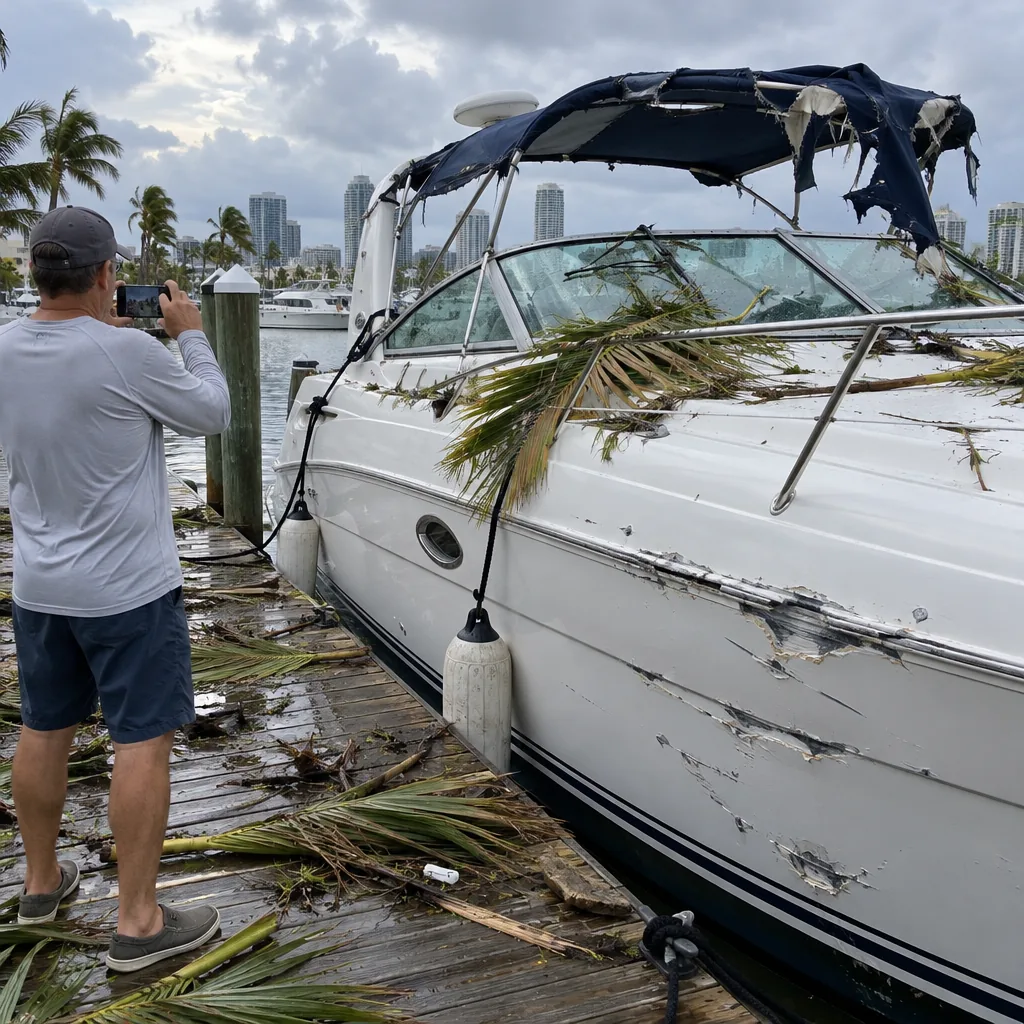
Shoot everything twice, once wide and once close. Start with the full exterior from all four corners, the waterline, and every hull strike with a tape measure in the frame. Then move inside to the cockpit and cabin sole, the bilge, and soaked upholstery. Finish with each electronics unit and engine showing its serial plate, plus anything torn loose from the deck.
A tape measure in the frame turns a photo of a gouge into a measurement an adjuster can price. Close shots of cracks and stress lines in the gelcoat matter too, because damage under the surface often shows up there first. A fiberglass repair estimate is far easier to defend when the photos show size and location clearly.
Keep the original files with their time stamps. Do not crop, filter, or send only compressed copies.
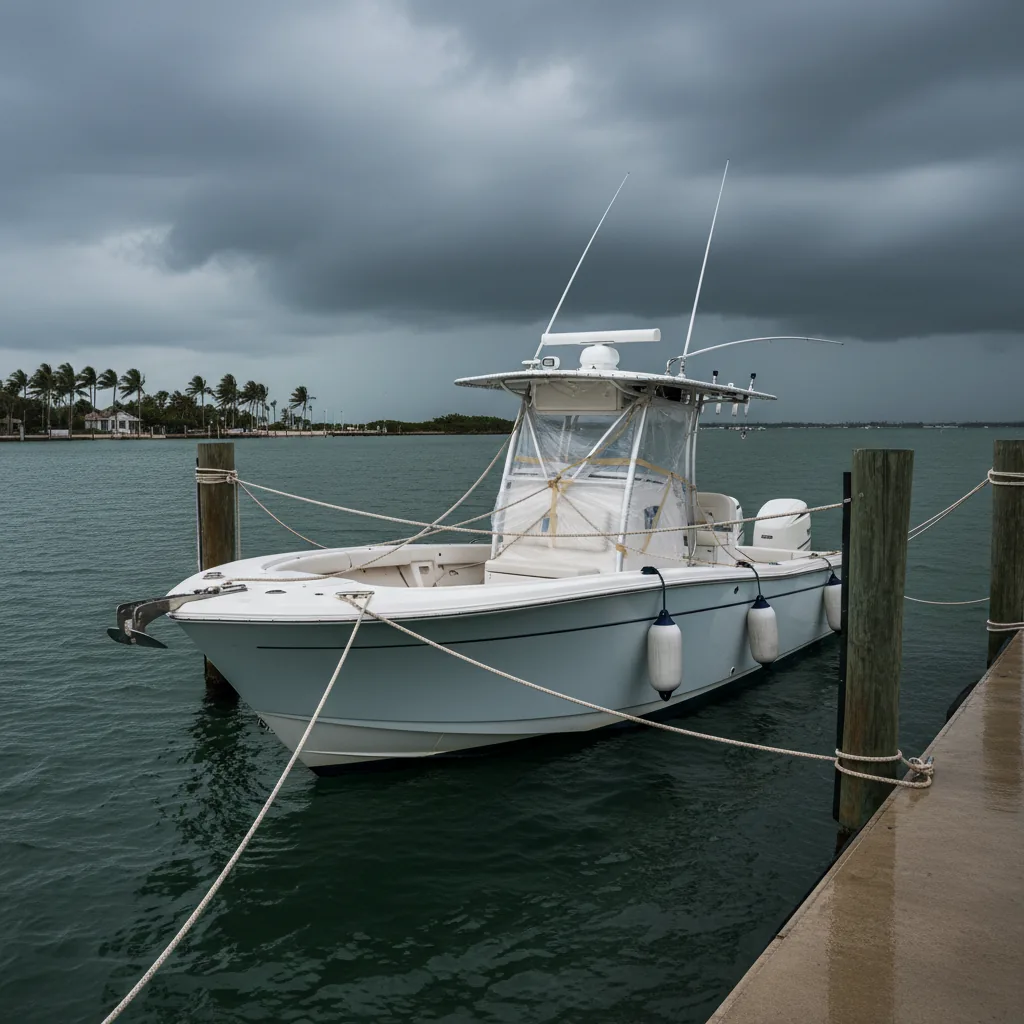
If the boat broke loose, photograph where it ended up and the dock or piling it hit. Pre-storm photos help too. Owners who photographed their boat during boat hurricane prep start the claim with a before-and-after comparison.
Get an Independent Survey Before You Agree to Anything
The insurer's adjuster works for the insurer. On anything beyond minor damage, consider hiring your own accredited marine surveyor, such as a member of SAMS or NAMS, to document the loss independently. A written survey gives you a baseline to compare against the adjuster's findings.
Storm damage often hides below the surface. A surveyor looks for delamination under intact gelcoat, wet deck or hull core, stringer damage, water in fuel tanks, and saltwater in wiring and electronics. None of that shows in a quick walk-around.
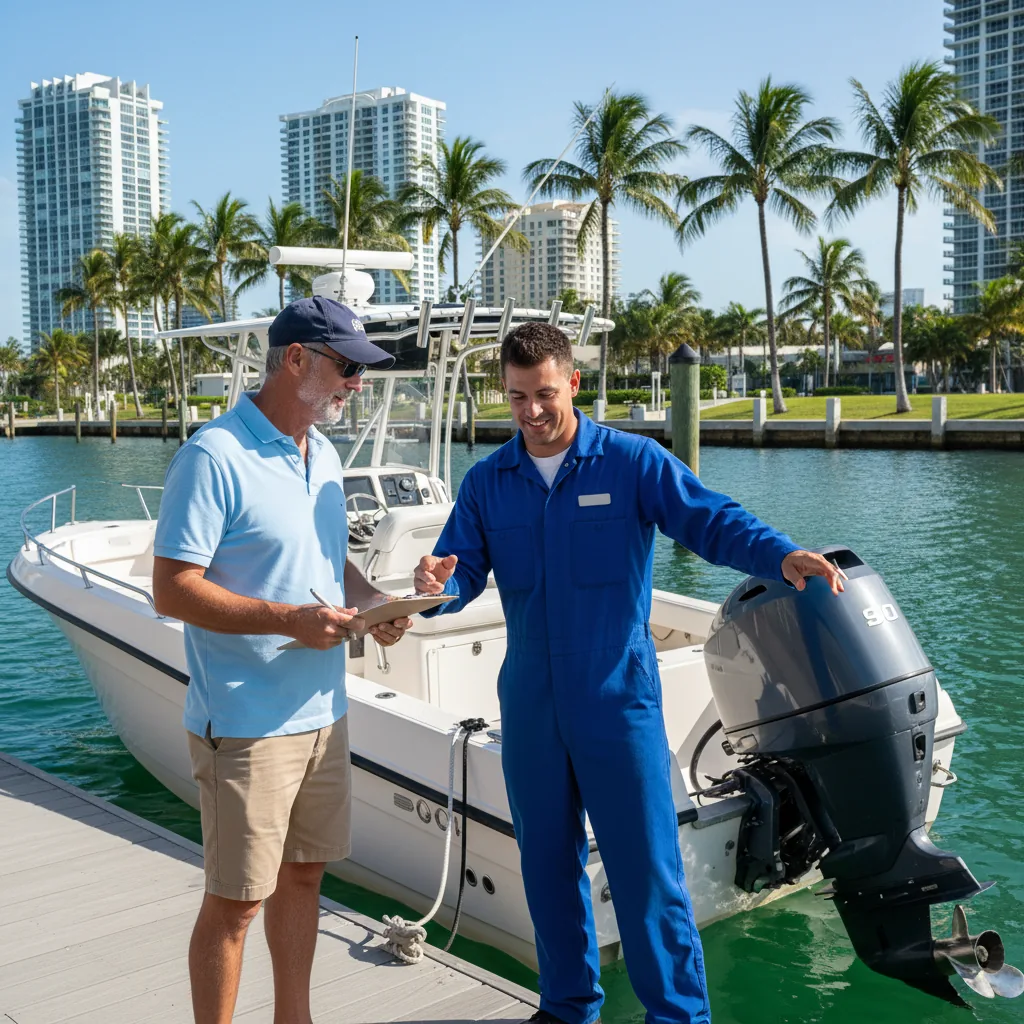
Pair the survey with a mechanical inspection of the engines and electrical system. A boat inspection after a storm should produce a written report with numbered photos and serial numbers, so each damaged item can be tied to evidence.
If the Boat Sank, Broke Loose, or Is Leaking Fuel
A sunken or stranded boat adds steps beyond the claim itself. Call your insurer before you hire anyone to raise or tow it, because many policies cover salvage and wreck removal but want to approve the plan first. Ask in writing what they will cover.
If fuel or oil is leaking into the water, report it. Discharges of oil into navigable waters go to the National Response Center, which the Coast Guard operates. Contain what you safely can with absorbent pads, but do not put yourself at risk around a damaged boat.
A boat left sunk, stranded, or abandoned can also draw attention from the Florida Fish and Wildlife Conservation Commission, which handles derelict vessel cases in state waters. Moving quickly on salvage, and keeping a record of every call and quote, shows you acted responsibly.
Run the engines only after they have been inspected. An engine that sat underwater needs to be pickled or flushed and dried quickly to have any chance of being saved. Starting it with water inside can turn a repairable engine into a total loss.
How Named-Storm Deductibles Usually Work on Boat Policies
Many Florida boat policies carry a separate named-storm or hurricane deductible, and it is often a percentage of the boat's insured value rather than a flat dollar amount. That changes the math. For example, a 5 percent named-storm deductible on a boat insured for $150,000 means the first $7,500 of a covered storm loss is yours.
What triggers that deductible depends on your policy's exact wording. Some tie it to a storm named by the National Weather Service, others to a watch or warning for your area. A storm-related loss outside that window may fall under your regular deductible instead.
Find the deductible and its trigger on your declarations page before you talk numbers with the adjuster. If the wording is unclear, ask your agent or broker to explain it in writing.
Agreed Value, Actual Cash Value, and Repair vs Total Loss
Boat policies generally settle one of two ways. An agreed value policy pays based on a value you and the insurer set when the policy was written. An actual cash value policy pays replacement cost minus depreciation, which on an older boat can be far less than you expect. Your declarations page says which one you have.
On a serious loss, the biggest question is whether the boat gets repaired or declared a total loss. Disagreements often center on components soaked in saltwater, such as an engine that ran underwater or wiring that sat submerged. Ask for a written teardown report on those parts rather than relying on a quick visual check.
Itemized estimates carry weight. A boat restoration estimate that lists parts, labor hours, and the photos behind each line gives you something specific to compare against the insurer's figure.
When a Public Adjuster Makes Sense
A public adjuster is a licensed professional who represents you, not the insurer, in exchange for a percentage of the settlement. They tend to earn their fee on large or disputed claims, such as a contested total loss or a denial over wear and tear. On a simple claim with a cooperative insurer, they may cost more than they add.
Florida licenses public adjusters through the Department of Financial Services, and state law limits their fees. Look up the license before you sign, read the fee terms carefully, and never pay anything up front. Be wary of anyone who pressures you to sign at the dock the day after the storm.
Owners in Key Biscayne and across Miami often find that an independent survey and solid repair estimates resolve the claim without one. Get those documents first, then decide whether you need extra representation.
Keep a Claim File From Day One
Storm claims can take weeks or months, and details fade fast. Start one folder, paper or digital, the day of the storm and put everything in it.
Keep a simple log of every call: the date, the time, who you spoke with, and what they said. Follow up important phone conversations with a short email that confirms what was agreed, so there is a written record. Save every receipt for emergency work, towing, storage, and supplies, since mitigation costs are often reimbursable.
Add a copy of your policy and declarations page, your photo set, the survey, and every estimate. When an adjuster asks for something, send it promptly and note when you sent it. An organized owner with a complete file is much harder to stall than one searching for paperwork every time the phone rings.
How a Repair Estimate Supports Your Claim
A written estimate from a working marine repair shop gives the adjuster a specific number to respond to, instead of an owner's guess. The most useful package has three parts. A damage report with photos, an itemized parts-and-labor estimate, and a teardown report for engine or electrical damage that cannot be seen from outside.
Expect pushback on corrosion. Many policies exclude wear, tear, and gradual deterioration, and saltwater damage can blur that line. A dated report that ties the damage to the storm event, backed by your surveyor's findings, helps separate storm damage from pre-existing wear.
Prevention still costs less than any claim. The Miami boat hurricane prep cost breakdown shows what it takes to keep the next storm from reaching this point.
Schedule a Written Storm Damage Inspection
Once it is safe to reach your boat, call (305) 290-2701 or request a storm damage inspection online. We document the damage with numbered photos and serial numbers, check engines and electrical systems, and give you an itemized written repair estimate you can hand to your adjuster and surveyor. Have your claim number ready when you call so it goes on every page of the report.
Frequently Asked Questions
How soon do I need to report boat storm damage to my insurer?
Always as soon as you safely can. Most marine policies require prompt notice of a loss, and the claim number from that first call ties together every document that follows. Waiting makes it harder to show the damage came from the storm rather than something that happened later.
What is a named-storm deductible on a boat policy?
It's a separate deductible that applies to losses from a named storm, often set as a percentage of the boat's insured value. A 5 percent deductible on a $150,000 boat, for example, is $7,500. The exact percentage and what triggers it are on your declarations page.
Should I hire my own surveyor or rely on the insurance adjuster?
For anything beyond minor damage, an independent surveyor is usually worth it. The adjuster represents the insurer. Your own surveyor documents hidden damage and gives you a written baseline to compare against the insurer's findings.
Can I start cleaning up my boat before the adjuster arrives?
No, only what safety and preventing further damage require, such as pumping the bilge or securing loose gear. Photograph everything before and after, and keep receipts. Do not throw away damaged parts or start repairs until the insurer has inspected or told you in writing to proceed.