The 5-Year Cost Answer for a 30-Foot Boat
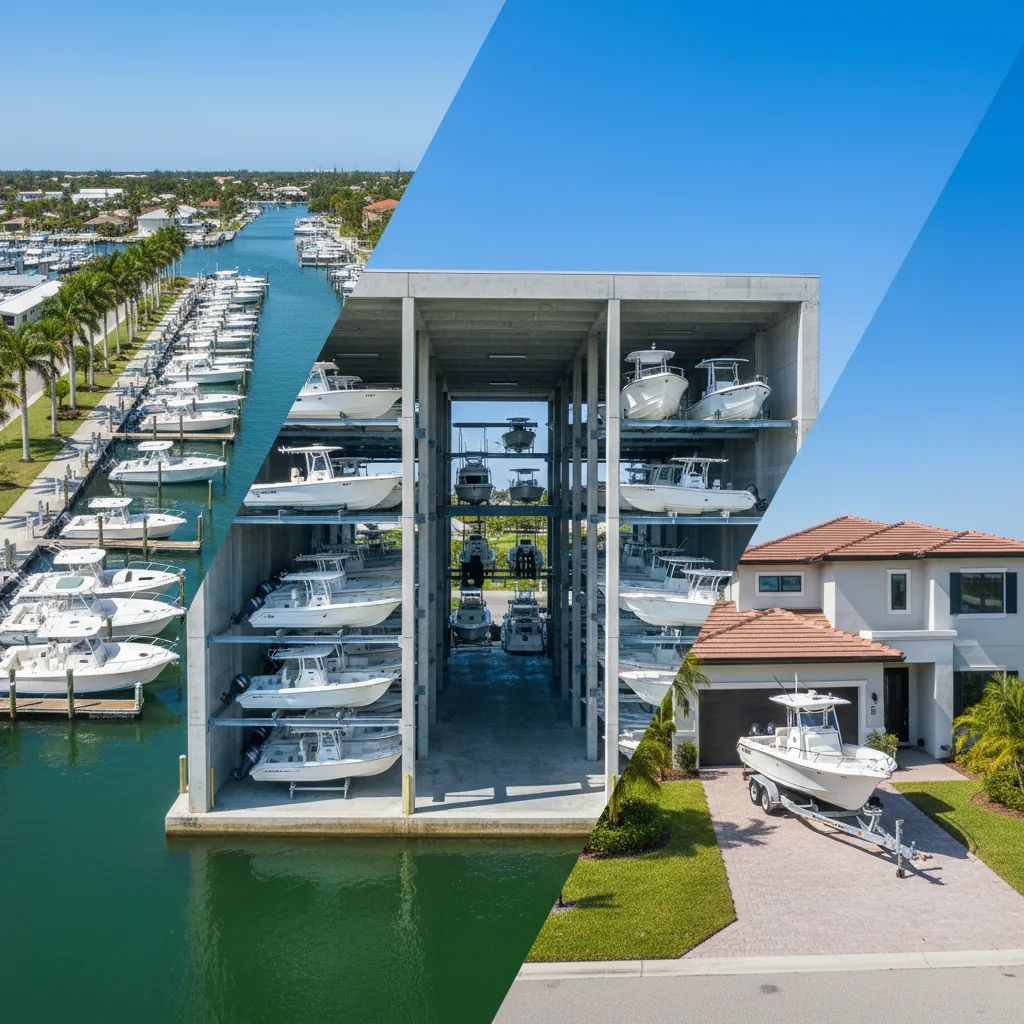
A 30-foot boat in Miami costs roughly $52,800 to $71,400 over 5 years in a wet slip, $34,200 to $48,600 in dry stack, and $9,600 to $18,000 on a trailer with home or lot storage. Those ranges include base storage, launch fees, electric, and the salt-driven service work each option forces on your hull and rigging.
The wet slip number assumes Dinner Key and Coconut Grove pricing of $28 to $38 per foot per month in 2026. Dry stack reflects mid-tier Miami River and Hi-Lift style facilities at $950 to $1,350 per month for a 30-footer. Trailer storage covers a residential driveway plus annual launch ramp fees at Pelican Harbor and Crandon Park.
Those numbers are the headline, but the cost breakdown changes when you factor in how often you actually run the boat. A weekend-only owner trailering twice a month pays almost nothing in launch fees. A daily fisherman in dry stack hits the 15 to 20 launch per month soft cap most facilities enforce, and the math starts to favor a wet slip again.
Miami Boat Storage Cost Comparison Table
The table below uses 2026 Miami-Dade and Broward pricing for a 30-foot center console with a single outboard.
| Cost or Factor | Wet Slip | Dry Stack | Trailer |
|---|---|---|---|
| Monthly storage (30 ft) | $840-$1,140 | $950-$1,350 | $0-$185 |
| Annual storage total | $10,080-$13,680 | $11,400-$16,200 | $0-$2,220 |
| 5-year storage subtotal | $50,400-$68,400 | $57,000-$81,000 | $0-$11,100 |
| Launch or splash fees | Included | $0-$15 per launch, capped | $15-$25 per ramp visit |
| Security level | Gated dock, cameras | Indoor or covered rack | Owner responsibility |
| Hurricane protection | Exposed to surge | Best of the three | Movable inland |
| Access | 24/7 unlimited | 15-20 launches per month | Limited by ramp hours |
| Bottom paint frequency | Every 12-18 months | Every 24-36 months | Not required |
| Annual insurance impact | Highest | 5-12% discount | 15-25% discount |
| Estimated 5-year all-in | $52,800-$71,400 | $34,200-$48,600 | $9,600-$18,000 |
The all-in row folds in storage, launch costs, and the recurring service work each environment causes. It excludes engine repairs, fuel, and registration since those are similar across all three setups.
Wet Slip Costs: What You Actually Pay in Miami
Wet slip rates inside Miami-Dade have climbed every year since 2022. Dinner Key Marina wet slips averaged $28 to $38 per foot per month in 2026, with covered slips and amenity-heavy spots like Sunset Harbour pushing past $42. Marine Stadium Marina and Black Point Park sit lower at $22 to $26, but waiting lists for annual slips run 18 to 36 months.
That $840 to $1,140 monthly range for a 30-footer is just the base. Add $45 to $95 in electric, $25 to $50 for live-aboard or pump-out access, and an annual liveaboard surcharge if applicable. A boat sitting in salt water 24/7 also needs boat bottom painting every 12 to 18 months, which runs $25 to $45 per foot for a quality ablative system.
The hidden line item is marine electrical corrosion. Shore power connections, bonding wires, and through-hull fittings degrade faster in wet slip use than any other storage mode. Owners in Miami wet slips typically replace shore power inlets every 4 to 6 years and chase galvanic corrosion on outboard brackets every 100 to 150 engine hours.
Dry Stack Storage: The Miami Middle Ground
Dry stack covers most of the gap between wet slip convenience and trailer savings. Hi-Lift Marina on the Miami River, Sundance Marine, and similar facilities along Biscayne Bay charged $950 to $1,350 per month for 30-foot boats in 2026. Boats up to 36 feet often fit in standard racks, but anything wider than 10 feet of beam or taller than 12 feet bumps you out of the program.
Launch fees are usually included up to a cap. Most Miami facilities allow 15 to 20 splashes per month before charging $15 to $30 per extra launch. That cap rarely matters for weekend fishermen but bites hard for charter operators or daily divers.
The service math improves significantly. Boats stored dry and rinsed after each use see bottom paint stretched to 24 to 36 months and skip the slow salt soak that ages outboard powerheads. Owners running 100-hour boat service intervals often report longer impeller life and cleaner cooling passages compared to wet slip boats run the same hours.
Hurricane season is where dry stack earns its premium. Covered or enclosed racks at facilities in Fort Lauderdale and Miami pulled boats off the water for the 2024 named storms, and insurance carriers reflect that with 5 to 12% premium discounts versus wet slip equivalents.
Trailer Storage: Lowest Cost, Highest Effort
Trailer storage wins on raw dollars and nothing else. A driveway-stored 30-footer pays $0 in storage, and a fenced outdoor lot in Homestead or West Kendall runs $85 to $185 per month. Launch fees at Pelican Harbor, Crandon Park, and Black Point are $15 to $25 per visit, or $150 to $325 for an annual decal.
The boat itself benefits from dry storage. No bottom paint, minimal galvanic corrosion, and lower UV exposure if you cover it. Gelcoat oxidation slows, vinyl lasts longer, and the outboard sees no salt soak between trips. Insurance carriers commonly discount trailered boats 15 to 25% versus wet slip equivalents.
The cost reappears in trailer wear and maintenance. Salt dunkings at the ramp eat axles, brakes, and bearings. Plan on bearing repacks every 12 months, brake actuator service every 24 months, and a full axle inspection at year 3. A neglected trailer fails on I-95 at the worst possible time.
Trailering also caps your boating window. Friday afternoon ramp lines at Crandon during stone crab season run 90 minutes. Sunday returns at Pelican Harbor stretch past 6 PM in the summer. Owners who value spontaneity often migrate to dry stack after one busy season of ramp queues.
When Each Option Wins: Decision Framework
Use the framework below to match your real-world boating pattern to the right storage mode. The wrong choice can cost $20,000 over five years for the same boat.
Wet slip wins when any of these apply:
- You run the boat 80 or more days a year and value 24/7 dawn departures
- Your boat is over 36 feet
- You live aboard part-time
- You run a charter or fishing business
- You keep the boat in the water for offshore tournament prep
Dry stack wins when these conditions match:
- You run the boat 30 to 80 days a year and want it clean every time
- You want measurable hurricane protection and insurance discounts
- Your boat fits standard rack dimensions, typically under 36 feet
- You want longer intervals between bottom paint and electrical service
- You hate scrubbing slime and barnacles off the hull
Trailer storage wins when:
- You run the boat under 30 days a year, mostly weekends
- You travel to the Keys, the Everglades, or out-of-state fishing trips
- You have driveway or affordable lot space within a reasonable tow
- You want maximum resale value through minimal water exposure
- You enjoy the maintenance ritual and tow your own rig
Owners in Key Biscayne with bayfront access often default to wet slips for convenience, while Coral Gables and Pinecrest owners frequently choose dry stack for the security and storm protection.
Service Costs That Change With Storage Mode
The storage decision drives the service budget more than most owners realize. A wet slip boat needs mobile marine mechanics for routine work because hauling the boat for every service multiplies the cost. Dockside service calls in Miami average $145 to $185 per hour in 2026 plus a $65 to $95 trip charge.
Dry stack boats get launched once, serviced, and returned to the rack. That workflow is faster and cheaper for engine flushes, fuel system service, and electronics troubleshooting. Trailered boats get the best of both worlds for service. You tow to the shop or have a mobile tech come to the driveway.
Across five years on the same 30-footer, total service spend typically lands around $14,000 to $19,000 for wet slip boats, $9,000 to $13,000 for dry stack, and $6,500 to $10,000 for trailered boats.
Compare Your Storage Total Before You Commit
Storage decisions lock in five-figure costs and a service pattern you will live with for years. Before you sign at Dinner Key, put a deposit on a dry stack rack, or buy a tandem trailer, get a real apples-to-apples breakdown for your specific boat, engine hours, and usage pattern. The $20,000 swing between options across 5 years is bigger than most boat owners ever budget for.
Call Boat Repair Miami at (305) 290-2701 or request a storage-vs-service cost breakdown tailored to your boat. We will pull realistic service intervals for each storage mode and show you where the dollars actually land over a 5-year ownership window.
Frequently Asked Questions
What is the cheapest way to store a 30-foot boat in Miami?
Trailer storage on your own property is the cheapest at $0 per month for storage, plus $15 to $25 per launch at public ramps. Annual ramp decals run $150 to $325. Total 5-year cost lands between $9,600 and $18,000 including trailer maintenance and ramp fees.
How much does dry stack storage cost in Miami in 2026?
Dry stack for a 30-foot boat at Miami River and Biscayne Bay facilities costs $950 to $1,350 per month in 2026. Most facilities include 15 to 20 launches per month with extra launches charged at $15 to $30 each. Annual total runs $11,400 to $16,200 before service costs.
Do wet slip boats really need bottom paint every year?
Most Miami wet slip boats need bottom paint every 12 to 18 months because warm Biscayne Bay water grows barnacles and slime fast. Quality ablative paint costs $25 to $45 per foot installed. Dry stack and trailered boats often stretch paint intervals to 24 to 36 months or skip bottom paint entirely.
Does dry stack storage lower my boat insurance?
Yes, most marine insurance carriers discount dry stack stored boats 5 to 12% versus wet slip equivalents. The discount reflects lower theft risk, better hurricane protection, and reduced corrosion claims. Trailered boats often see 15 to 25% discounts.
How do launch fees affect total Miami boat storage cost?
Launch fees can swing total cost by $1,500 to $4,000 over 5 years. Wet slips include unlimited launches. Dry stack typically caps free launches at 15 to 20 per month before charging $15 to $30 each. Trailer owners pay $15 to $25 per ramp visit or buy annual decals for $150 to $325.