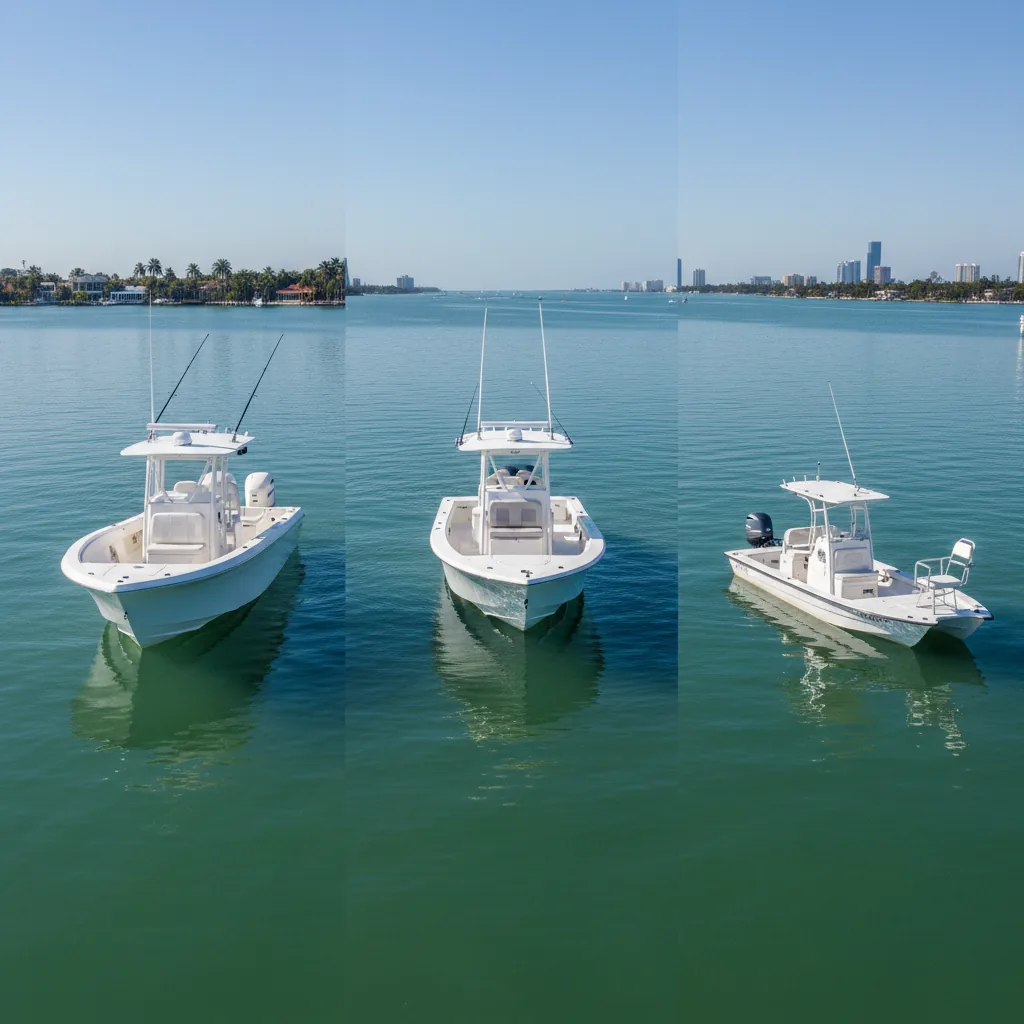
The Three Hulls at a Glance
For Miami fishing, the choice between a center console, a bay boat, and a flats skiff comes down to where you fish and how rough the water gets. Below is the breakdown by hull type with real cost and capability data, including draft, horsepower, fuel burn, and annual maintenance numbers from the fleet we service from Government Cut down to Florida Bay.
South Florida anglers tend to argue this question at every dock from Crandon Marina to Black Point, and the answer almost always depends on one variable: water depth where you actually fish. A 26-foot center console that crushes a run to Bimini will drag bottom on the Biscayne Bay flats, and a 17-foot Hells Bay skiff that poles tarpon in eight inches of water becomes a wet, terrifying ride once you cross past the channel markers at Key Biscayne.
The center console is the do-everything offshore platform with deep V hulls, twin or triple outboards, and the range to fish the Gulf Stream. The bay boat is the hybrid: shallow enough to chase tailing reds in two feet of water, dry enough to handle a four-foot Atlantic chop on calm summer mornings. The flats skiff is a specialist tool, built for stealth in less than a foot of water with poling platforms, push poles, and outboards that sip fuel.
Center Console vs Bay Boat vs Flats Skiff: Full Comparison
| Spec | Center Console | Bay Boat | Flats Skiff |
|---|---|---|---|
| Typical length | 23-39 ft | 20-24 ft | 16-18 ft |
| Draft (engine up) | 16-22 in | 10-14 in | 5-9 in |
| Max horsepower | 300-1,800 HP | 200-450 HP | 70-150 HP |
| Fuel burn at cruise | 14-28 GPH | 9-14 GPH | 3-6 GPH |
| Ideal waters | Stiltsville edge, Government Cut, offshore Bimini, wrecks | Biscayne Bay, channel edges, nearshore reefs | Biscayne flats, Florida Bay backcountry, mangroves |
| Seas tolerance | 4-6 feet | 2-3 feet | Under 1 foot |
| Range at cruise | 250-400 mi | 180-250 mi | 100-150 mi |
| Top speed | 50-75 MPH | 45-60 MPH | 38-52 MPH |
| Price range new | $180K-$1.2M | $85K-$250K | $45K-$120K |
| Price range used (5 yr) | $95K-$600K | $50K-$145K | $28K-$75K |
| Annual service cost | $3,400-$7,800 | $1,800-$3,200 | $900-$1,800 |
Those service numbers assume around 80 to 120 engine hours per year with normal Miami salt exposure. Boats that sit at a wet slip year round in Government Cut current will run higher because of accelerated corrosion on lower units and trim tabs.
When Each Hull Wins in Miami
The decision rarely comes down to one boat being better. It comes down to matching the hull to a real fishing plan.
Center console wins: offshore to Bimini, Stiltsville edge, wreck fishing. If your regular run is Government Cut out to the 200-foot curve, or you cross to Bimini three weekends a year, a center console in the 28 to 33 foot range is the right tool. Twin 350s give you a get-home margin if one engine dies 40 miles offshore. Reliability matters here, which is exactly why OEM diagnostics and alarm code reading matters on these boats.
Bay boat wins: Biscayne Bay, channel edges, calm offshore days. A 22-foot bay boat with a 250 HP outboard will pole quietly enough on the flats off Elliott Key to get shots at bonefish, then turn around and fish a nearshore wreck off Miami on a flat morning. The trade-off is real: in a sloppy three-foot beam sea, you will get wet and rattled.
Flats skiff wins: Biscayne flats, Florida Bay, mangrove backcountry. If your dream day is poling a redfish on a falling tide in 11 inches of water, nothing else works. The catch is that the rest of Miami is closed to you. Crossing Biscayne Bay in a 20-knot east wind in a flats skiff is a punishing experience.
In practice, a lot of serious anglers run two boats: a flats skiff for the shallow stuff and a 26 to 32 foot center console for offshore. The bay boat occupies the middle ground for owners who want one boat that does most things adequately.
Maintenance Reality by Hull Type
The annual service numbers in the table assume the boat is being maintained correctly.
Center consoles with twin or triple outboards need rigorous interval-based service. Every 100 hours: oil, filters, gear lube, spark plugs, water pump impellers. Every 300 hours: a full 300-hour service with timing belt replacement, fuel system pressure testing, and full powerhead inspection. Skip these and you will spend the savings on a $14,000 powerhead at year five.
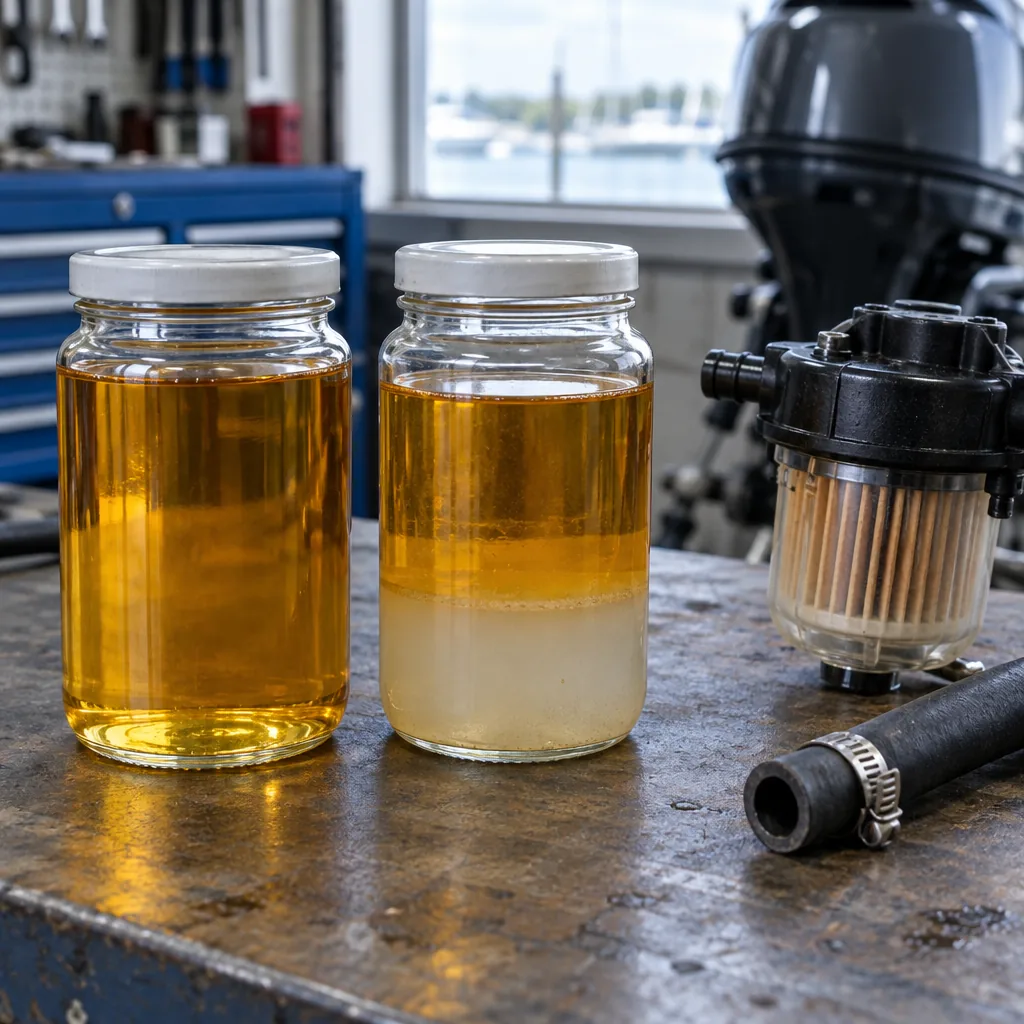
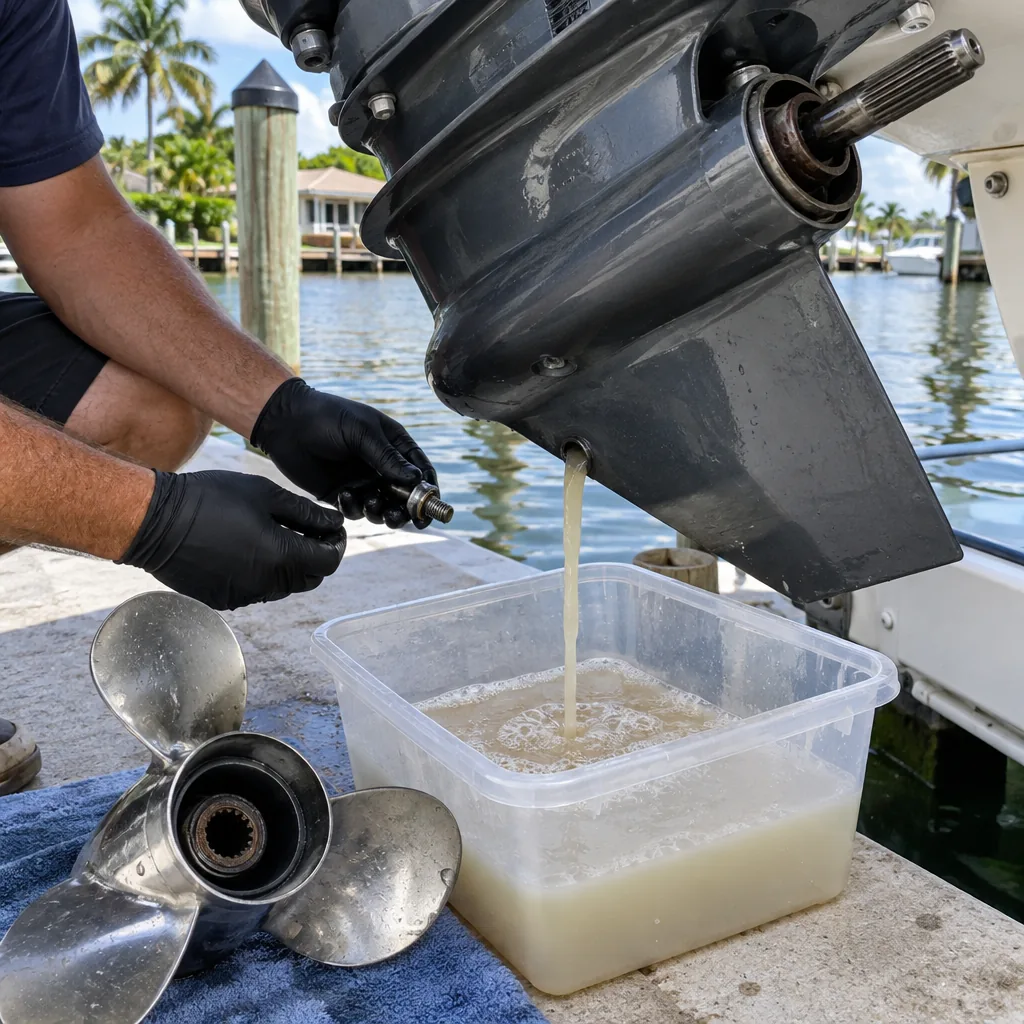
Bay boats often have one outboard doing all the work, and that single engine is the failure point. Annual outboard service with a careful look at lower unit oil for water intrusion is non-negotiable. Trim tab actuators, jack plates, and live well pumps are the secondary failure points we replace constantly.
Flats skiffs run small, simple outboards that are often the most neglected category. Because the engine starts every time and the boat is light, owners skip service intervals. Then the impeller fails three miles back in the mangroves on a hot afternoon. The fix is simple: cheap insurance every 100 hours, plus an annual check on the fuel system because ethanol gas sitting in a small tank causes the worst problems.
Pre-Purchase Survey Priorities by Hull
Before you buy any of these boats used, a proper pre-purchase inspection is the difference between a great deal and a five-figure mistake.
Center consoles need a full compression check across all cylinders, engine hour verification through OEM diagnostics, a stringer and transom moisture survey, and a fuel tank inspection because aluminum tanks in older boats are a common failure. Bay boats need a careful look at the deck core for soft spots and a hull check below the waterline for prior grounding repairs. Flats skiffs need the cap-to-hull seam inspected for stress cracks and the foam coring checked for water intrusion.
Our marine inspection service covers all three categories, and we will tell you what we find without a sugar coating. We have walked plenty of buyers away from boats that looked great in the listing photos.
Match Your Hull to the Fishing You Actually Do
Whether you are deciding between hulls or already have one picked out, get a real marine technician on it before the money changes hands. Call (305) 290-2701 or book a hull-type pre-purchase inspection and we will meet you at the seller dock anywhere from Homestead to Pompano. You get a written report covering powerplant condition, hull integrity, and any deferred maintenance, plus a frank conversation about whether the boat matches the fishing you actually plan to do.
Frequently Asked Questions
What is the shallowest draft hull I can buy for Biscayne Bay flats fishing?
A technical poling skiff drafts 5 to 9 inches with the engine trimmed up, which lets you fish water under a foot deep. Bay boats draft 10 to 14 inches and are not true flats boats despite the name.
Can a bay boat safely run to Bimini from Miami?
Only on a flat calm forecast under two feet, and only if you carry full safety gear, a working VHF, and a backup propulsion plan. A center console with twin outboards is the right tool for that 48 nautical mile crossing.
How much does annual service cost for a 28-foot center console with twin 300s?
Expect $3,400 to $5,800 per year for full 100-hour and annual service across both engines, assuming around 100 hours of use. Add roughly $1,800 every third year for the 300-hour interval.
Are flats skiffs more reliable than larger boats?
They have fewer systems to fail, but the single small outboard becomes a critical failure point. Skip service intervals on a skiff and you will get stranded miles into the backcountry with no easy tow option.
What hull is best for fishing Stiltsville and the channel edges?
A bay boat in the 22 to 24 foot range is the sweet spot for fishing Stiltsville structure and the Biscayne Channel edges, with enough seas tolerance for the bay chop and shallow enough draft to work the flats nearby.