What the 47-Point Survey Covers
A full marine survey on a 30-foot used boat takes 4-6 hours and runs $20-$28 per foot in Miami. The surveyor checks 47 specific items across 6 systems. Below is exactly what they are looking at and what fails most often on Florida boats.
Surveys break into two flavors. A condition and valuation survey is what insurance companies and lenders require. A pre-purchase survey adds mechanical sea trials and is what smart buyers order before signing anything. Buyers who skip the survey on a used boat in South Florida find an average of $4,200 in undisclosed defects within the first 90 days of ownership, according to underwriting data from regional marine insurers.
Hull and Structure (Items 1-10)
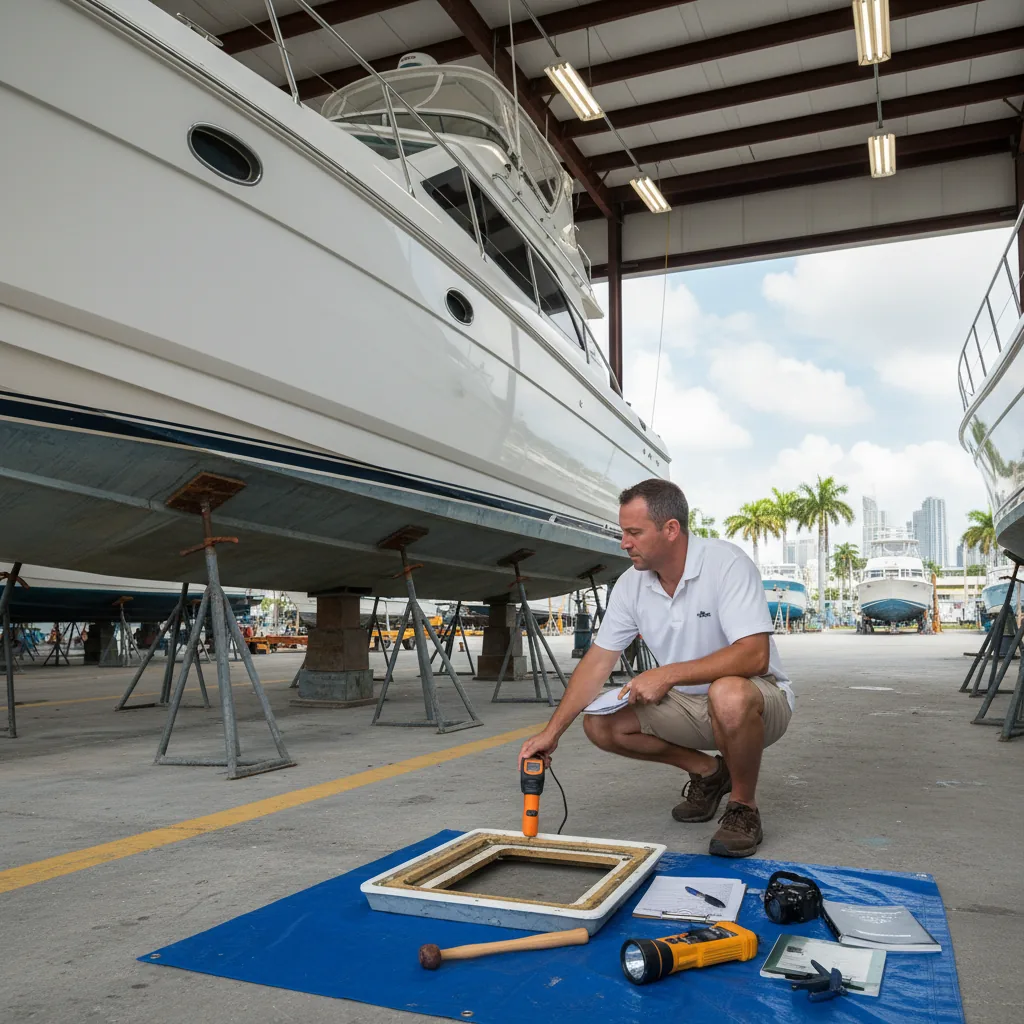
The hull is checked with a phenolic hammer, a moisture meter, and a flashlight. Roughly 35% of pre-purchase surveys in Miami find moisture intrusion in the deck core, and another 18% find prior repairs that were not disclosed.
1. Hull moisture readings. Readings above 20% indicate water saturation and signal blister risk or core rot.
2. Hull blisters. Florida boats stored in the water year-round show blistering on roughly 22% of fiberglass hulls over 10 years old.
3. Hammer sounding. A light tap test reveals delamination as a dull thud versus a sharp ring.
4. Keel and strake condition. Surveyors look for grounding damage, stress cracks, and prior repairs hidden under fresh bottom paint.
5. Deck core moisture. Soft decks around hardware are the number one finding on boats over 15 years old.
6. Transom integrity. Cracked, soft, or repaired transoms can cost $6,000 to $14,000 to remediate.
7. Stringer condition. Rotted stringers are a deal-killer because repair often exceeds market value.
8. Bulkhead attachment. Tabbing where bulkheads bond to the hull is checked for cracks or separation.
9. Through-hull fittings. Each is counted, verified for bronze versus brass, and tested for valve function.
10. Rudder and shaft. Play, alignment, and seal condition are checked. For hull and gelcoat findings, our fiberglass repair and gelcoat repair teams handle remediation.
Engine and Propulsion (Items 11-19)
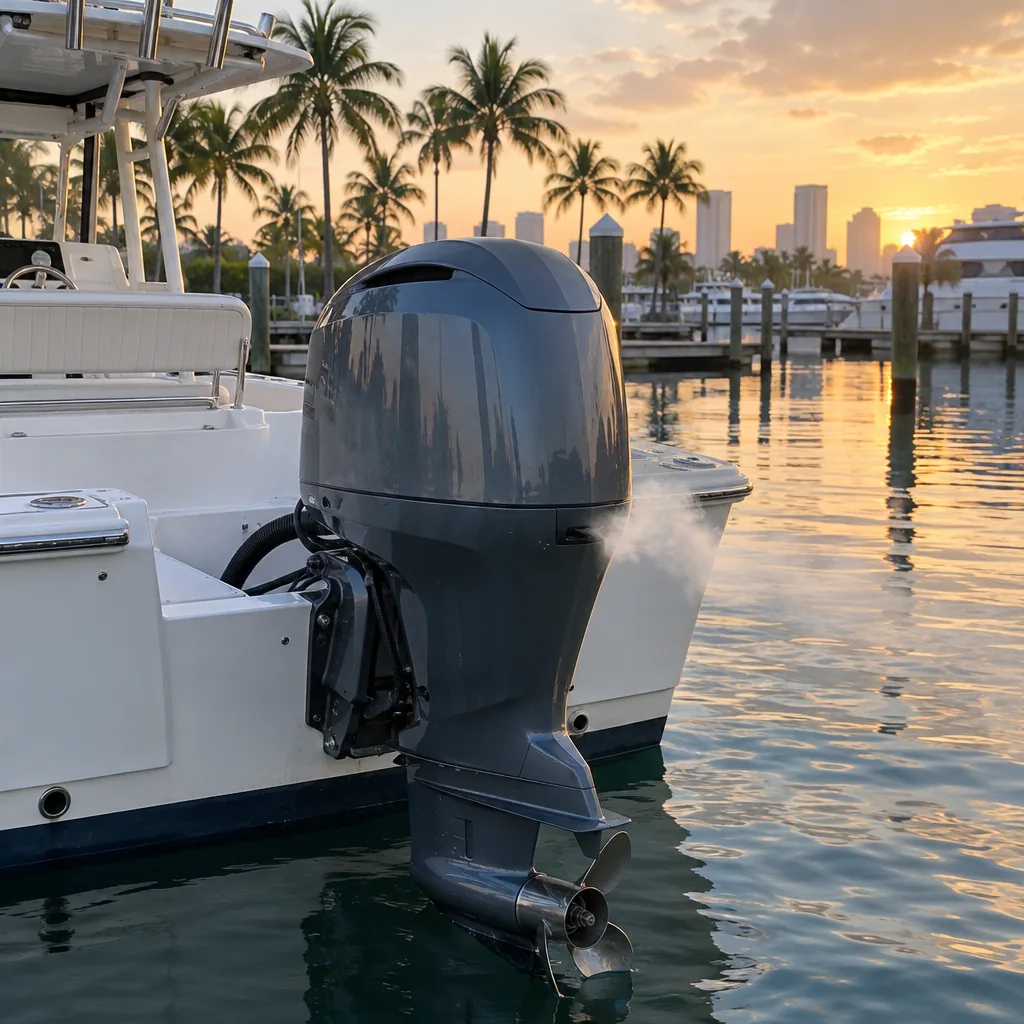
Mechanical inspection is where most condition surveys stop short. A proper pre-purchase survey includes a hot compression test, oil analysis, and a sea trial under load. Roughly 40% of used outboards over 8 years old in Miami show at least one compression cylinder more than 15% below spec.
11. Compression test. Each cylinder is tested hot. Variance over 15% predicts a top-end rebuild within 200 hours.
12. Oil sample analysis. Lab analysis detects metal wear particles, fuel dilution, and coolant intrusion before symptoms appear.
13. Fuel system inspection. Phase separation in ethanol fuel destroys 12% of carbureted outboards in Miami every year.
14. Cooling system flow. A weak telltale on sea trial is a $400 to $900 repair waiting to happen.
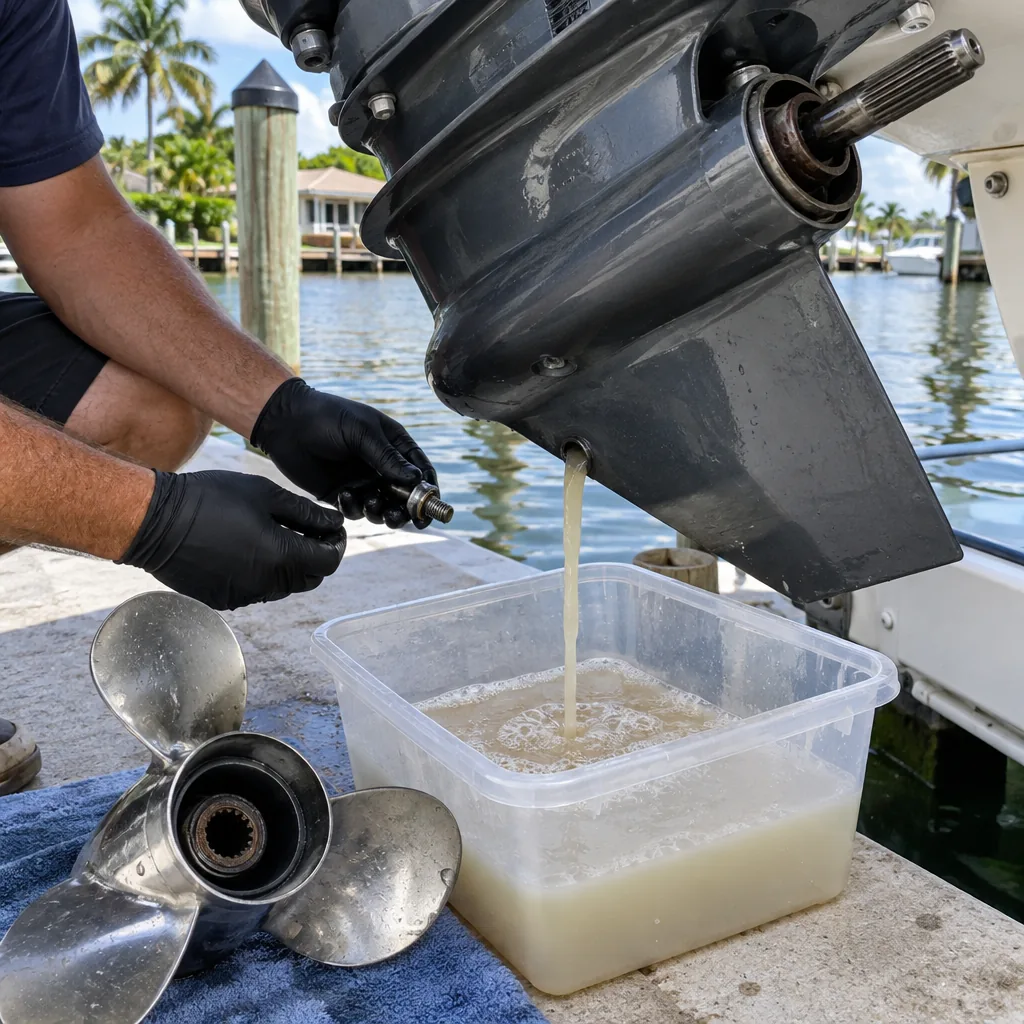
15. Lower unit oil condition. Milky oil means water intrusion and a failing seal, leading to lower unit repair averaging $1,800 to $4,500.
16. Propeller and shaft condition. Bent shafts cause vibration that destroys bearings within a season.
17. Engine mounts and alignment. Soft or cracked mounts cause vibration and accelerated bearing wear.
18. Exhaust system. Failed risers are the most common cause of catastrophic saltwater inboard failure.
19. ECM and alarm code scan. Stored fault codes are pulled with manufacturer diagnostic tools through our OEM diagnostics process.
Electrical and Electronics (Items 20-27)
Electrical issues account for roughly 31% of all boat fires and are the second most common insurance claim category in Florida.
20. Battery condition and age. Batteries over 4 years old in Florida heat are flagged regardless of test results.
21. Battery switch and isolation. ABYC standards require proper switching with the battery disconnect within reach.
22. DC panel and wiring. Marine-grade tinned copper is required; standard automotive wire is an automatic deficiency.
23. AC shore power system. Reverse polarity is a critical safety hazard found on roughly 9% of older boats.
24. Bonding system. Missing or corroded bonding accelerates underwater metal failure.
25. Navigation lights. Non-functioning lights are a Coast Guard violation and fail insurance survey.
26. Bilge pumps and switches. Florida boats need redundant pumping because summer thunderstorms drop two inches of rain per hour.
27. Marine electronics function. GPS, radar, VHF, sonar, and autopilot are powered up and tested. Repairs and upgrades fall under marine electronics installation.
Plumbing, Tankage, Safety, and Compliance (Items 28-41)
Aluminum fuel tanks in Florida have an average service life of 18 to 22 years before pinhole leaks appear at the tank-foam interface.
28. Fuel tank inspection. Stained foam, fuel odor, or bottom corrosion signal $4,000 to $9,000 tank replacement.
29. Fuel fill and vent. USCG Type A1-15 hose is required and must be under 10 years old for insurance compliance.
30. Freshwater system. Pump operation, accumulator function, and hose condition are tested.
31. Holding tank and head. The marine sanitation device must be Coast Guard compliant.
32. Hose clamps. Every below-waterline hose requires double stainless clamps. Single clamps are an automatic survey deficiency.
33. Seacocks and valves. Each seacock is operated through full range. Frozen valves cannot be closed in an emergency.
34. Bilge cleanliness. Heavy oil, fuel, or biological growth falls under marine plumbing remediation.
35-41. Safety and compliance. Life jackets, fire extinguishers (most common compliance failure), visual distress signals (42-month expiration), sound signaling device, CO detectors, anchor and ground tackle, and HIN verification against title. Issues at this stage often surface during a formal pre-delivery inspection.
Cosmetic and Interior (Items 42-47)
The final section addresses condition items that affect value rather than safety. These findings rarely kill deals but drive negotiation.
42. Gelcoat and paint condition. Heavy oxidation reduces resale by 8 to 12%.
43. Canvas and upholstery. Bimini, enclosures, and seating are inspected for UV damage, mildew, and stitching failure.
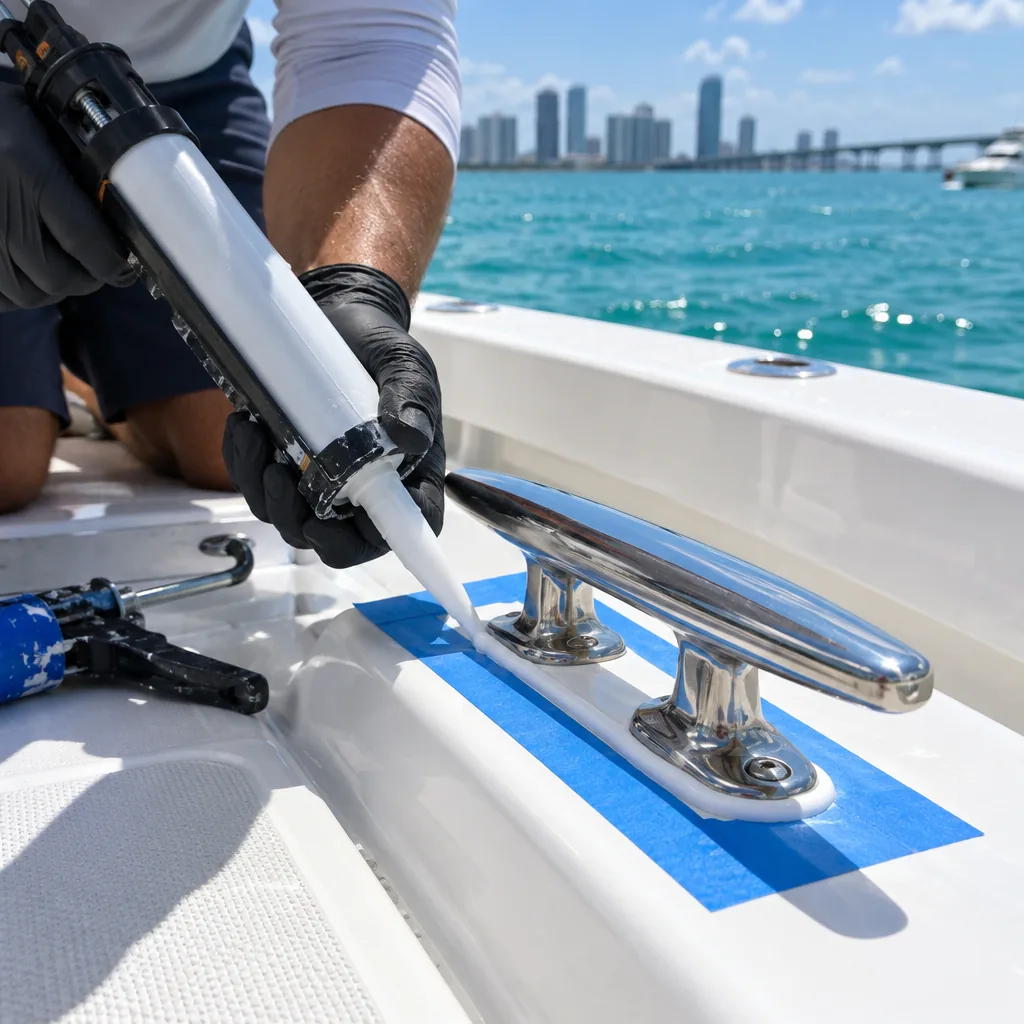
44. Hardware condition. Loose hardware indicates either core damage or deferred maintenance.
45. Galley appliances. Marine refrigeration failure is common after 10 years.
46. Trailer condition. Trailer issues are addressed under boat trailer repair.
47. Overall presentation. The surveyor's final note is a subjective assessment of how the boat has been kept.
Schedule Your Pre-Purchase Mechanical Inspection
A standalone marine survey covers structure and compliance, but the mechanical side determines whether the boat is actually worth buying. Our mobile mechanics serve buyers across Miami and Fort Lauderdale with compression testing, oil analysis, ECM scans, and sea trial diagnostics that complement what your surveyor delivers. Call (305) 290-2701 or request a pre-purchase mechanical inspection before you sign closing paperwork.
Frequently Asked Questions
How long does a 47-point marine survey take?
A full pre-purchase survey on a 30-foot boat takes 4 to 6 hours including haul-out and sea trial. Larger vessels can run two full days. The written report typically arrives 3 to 5 business days after the inspection.
What does a marine survey cost in Miami?
Pre-purchase surveys run $20 to $28 per foot in Miami, so a 30-foot boat costs roughly $600 to $850. Haul-out fees, sea trial fuel, and mechanical inspection add $400 to $1,200 depending on scope.
Is a marine survey required by insurance?
Yes. Almost every Florida marine insurance carrier requires a condition and valuation survey for boats over 20 years old or valued over $75,000. Most policies still require survey at renewal every 5 years.
Should the buyer or seller hire the surveyor?
The buyer always hires and pays for the survey. Hiring an independent surveyor with no relationship to the seller or broker is the entire point. Expect to pay at the time of inspection regardless of whether the sale closes.
Do I need a separate mechanical inspection?
Standard surveys cover engine condition visually and through brief operation, but a mechanical inspection adds compression testing, oil analysis, ECM scans, and detailed sea trial diagnostics. On any boat over $30,000, the added mechanical inspection typically pays for itself in negotiation leverage.