What the RPM Drop Is Actually Telling You
On a healthy boat, the tachometer climbs with the throttle and stays there. Push forward, RPM rises. Hold steady, RPM holds steady.
When you push the throttle to cruise and RPM climbs for a second and then slides back on its own, the boat is telling you the engine is making less power than the prop is asking for. The engine is in a fight it cannot win. Something is starving it.
Either the engine cannot get enough fuel, enough air, or enough cooling water to burn that fuel cleanly.
That same symptom sometimes shows up as a surge, where RPM hunts up and down in a rhythm. Other times the boat simply refuses to come onto plane and sits bow-high and sluggish. All three are variations of the same story: load is exceeding available power.
The good news is the cause is usually one of four systems. You can narrow it down in 20 minutes of structured checks instead of guessing and throwing parts at the boat.
Fuel Delivery Is the Usual Culprit
A clogged fuel filter is the most common cause of RPM drop under load in South Florida. Ethanol-blended pump gas pulls water from humid Miami air. The water plus fuel gunk slowly loads the primary and secondary filters.
At idle, demand is low and fuel flows fine. Under load, the pump cannot pull enough through a restricted filter.
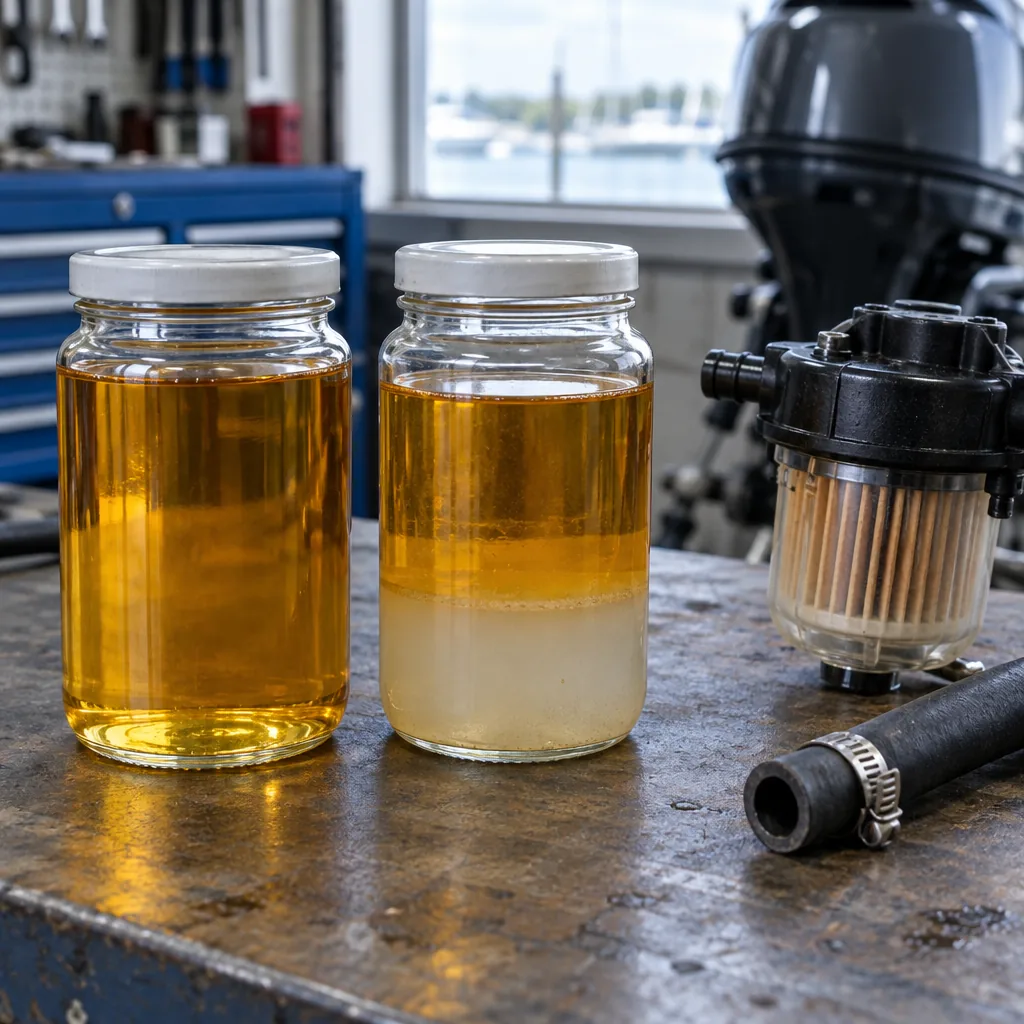
Check the filter bowl. Water looks like a separate layer at the bottom. Rust-colored fuel or black specks mean the filter has done its job and needs replacing.
Most boats need a new 10-micron primary element every 100 hours or once a season, whichever comes first.
The next suspect is the anti-siphon valve at the fuel tank outlet. It sticks closed over time from fuel varnish, especially on older outboards. A stuck valve passes enough fuel for idle and trolling but chokes the engine at wide-open throttle. A professional outboard engine repair shop can pressure-test the fuel line from tank to engine and confirm whether flow is adequate.
Fuel pumps wear. An old electric pump or a tired mechanical pump can deliver rated pressure at low demand but fall off its curve at wide-open throttle.
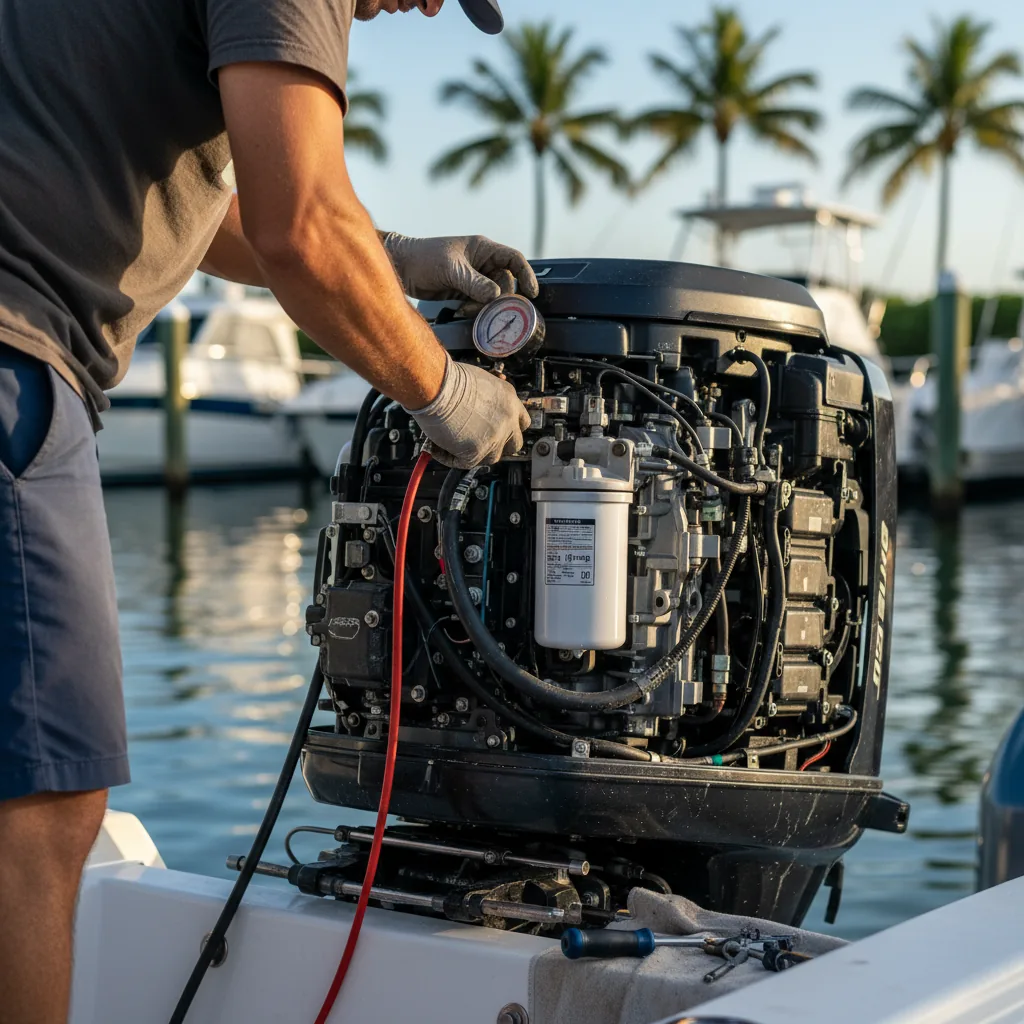
A fuel pressure gauge teed into the line at the engine tells the real story. Cruise pressure should match the manufacturer spec, not drop.
Air and Cooling Failures Look Similar
On four-stroke outboards the intake plenum and throttle body collect salt film and dried marine growth. A restricted air path caps the engine's breathing the same way a clogged fuel filter caps fuel delivery.
Pull the air cover and inspect. Clean it with a dry brush, never soap and water that can wick into the throttle bore.
Exhaust restriction causes the same symptom from the other direction. Outboards rarely clog their exhaust, but inboards and sterndrives with aging riser gaskets or carbon-loaded exhaust manifolds can back-pressure the engine. You will often hear a duller exhaust note before the RPM drop becomes obvious.
Cooling problems trigger the engine's protection circuit. Modern engines have a limp-home mode that pulls RPM back automatically when water flow drops, cylinder temperature climbs, or the thermostat sticks.
A weak impeller, a blocked raw-water strainer, or a failing thermostat all cause the engine to protect itself by cutting power. The tach drop feels sudden because the ECU drops the power quickly.
If the telltale stream is weak or hot to the touch, cooling is your first stop. Let the engine cool completely, then pull the impeller for visual inspection. A worn impeller loses vanes over time and flow degrades long before it fully fails.
An OEM alarm code scan on engines with NMEA 2000 will confirm a stored overheat event even if the beep reset.
Propeller and Gearcase Issues That Mimic RPM Drop
Not every RPM drop is an engine problem. A slipping propeller can look identical on the tach. If the hub is spinning inside the prop, the engine revs higher than normal at full throttle but boat speed does not follow.
That is not strictly a drop, but the mismatch between engine RPM and boat speed points at the prop.
A damaged prop moves less water per rotation. The engine loads differently and can hit its rev limiter earlier than it used to. Inspect the blade edges for dings or flattened tips.
Even small damage changes the pitch and the way the blades bite.
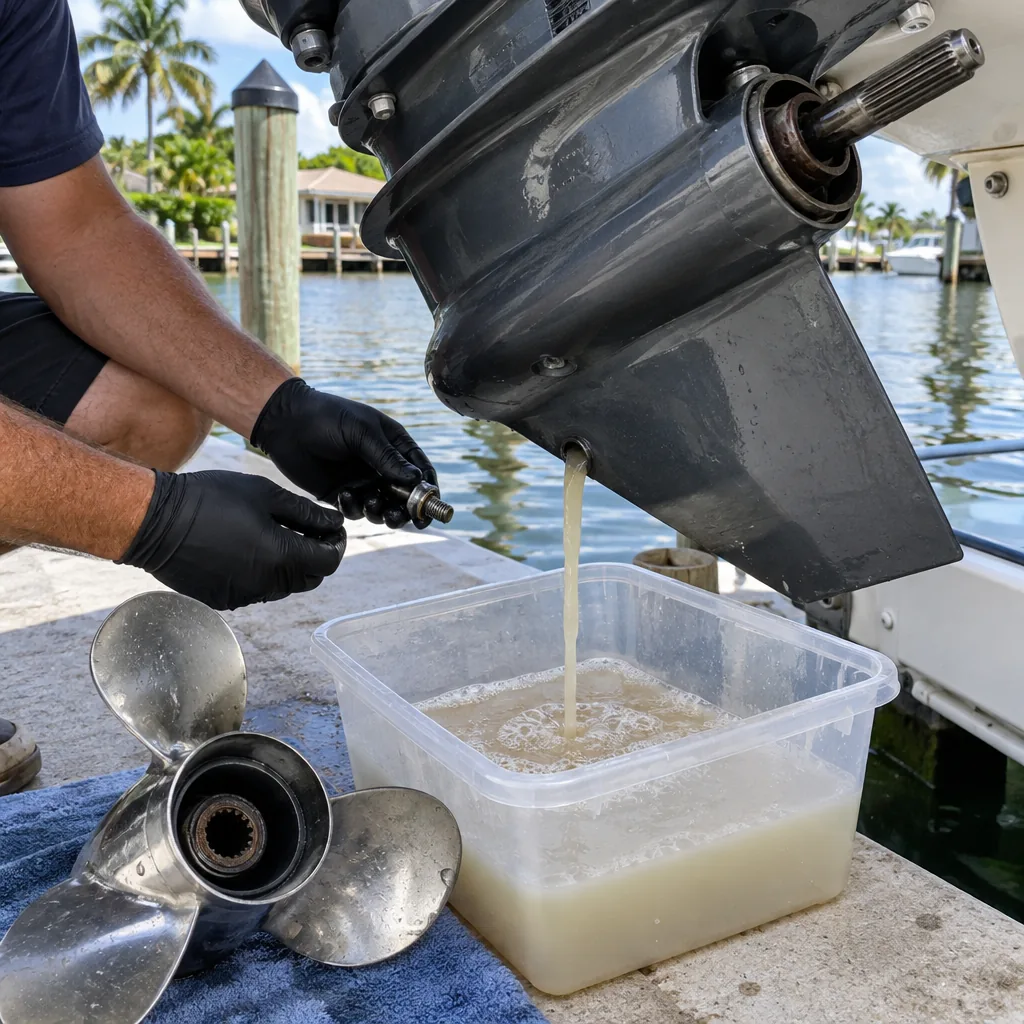
A gearcase problem can also show up as power loss. Milky lower-unit oil indicates water intrusion at the seals. Running a gearcase with water inside grenades bearings quickly, and the boat's symptoms include vibration plus reduced top-end RPM and speed.
Cavitation from marine growth on the hull bottom also taxes the engine. Boats kept in Miami marinas without regular bottom service accumulate barnacles and soft growth that add drag faster than owners expect.
A bottom cleaning can recover 3 to 5 knots of lost top speed on a heavily loaded hull.
The 20-Minute Diagnostic Walk-Through
Before you hand the boat to a shop, run this sequence. It narrows the cause enough that you can describe it accurately, which saves diagnostic time and money.
First, check the fuel filter bowl. Look for water and debris. Replace the primary element if you see either.
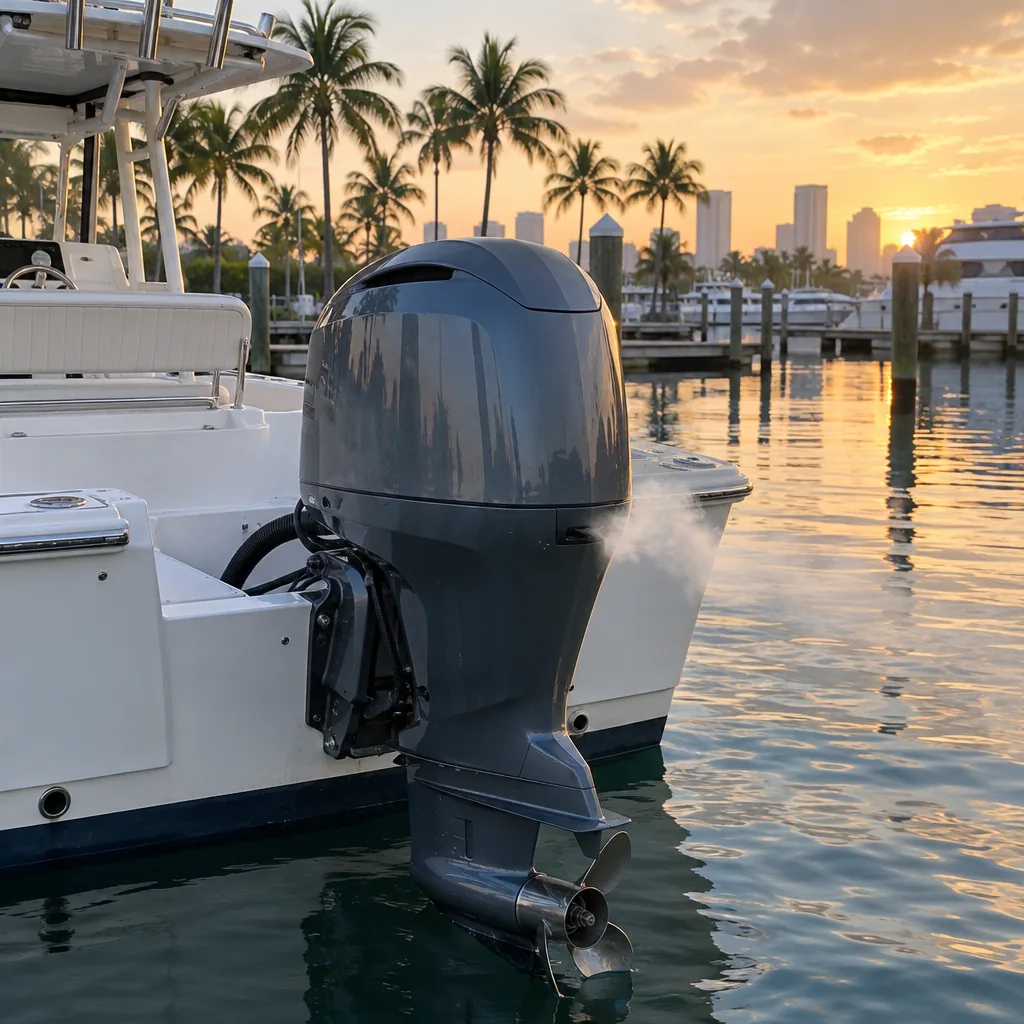
Next, inspect the cooling telltale at idle. A strong, steady stream means the raw-water pump is doing its job. A weak or pulsing stream is your first lead.
Pull the cowl and check the air intake for obvious blockage. Mouse nests, wasp nests, and salt-crystallized intake grills happen more often than people expect on boats that sit.
Start the engine at the dock with the cowl off. Listen for injector tick, misfires, or a rough idle that was not there last trip. A marine engine repair shop can plug a scan tool into the engine and read live fuel trim, spark timing, and O2 data in about 15 minutes.
Finally, take the boat out for a controlled test run. Note the exact RPM at which the drop starts. Note how long the engine can hold cruise before the symptom appears.
Note whether the drop is gradual or sudden. Boats running between Miami and Key Biscayne often show the symptom only after 15 or 20 minutes at cruise, which is important detail for the shop.
When the answer is not obvious, call (305) 290-2701 and describe what the RPM is doing. Most cases can be diagnosed over the phone well enough to schedule the right service appointment.
Find Out Exactly What Is Causing the RPM Drop
Fuel restriction, weak impeller, stuck anti-siphon valve, slipping prop hub, restricted intake. The symptom is identical, the fix is not. We bring a fuel pressure gauge, factory scan tool, and a borescope to your slip and run the same 20-minute walk-through above with proper instruments instead of guesswork. Diagnostic fee credited toward the repair if you book it the same visit. Reach us at (305) 290-2701 or book an on-water diagnostic with same-week availability across Miami and Key Biscayne.
Frequently Asked Questions
Is an RPM drop under load always a serious problem?
Not always, but it is always worth investigating. Small issues like a dirty fuel filter are cheap and fast to fix. Ignored, they often cascade into fuel-pump wear or injector damage that is much more expensive.
Can I keep running the boat if the RPM drop is mild?
Running an engine that cannot hit its designed RPM is running it under constant stress. Short trips at reduced throttle are lower risk, but any wide-open-throttle operation with this symptom accelerates wear. Fix the root cause before the next long run.
Does this symptom ever fix itself?
No. Filters do not unclog themselves. Impellers do not regrow vanes. A symptom that comes and goes usually means the underlying problem is load-dependent, not that it is healing. Waiting makes it worse.
How much does it cost to diagnose an RPM drop?
A professional bench diagnostic runs roughly one to two shop hours depending on the engine. If the cause is obvious like a clogged filter, the repair is added on top. Most Miami shops will quote the diagnostic flat rate up front before you commit.