The 50-70% Rule for Miami Saltwater
Most marine parts last 50-70% as long in Miami saltwater as in northern freshwater. Below is what mechanics in Miami actually see across hundreds of services. The pattern repeats across every brand, every hull size, and every boater experience level: salt corrodes faster than fresh, and Miami warm water accelerates the chemistry further.
Freshwater lakes in Minnesota or Michigan run cold, low in chloride, and stay below 75 degrees most of the boating season. Miami coastal water sits at 78-85 degrees year-round with chloride levels above 19,000 parts per million. That combination drives galvanic corrosion, biofouling, and electrolyte breakdown at roughly double the rate of any freshwater environment.
This guide is built from service records on outboards, sterndrives, and inboards docked between Coconut Grove, Dinner Key, and Key Biscayne. The numbers below reflect what gets replaced and when, not manufacturer claims. If you boat in salt, plan budgets around the salt column, not the freshwater column.
Marine Parts Lifespan Data Table
The table below compares typical service life in cold freshwater versus Miami saltwater, the corrosion or wear mechanism that shortens salt-side life, and the replacement cost range observed during routine 100-hour boat service intervals. Hours assume average 80-120 engine hours per year.
| Part | Freshwater Lifespan | Miami Saltwater Lifespan | What Kills It Faster in Salt | Replacement Cost |
|---|---|---|---|---|
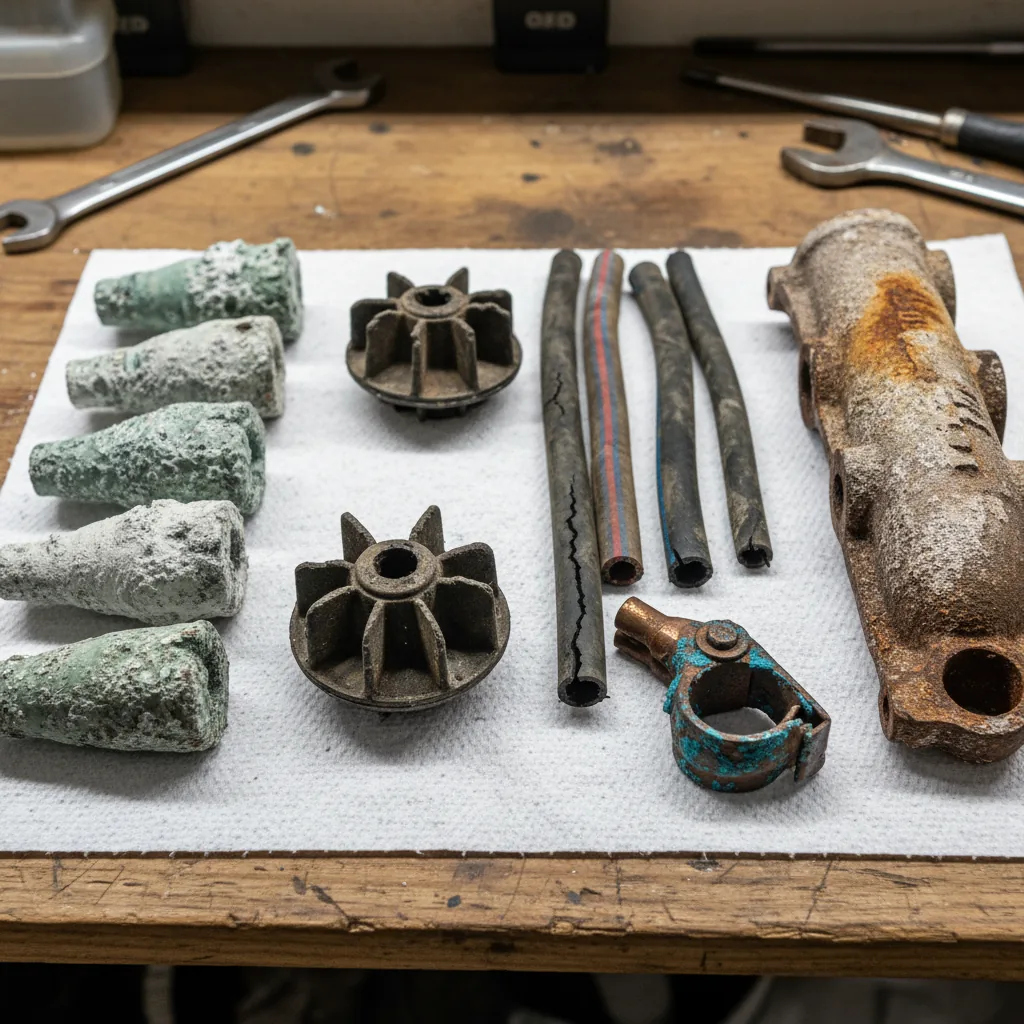
| Water pump impeller | 3-4 years or 300 hours | 1-2 years or 100-150 hours | Salt crystals abrade vanes, heat softens rubber | $180-$420 |
| Sacrificial anodes (zinc) | 18-24 months | 4-8 months | Higher conductivity speeds galvanic sacrifice | $60-$240 |
| Exhaust manifold (cast iron) | 10-15 years | 4-7 years | Internal salt pitting and through-wall rust | $650-$1,800 |
| Cooling hoses and clamps | 8-10 years | 3-5 years | Stainless clamps crevice-corrode at the worm gear | $120-$380 |
| Starting battery (AGM) | 4-6 years | 2-3 years | Heat cycling and terminal sulfation in humid air | $220-$520 |
| Alternator | 8-12 years | 4-6 years | Salt mist seizes bearings and corrodes diodes | $380-$950 |
| Prop shaft seal (dripless) | 6-8 years | 3-4 years | Bellows hardens, salt scores carbon face | $340-$720 |
| Lower unit gear oil seals | 5-7 years | 2-3 years | Fishing line and salt grit cut lip seals | $180-$520 |
| Fuel injectors | 10-12 years | 6-8 years | Ethanol-water emulsion from humid air | $420-$1,400 |
| Spark plugs | 200-300 hours | 100-150 hours | Salt deposits foul electrodes faster | $60-$180 |
| Bottom paint (ablative) | 3-4 years | 10-14 months | Aggressive barnacle and slime pressure | $900-$3,200 |
| Gelcoat (clear) | 15-20 years | 6-9 years | UV plus salt etching dulls finish | $1,200-$6,500 |
| Bilge pump (1100 GPH) | 5-7 years | 2-3 years | Salt residue corrodes motor windings | $80-$240 |
| Navigation electronics (MFD) | 10-12 years | 5-7 years | Salt fog penetrates seals, oxidizes pins | $650-$2,400 |
| Raw water pump (engine-mounted) | 6-8 years | 3-4 years | Impeller debris and salt scale wear housing | $280-$680 |
Two numbers stand out. Sacrificial anodes burn through three to four times faster in Miami than in any northern lake, which is exactly the design intent. If a zinc on a Biscayne Bay boat lasts a full year, the bonding system has a problem and the next metal in line is sacrificing itself instead.
Why Miami Saltwater Is Harder Than Other Saltwater
Not all salt is equal. The Gulf of Maine averages 58 degrees, San Francisco Bay averages 61, and the Chesapeake averages 64. Miami sits at 79 degrees as a yearly average. Every 18-degree rise in water temperature roughly doubles corrosion reaction rates, which is why a sterndrive in Boston might run 12 years before manifold replacement while the same drive in Miami hits 5-6 years.
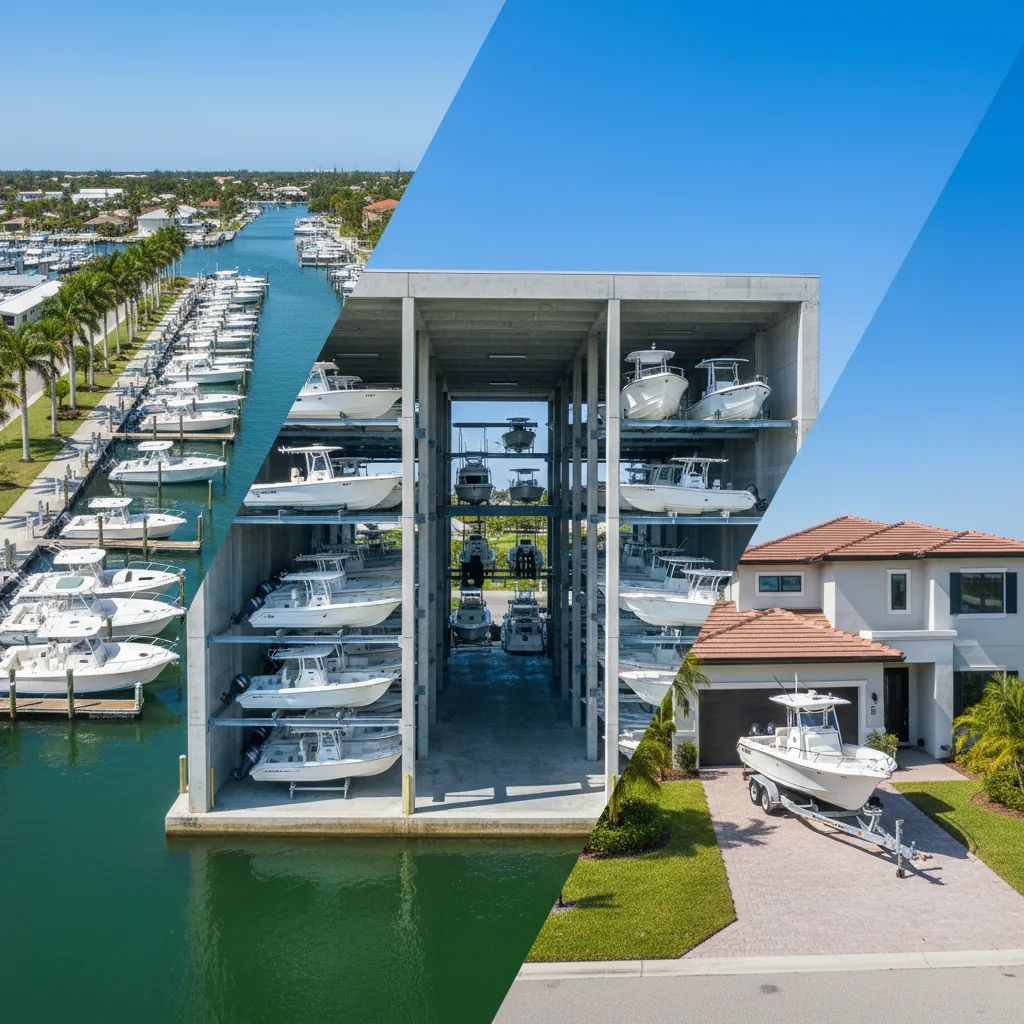
Three Miami-specific factors compound the heat issue. First, year-round use: most Miami boats log 120-180 hours annually versus 40-60 in seasonal markets. Second, stray current from marinas: older Miami docks carry leakage current from neighboring boats and shore power, accelerating anode consumption and pitting underwater metals within weeks. Third, humid storage: even when a boat is on a lift, 75% relative humidity overnight pulls salt-laden moisture into electrical connections and engine internals.
Boats kept in Key Biscayne open-water slips show the most aggressive wear because they have no canal protection from chop and salt spray. Boats lifted and freshwater-rinsed after every trip can extend salt-column lifespans by 20-30%.
Parts Where Salt Cuts Lifespan in Half or More
Some parts handle salt fairly well. Stainless 316 fasteners, bronze through-hulls, and aluminum housings with proper anti-corrosion coatings hold up close to freshwater numbers if maintained. Other parts collapse on a much steeper curve.
Anodes, bottom paint, and bilge pumps are the three categories where Miami lifespans run a third or less of freshwater service life. Bottom paint deserves special attention. A boat hauled in Lake Michigan can run the same paint for three or four seasons. In Biscayne Bay, ablative paint loses effective copper load in 10-14 months because the biofouling pressure never stops. Schedule boat bottom painting on a calendar, not on appearance.
Cooling system rubber is the silent killer. Hoses look fine on the outside while internal carbon black migrates and the inner wall delaminates. A hose that should run 8 years on a Wisconsin inboard fails at 3-5 years in Miami, often during summer when raw water temperatures already stress the cooling loop. Pressure-test the cooling system every two years and replace hoses on a schedule, not on failure.
How to Stretch Salt-Side Lifespan
The lifespan numbers above are averages from boats that get reasonable care. Owners who follow strict rinse and inspection routines push their parts 20-40% further. The fundamentals: freshwater flush every trip (10-15 minutes on muffs or built-in flush ports removes 80% of salt residue from cooling passages), inspect anodes monthly and replace at 50% consumption, wash and wax quarterly to slow UV plus salt etching by roughly 40%, pull and inspect props annually because salt and fishing line score shaft seals long before they leak, and service cooling system every 100 hours including impeller, thermostat check, and pressure test.
For older outboards and sterndrives, scheduling outboard engine repair on a preventive cadence costs less than reactive breakdown work. The same applies to inboards. A scheduled boat engine repair inspection at the 300-hour mark catches manifold pitting, riser cracks, and exhaust elbow corrosion before the parts fail under load. Reactive replacements on the water cost three to four times what scheduled service in a slip would have cost.
Budgeting Around the Salt Column
Use the saltwater lifespan column to build an annual maintenance reserve. A typical 25-foot center console in Miami runs roughly $4,200-$7,800 per year in parts and labor between anodes, impellers, bottom paint, batteries, and assorted hoses and seals. A 40-foot express cruiser runs $9,500-$18,000. These figures exclude major engine work and assume the boat is on a routine service schedule.
The boats that cost dramatically more to keep running are the ones where owners deferred maintenance for two or three seasons. A $240 anode set ignored long enough turns into a $4,800 lower unit. A $180 impeller skipped turns into a $3,200 head gasket or worse. The math always favors proactive replacement on the saltwater lifespan numbers in the table above, not optimistic estimates pulled from owner forums in northern lakes.
Replace Worn Parts Before They Strand You Offshore
The lifespan table above is built from real Miami service records, not manufacturer brochures. If your boat is approaching the saltwater numbers on any part listed, schedule an inspection before the next offshore run. Call (305) 290-2701 or book a parts lifespan inspection and a mobile technician will check anodes, hoses, impeller, and the cooling system at your slip or dry storage. Replacing a $200 part on a Tuesday morning beats a $3,000 tow plus repair on a Saturday afternoon.
Frequently Asked Questions
How much shorter do marine parts last in Miami saltwater?
Most marine parts last 50-70% as long in Miami saltwater as in northern freshwater. Anodes, bottom paint, and bilge pumps see the steepest cuts, often dropping to one-third of freshwater service life because of warm-water corrosion chemistry and constant biofouling pressure.
Why does a water pump impeller fail faster in Miami?
Salt crystals abrade the rubber vanes, warm water above 80 degrees softens the rubber compound, and silt or shell debris from coastal bottoms accelerates wear. A freshwater impeller can run 300 hours, while a Miami impeller often needs replacement at 100-150 hours.
How often should I replace zinc anodes in Miami?
Inspect monthly and replace at 50% consumption. Most Miami boats need new anodes every 4-8 months. If your zinc lasts a full year, the bonding system likely is not properly connected and another underwater metal is sacrificing itself instead.
Does freshwater flushing actually extend part life?
Yes. A 10-15 minute freshwater flush after every trip removes roughly 80% of salt residue from cooling passages. Boats with disciplined flush routines extend impeller, manifold, and hose lifespans by 20-30% over boats that skip the flush.
When should I budget for bottom paint reapplication?
Plan on bottom paint every 10-14 months in Miami waters. Warm temperatures and constant biofouling pressure burn through ablative copper load far faster than the 3-4 year cycles common on freshwater lakes. Schedule reapplication on a calendar, not based on how the paint looks.