Sell It, Part It Out, Donate It, or Pay to Have It Hauled Away
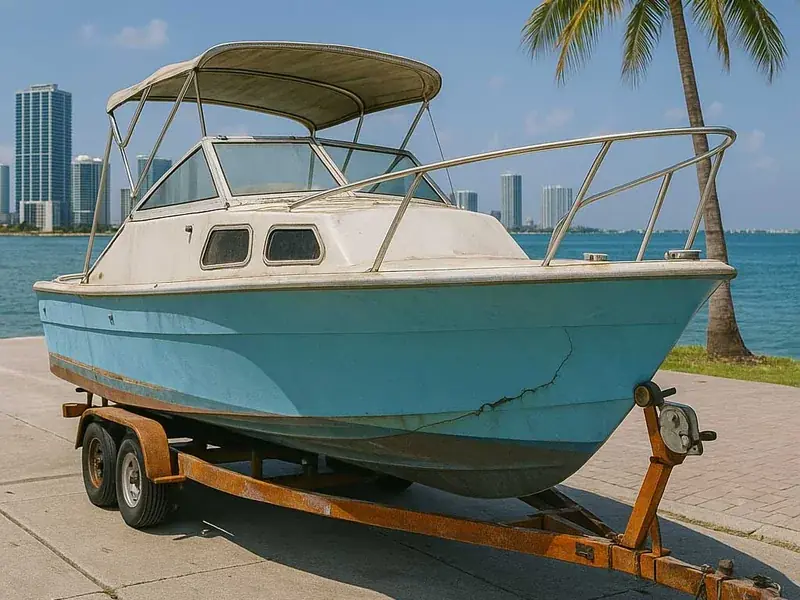
There are 4 ways to get rid of an old boat in South Florida, and they work best in this order. Sell it as-is or as a project, or sell the engine, trailer and electronics separately. Otherwise donate it to a qualified charity, or pay a licensed salvage or junk-boat removal company to haul it away. If the boat is in the water and has already been cited as at risk, Florida's state turn-in program may remove it at no cost.
The order matters because each step down usually returns less money and costs more effort. A running boat with a clean title almost always does better as a sale than as scrap. A hull with no engine and soft decks may only be worth what its parts bring.
Whatever route you take, the safe part is the paperwork. In Florida, the title is the evidence of who owns the boat until a transfer is properly recorded, and an abandoned vessel can come back on you as removal costs and a criminal charge.
Find Out What the Boat Is Actually Worth First
Most owners decide to get rid of a boat based on a guess. The engine will not start, the deck feels spongy, and the repair estimates in their head add up to more than the boat. Sometimes that guess is right, and sometimes a no-start is a fuel or ignition fault on an otherwise sound hull.
A professional boat inspection answers the question before you give the boat away. A marine technician checks the hull, transom, stringers, steering, electrical system and engine, then tells you what is wrong and what it would take to fix. Those findings also help a buyer trust a project-boat listing.
If the numbers point toward keeping it, the next question is whether the repair beats replacing the boat. Our breakdown of whether to fix up an old boat or buy a newer one walks through how to weigh repair cost against the price of a newer hull.
Selling As-Is or as a Project Boat
Selling is the only option that reliably puts money in your pocket. Project boats have buyers, usually people who want a cheap hull to repower or restore. Be honest in the listing about what runs and what does not, since a buyer who feels misled will walk away at the dock.
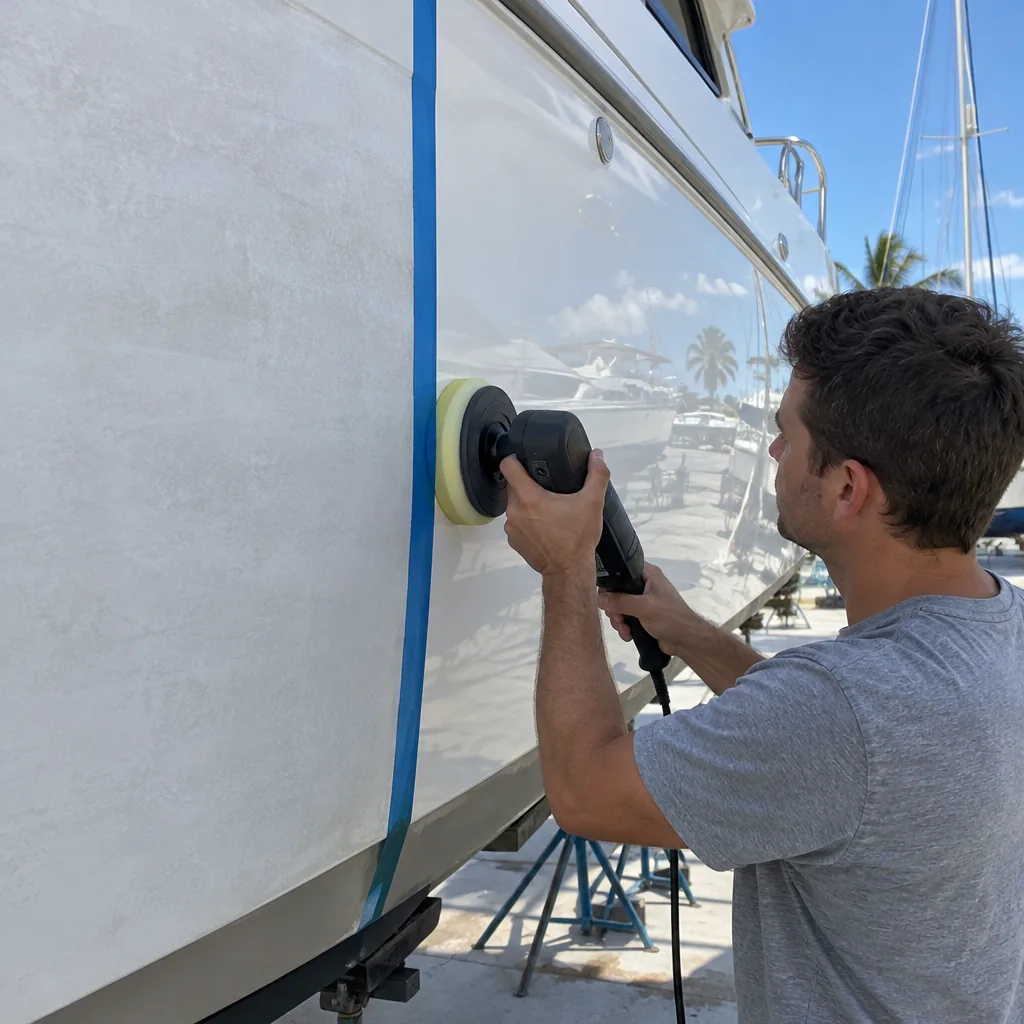
A few modest fixes can move a boat from scrap pile to sale. Cleaning out the bilge, fixing a broken gauge or patching cosmetic gelcoat and restoration work changes how the boat looks in photos. The goal is not a full rebuild, only removing the obvious reasons a buyer would say no.
Before listing, gather the title, current registration and any service records. In Florida, the seller must hand the buyer a properly completed certificate of title. A boat with a missing or lien-encumbered title is much harder to sell at any price.
Selling the Engine, Trailer and Electronics Separately
When the hull itself has no value, the parts often still do. A running or rebuildable outboard, a road-legal trailer, a chartplotter, a VHF radio, trolling motors and stainless hardware all have their own buyers.
The outboard is usually the most valuable single piece. If it runs, a compression test and a short water test give buyers confidence. If it does not, an outboard engine repair diagnosis tells you whether you are selling a working motor or a parts motor, which are priced very differently.
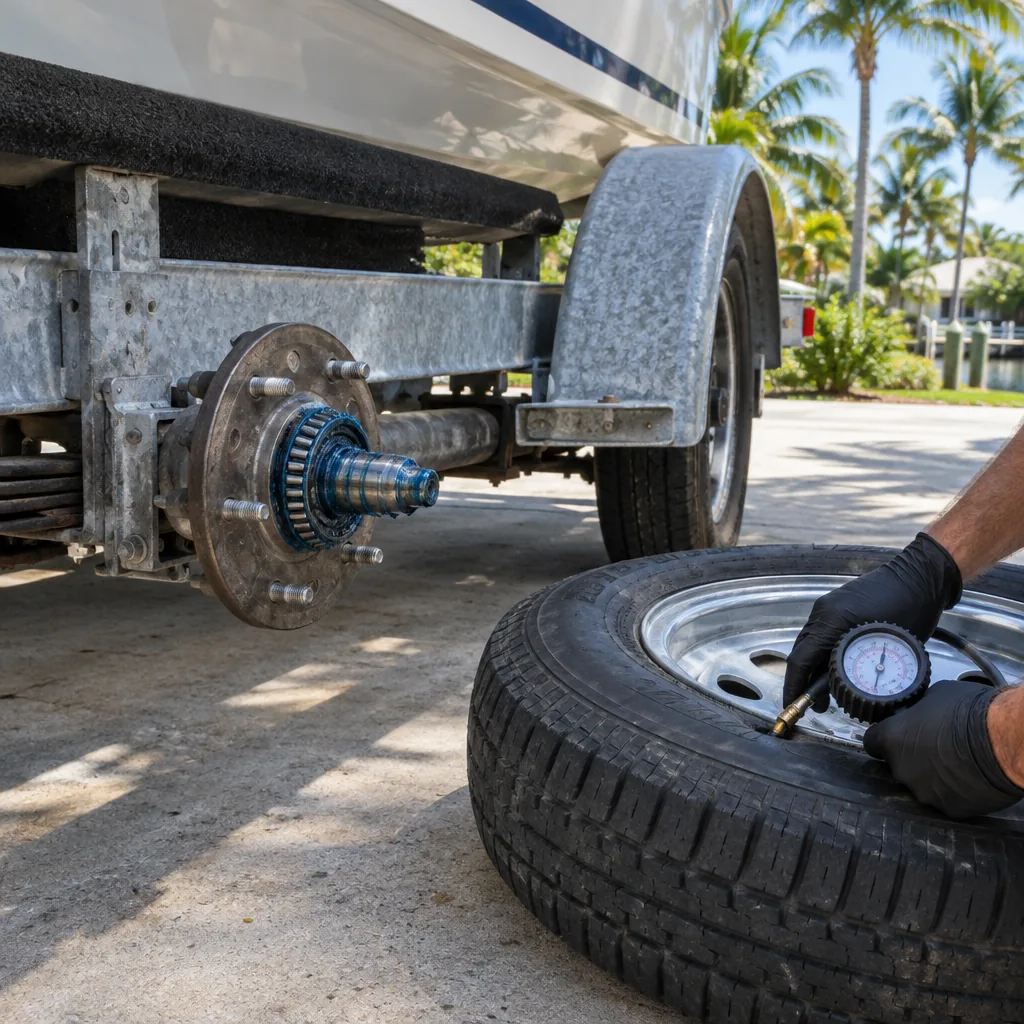
A trailer is worth selling on its own only if it has a title or registration of its own and safe tires, lights and bearings. Keep the paperwork for each part you sell, and remember that whatever is left of the hull still has to go somewhere legal.
Donating a Boat to a Charity
Donation can work, but the tax benefit is often smaller than owners expect. IRS Publication 526 treats a boat as a qualified vehicle, the same as a car. If you claim more than $500 and the charity sells the boat, your deduction is generally limited to what the charity received from the sale.
If the charity sells it for $500 or less, you can deduct the smaller of $500 or the boat's fair market value. Exceptions allow a fair market value deduction when the charity makes significant use of the boat, materially improves it, or gives or sells it below value to a needy person. You must itemize deductions to claim any of this.
The charity reports the donation on Form 1098-C, and you attach Copy B or an equivalent statement to your return. Without it, the IRS says you cannot deduct the contribution. Confirm the organization is a qualified charity and ask in writing whether it will accept a non-running boat before you sign over the title.
How Boat Removal Works in South Florida
When no one will buy or accept the boat, the last step is paying to have it hauled and dismantled. The companies that do this are marine salvage firms, demolition and junk-boat removal operators, and some towing companies that handle vessels. Ask for proof of licensing and insurance and a written quote that states where the boat will be taken.
Removal prices vary widely, so get several quotes. These are the factors that move the price most.
Size and weight. A small center console on a trailer is a very different job from a 35-foot cruiser that needs heavy equipment and a large truck.
Where the boat sits. A boat on a trailer in a driveway is the simplest case. A boat on blocks needs lifting, and a boat in the water, partly sunk or aground, may need a crane, divers or a barge.
Hull material. Aluminum and steel have scrap value that can offset part of the cost. Fiberglass usually has little or none, so the hull is cut up and disposed of rather than sold.
Fluids, batteries and hazardous items. Fuel, oil, batteries, flares and refrigerants have to be drained or removed before the hull is crushed or cut. Removing them yourself, safely and legally, can reduce what the hauler has to handle.
Why You Cannot Just Leave It at the Dock or Anchorage
Abandoning an old boat on Florida waters is a crime. Under s. 823.11, Florida Statutes, an owner may not leave a derelict vessel on state waters for more than 24 hours. A derelict vessel includes one that is wrecked, junked or substantially dismantled, or left on someone else's property without consent.
A first offense is a first-degree misdemeanor, a second offense is a third-degree felony, and a third is a second-degree felony. The costs of removing, storing and destroying the boat are recoverable from the owner, and unpaid costs can block future vessel registration.
Selling the boat informally does not always get you off the hook. The statute treats the title as evidence of ownership. Handing a derelict boat to someone without a proper title transfer generally leaves you responsible unless there is a written agreement or proof of a sale.
The State Program for At-Risk Boats in the Water
Before a boat becomes derelict, Florida can declare it at risk. Under s. 327.4107, that includes a boat taking on water with no effective way to dewater, one breaking loose from its anchor, or one tied to an unpermitted mooring. Keeping an at-risk vessel on state waters is a noncriminal infraction on its own.
For owners in that position, FWC runs the Vessel Turn-In Program. You must be the titled owner, the boat must be free of liens, and it must already have a written at-risk citation or warning. If approved, FWC funds the full cost of removing and destroying the boat.
Applications are accepted first come, first served until funding runs out or the program ends. You send the application, title, citation, photo ID, photos and a signed waiver to FWC. If approved, you mark the original title "JUNKED," sign it, and mail it to FWC.
Florida Title and Registration Steps That Close It Out
The last step in any route is telling the state the boat is no longer yours. Under s. 328.64, Florida Statutes, an owner must notify the Department of Highway Safety and Motor Vehicles within 30 days of transferring, destroying or abandoning a registered vessel. That notice ends the boat's certificate of registration.
For a sale, sign the title over to the buyer and keep a dated bill of sale with the hull identification number. The buyer then has 30 days to file the transfer with a county tax collector or license plate agent. For a scrapped or destroyed boat, ask your county tax collector which form to file and keep the removal company's receipt.
Keep copies of everything for at least a few years. If the boat later turns up on the water, those papers are your proof that it stopped being your responsibility.
Have the Boat Inspected Before You Give It Away
Before you list the boat for parts, sign it over to a charity or pay someone to haul it off, find out what you actually have. A technician can check the hull, transom, engine and wiring and tell you whether the boat is worth fixing, worth selling as a project, or truly done.
Call (305) 290-2701 or request a boat inspection online. We come to your dock, lift or driveway across Miami, Homestead and the rest of South Florida. You make the keep-or-sell decision knowing exactly what is wrong.
Frequently Asked Questions
Can you junk a boat for cash in Florida?
Usually only for aluminum or steel boats, or for boats with a sellable engine and trailer. Fiberglass hulls generally have little scrap value, so the cash in a junk boat is mostly in its outboard, trailer, electronics and metal hardware. In many cases the owner pays for removal rather than being paid.
How much can you scrap a boat for?
No single number applies, because scrap value depends almost entirely on what the boat is made of and what is still on it. An aluminum hull has metal value, while a fiberglass hull usually does not. Selling the engine, trailer and electronics separately before scrapping almost always recovers more than scrapping the boat whole.
What is a derelict vessel in Florida?
It's a boat that is wrecked, junked or substantially dismantled on Florida waters, or left on someone else's property without consent. FWC treats a boat as substantially dismantled when two or more of its steering, propulsion or hull integrity systems are missing or broken. Leaving one on state waters for more than 24 hours is a crime under s. 823.11.
Does Florida still have a free boat turn-in program?
Yes. FWC says its Vessel Turn-In Program accepts applications on a rolling basis until funding runs out or the program ends. It is only for titled owners of lien-free boats that have already received a written at-risk citation or warning. A boat sitting on a trailer in a yard does not qualify.
Do I need to notify the state after I get rid of my boat?
Yes. Florida law requires the owner to notify the Department of Highway Safety and Motor Vehicles within 30 days of transferring, destroying or abandoning a registered vessel. Keep a copy of the title transfer or removal receipt in case the boat is ever found abandoned under your name.