Grease Every 12 Months, Repack After Every Dunk, Check Tires Monthly
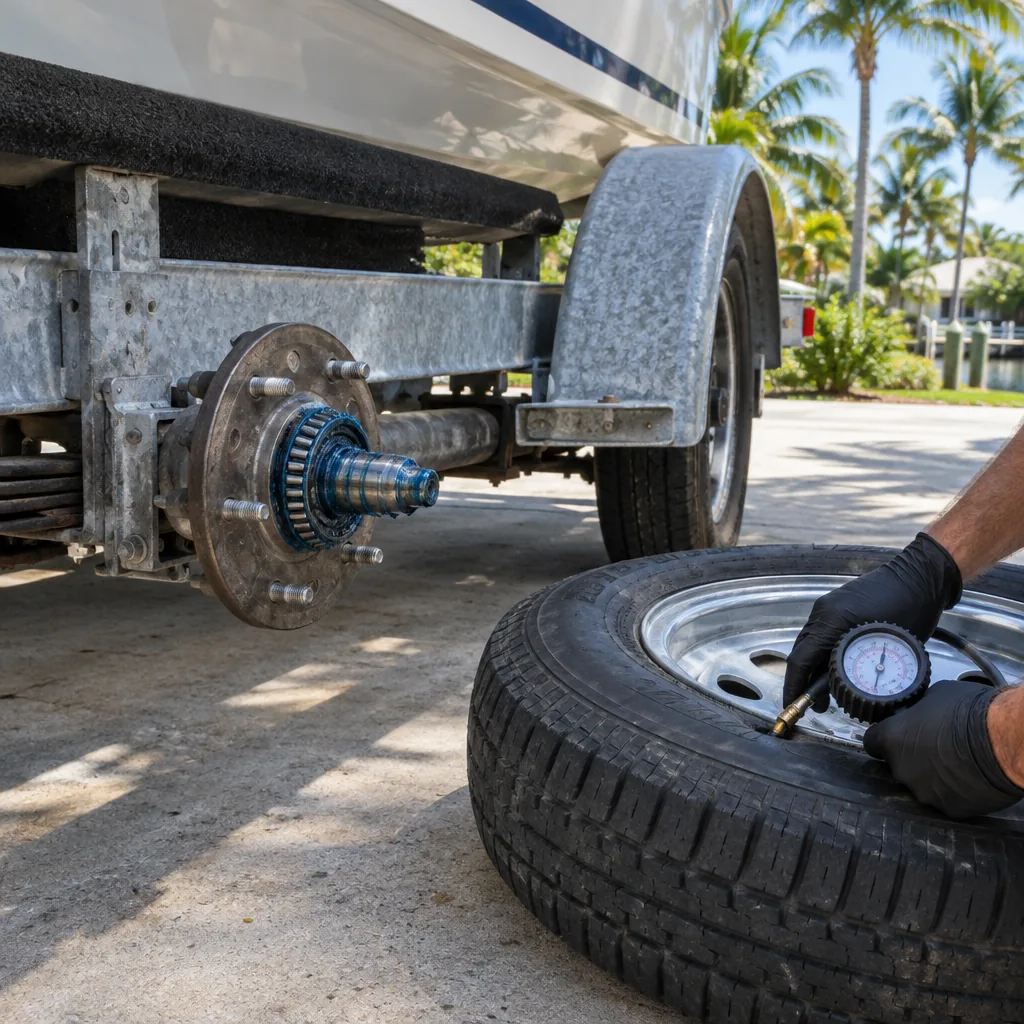
Grease the wheel bearings on a saltwater boat trailer at least every 12 months or 12,000 miles. That is Dexter's bearing lubrication guidance for its axles, and Dexter adds that standard grease hubs are not built for immersion and should be repacked after each dunk.
Tires get a cold pressure check at least once a month and again before every tow, set to the maximum pressure molded on the sidewall. Read the four-digit DOT date code every season, because a trailer tire usually ages out long before its tread wears down.
Treat the 12-month figure as a ceiling rather than a target. Salt water, heat and sun push a ramp trailer toward the short end of every window, so boat trailer repair here usually starts at the hubs and tires.
Why a Hot Hub Pulls Salt Water Past Its Seal at the Ramp
A hub that has been rolling down I-95 or Florida's Turnpike in summer gets hot, and so do the air and grease sealed inside it. Back that hub straight into the water and the sudden cooling makes the trapped air contract. That drop in internal pressure can draw water past the lip of the rear seal, and at a South Florida ramp that water is salt water.
Heat already breaks down bearing grease, and salt water finishes the job. Water thins the grease and leaves salt against the steel rollers and races. The damage starts as rust staining and ends as pitting, past the point fresh grease can save.
Letting hubs cool before launching helps, and so does a hub that keeps grease under light pressure. Neither replaces inspection.
Your Hub Type Sets the Schedule
Standard grease hubs. These are packed bearings behind a press-in dust cap. Dexter says they are not designed for immersion and should be repacked after each one, which on a ramp trailer means after every launch day.
E-Z Lube and similar grease-through-spindle hubs. A fitting on the spindle end lets you pump fresh grease through the bearings while turning the wheel. Dexter rates its E-Z Lube feature for immersion and calls for a manual grease gun pumped slowly, because a pneumatic gun can force grease past the seal.
Bearing protector caps. These spring-loaded caps replace the dust cap and hold a small reserve of grease under light pressure. They help resist water, but overfilling them can push grease past the rear seal toward the brakes, and a full cap says nothing about the condition of the rollers.
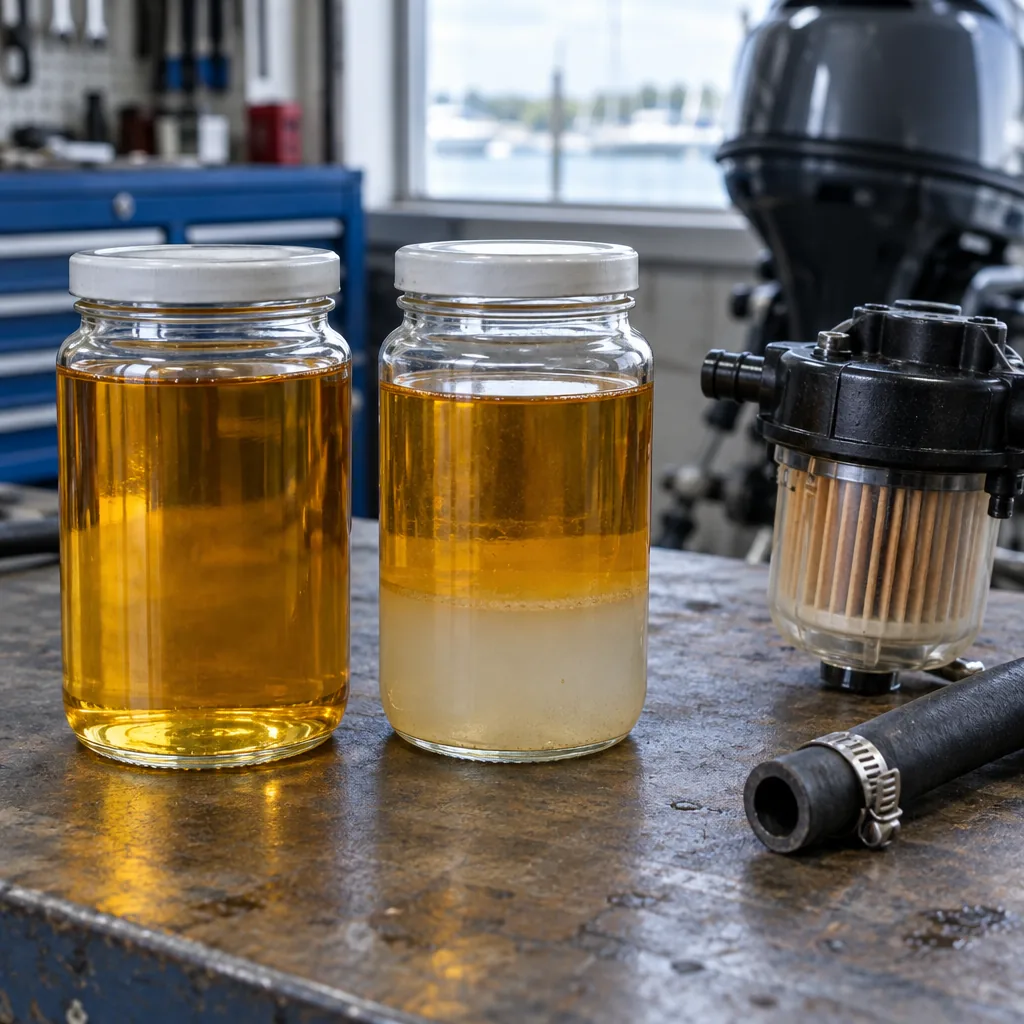
Oil-bath hubs. The bearings run in gear oil behind a clear cap marked with a fill line. Dexter says to check that level periodically and top up with hypoid gear oil, and the window gives an early warning, since milky or cloudy oil means water is already inside.
Dexter attaches one caution to all of them: convenient lubrication must not replace periodic bearing inspection. Its sealed Nev-R-Lube hubs, Dexter states, are not designed for boat trailer immersion at all.
Touch the Hubs and Rock the Wheels at Every Fuel Stop
On a long tow, the quickest bearing test needs no tools. At a fuel stop, hold your hand near each hub before touching it briefly, since a failing hub can be hot enough to burn. Every hub on the trailer should feel about the same, and one clearly hotter than its neighbors means something is dragging, either a bearing or a brake.
Checking for play takes a jack and level ground. With the wheel lifted off the ground at the jacking point your trailer manual shows, grab the tire at 12 and 6 o'clock and rock it. A healthy hub has barely perceptible movement, while a clunk or visible wobble means loose or worn bearings.
Spin the wheel by hand too, since a gritty feel or grinding sound means the hub needs to come apart. Summer pavement, a loaded single-axle trailer and long stretches at steady highway speed all raise hub temperature, so this check matters more in July than in January.
Grinding, Wobble or Grease on the Rim Means Pull the Hub
Failing trailer bearings give consistent warnings. A hub running hotter than the others, a rumble or grind that changes with speed, wheel wobble, or grease slung across the inside of the rim all point the same way. Smoke or a burning smell means stop where it is safe, because a seizing bearing can ruin the spindle.
Once the hub is off, the choice between repack and replace is made by looking. Dexter's rule is direct: if a bearing shows any pitting, spalling or corrosion, it must be replaced. Rust staining on the rollers counts as corrosion, which is why saltwater bearings often fail inspection even while they still spin.
Bearings are replaced as a matched set, the cone and the cup it runs in, which owners often call the race. Dexter states that cones and cups are always replaced together. The grease seal is inspected whenever the hub comes off and replaced if nicked, torn or doubtful. On a dunked trailer, a fresh seal at each repack is the sensible default.
A proper repack removes all old grease, then works fresh grease into each cone until it comes through the rollers. Dexter warns against mixing lithium, calcium, sodium or barium complex greases. If pulling hubs in the driveway is not how you want to spend a Saturday, mobile marine mechanics can do the work where the trailer is parked.
Run ST Trailer Tires at the Sidewall Maximum, Checked Cold
Trailer tires carry an ST code on the sidewall, for Special Trailer. Carlisle's trailer tire FAQ explains that passenger (P) and light truck (LT) tires are not designed for trailer use. Their flexible sidewalls can contribute to sway, which the stiffer ST sidewall is built to control.
Inflation follows the tire sidewall, not the tow vehicle's door sticker. Carlisle's guidance is to keep trailer tires at the maximum pressure shown on the sidewall, checked with a quality gauge when the tires are cold and in the shade. An underinflated tire flexes more and builds heat on a hot Florida highway.
NHTSA defines cold as not driven for at least three hours, and its tire guidance calls for checking every tire, including the spare, at least once a month. A trailer that sits all week deserves one more check before every tow, because a slow leak between launches is easy to miss.
Speed ratings vary widely. Carlisle lists trailer tires rated at 62, 65, 75 and 87 mph, and Goodyear's Endurance trailer tire carries an N rating of 87 mph. Carlisle stresses that a speed rating is a test figure, not a safe towing speed, and recommends towing at no more than 60 mph.
Read the DOT Date Code, Because Florida Sun Ages Tires First
Every tire has a DOT Tire Identification Number on the sidewall, and its last four digits give the week and year it was built. A code ending in 1225, for example, means the 12th week of 2025. The code may appear on only one side, so check the inner sidewall too.
NHTSA's tire aging guidance notes that some vehicle and tire manufacturers recommend replacing tires that are six to 10 years old, regardless of treadwear. Carlisle adds a point that matters for boat trailers: remaining tread is not an indicator of trailer tire life. Long periods parked under a static load break down the internal carcass in ways a visual check cannot catch.
For a trailer that lives outdoors in Florida sun and gets dunked in salt water, plan around the six-year end of that range. Fine sidewall cracks, a faded gray sidewall or a tire flat-spotted from months of sitting are reasons to replace it at any age. Tire covers and shade slow the aging.
Give the Spare and the Lug Nuts the Same Attention
The spare is often the oldest, least-checked tire on a boat trailer, and NHTSA names it in the monthly pressure check for good reason. Confirm that it matches the road tires in size and load range, and that the lug wrench in the truck actually fits the trailer's nuts.
Trailer lug nuts should be tightened with a torque wrench to the value in the trailer or axle manual, in stages and in a star pattern. A freshly mounted wheel can seat in and lose clamping force, so recheck torque after the first short tow, following the schedule in that manual. Never borrow the number from your truck.
A Ramp-Day Routine for Palm Beach and West Palm Beach Owners
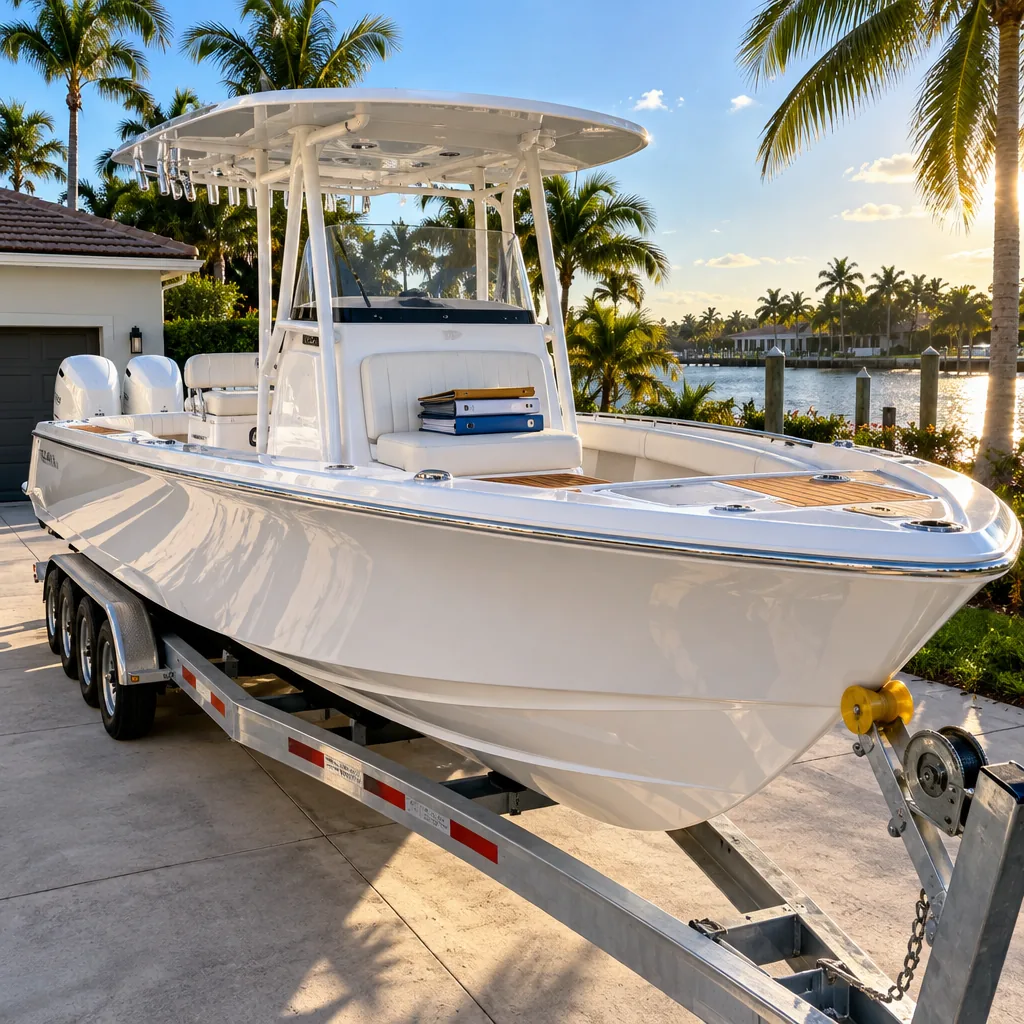
Boat trailer maintenance in Palm Beach, FL comes down to a short routine repeated every trip. Owners who trailer to ramps in Palm Beach and West Palm Beach can check tire pressure cold before leaving and glance at the hub caps or oil-bath windows. Give hot hubs a few minutes before backing in, and rinse the trailer with fresh water after recovery.
Repack standard grease hubs after launches, as Dexter directs, and pull dunk-rated hubs for inspection at least once a year. Pairing that annual hub pull with a pre-season boat inspection keeps the trailer and the boat on the same calendar.
Salt does not stop at the bearings. The same spray works on the frame and fasteners, and corrosion on your boat trailer deserves the same scheduled look.
Inspect Your Hubs and Tire Date Codes Before the Next Launch
A hot hub at the last fuel stop, a wheel that rocks, or a DOT code near six years old all need a look before the next tow. Our boat trailer repairs in Palm Beach, FL and across South Florida cover wheel bearings, tires, brakes and axles on aluminum and galvanized trailers. Call (305) 290-2701 or schedule a trailer hub and tire inspection anywhere from Palm Beach County down through Broward and Miami-Dade.
Frequently Asked Questions
How often should I repack boat trailer bearings used in salt water?
After every immersion on standard grease hubs, per Dexter, and at least every 12 months or 12,000 miles on any hub. Dunk-rated designs such as Dexter's E-Z Lube allow immersion, but Dexter still calls for periodic bearing inspection. On a saltwater trailer, an annual pull-and-inspect is the minimum.
Can I put LT or passenger tires on my boat trailer?
No, not as a general rule. Carlisle states that P and LT tires are not designed for trailer use, and their more flexible sidewalls can contribute to sway. Match the ST size and load range shown on the trailer's certification label.
What pressure should boat trailer tires run?
Usually the maximum cold pressure molded on the tire sidewall, which is what Carlisle's trailer tire guidance calls for. Check it with a quality gauge after the tires have sat for at least three hours, which is NHTSA's definition of cold, and out of direct sun. Ignore the tow vehicle's door sticker.
How old is too old for a boat trailer tire?
Six to 10 years is the range NHTSA reports some vehicle and tire manufacturers use as a replacement point, regardless of tread. For a saltwater trailer parked in Florida sun, the six-year end is the safer plan. Read the last four digits of the DOT code for the week and year, and replace any tire with sidewall cracking sooner.
Do bearing protector caps mean I never have to repack?
No. Spring-loaded protector caps hold a small reserve of grease under light pressure, which helps resist water, but they cannot show you the condition of the rollers or races. The bearings still need to be pulled, cleaned and inspected for pitting or corrosion on a schedule.