Ethanol Absorbs Water, Then Attacks Rubber and Aluminum
E10 pump gas pulls moisture from the air through your vented fuel tank and eventually drops it out as a separate layer at the bottom. The ethanol also softens older rubber fuel lines, and the water corrodes aluminum carb bodies and fuel pump housings. The fuel that stays on top loses octane and leaves varnish in jets and injectors. That is the entire mechanism of ethanol damage, and it happens faster in Miami than almost anywhere in the country.
Cars usually burn through a tank in a week or two, and their fuel systems are sealed. Boats often sit for days or weeks between trips with a tank vent open to humid salt air. The result is a slow chemical attack that most owners only notice when the engine will not start or runs rough at the ramp.
That is why fuel quality is one of the first things worth ruling out when a boat runs poorly, before anyone starts replacing parts. A proper boat engine repair diagnosis starts with a fuel sample, because bad fuel can mimic ignition, sensor, and compression problems.
Why Phase Separation Is the Real Killer
Ethanol is hygroscopic. It bonds with water molecules in the air that moves in and out of your tank vent as temperature changes. Up to a certain saturation point, the ethanol holds that water in suspension and your engine burns it off without complaint. Past that point, the water and ethanol drop out of the gasoline as a dense layer at the bottom of the tank.
That bottom layer is where your fuel pickup sits. When you start the engine, it drinks a slug of water and alcohol instead of gasoline. The engine either refuses to start, dies at idle, or runs lean enough to pop and backfire. Sustained lean running under load is how pistons get burned.
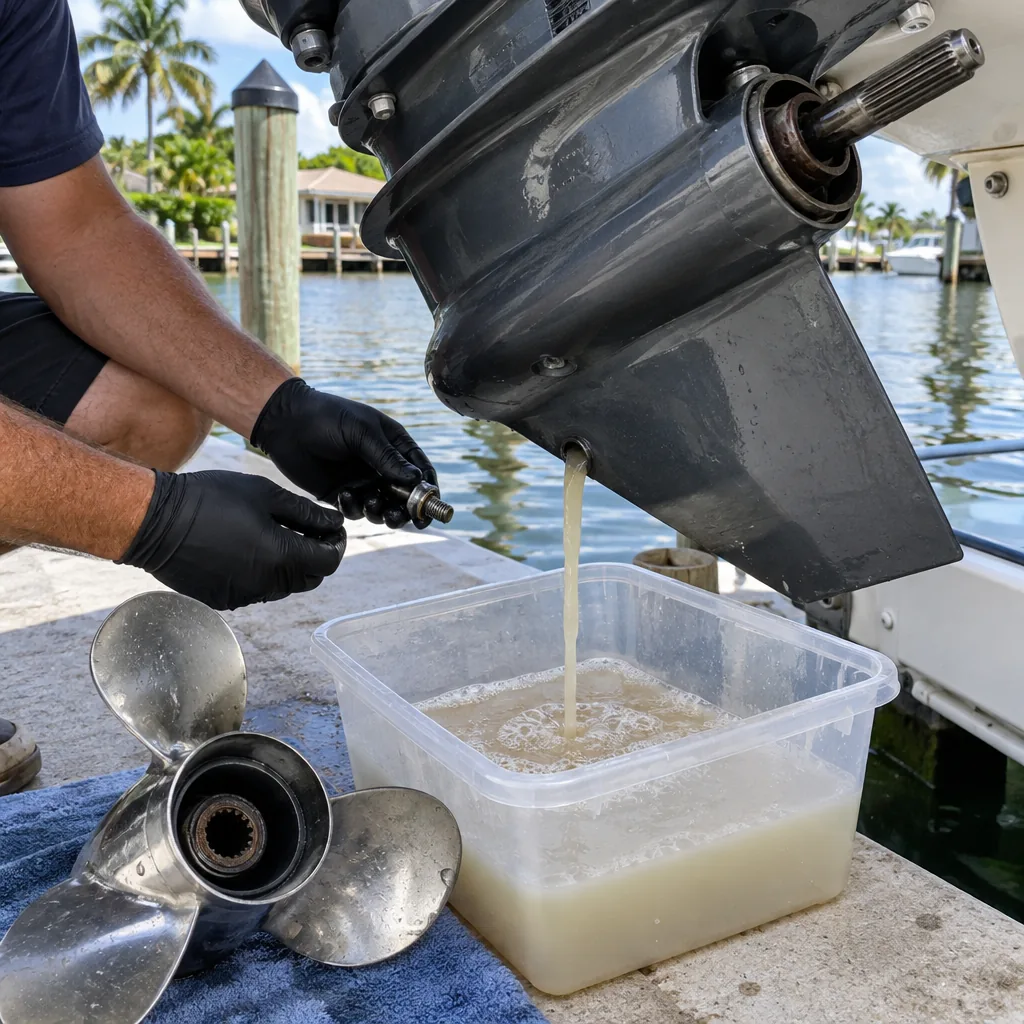
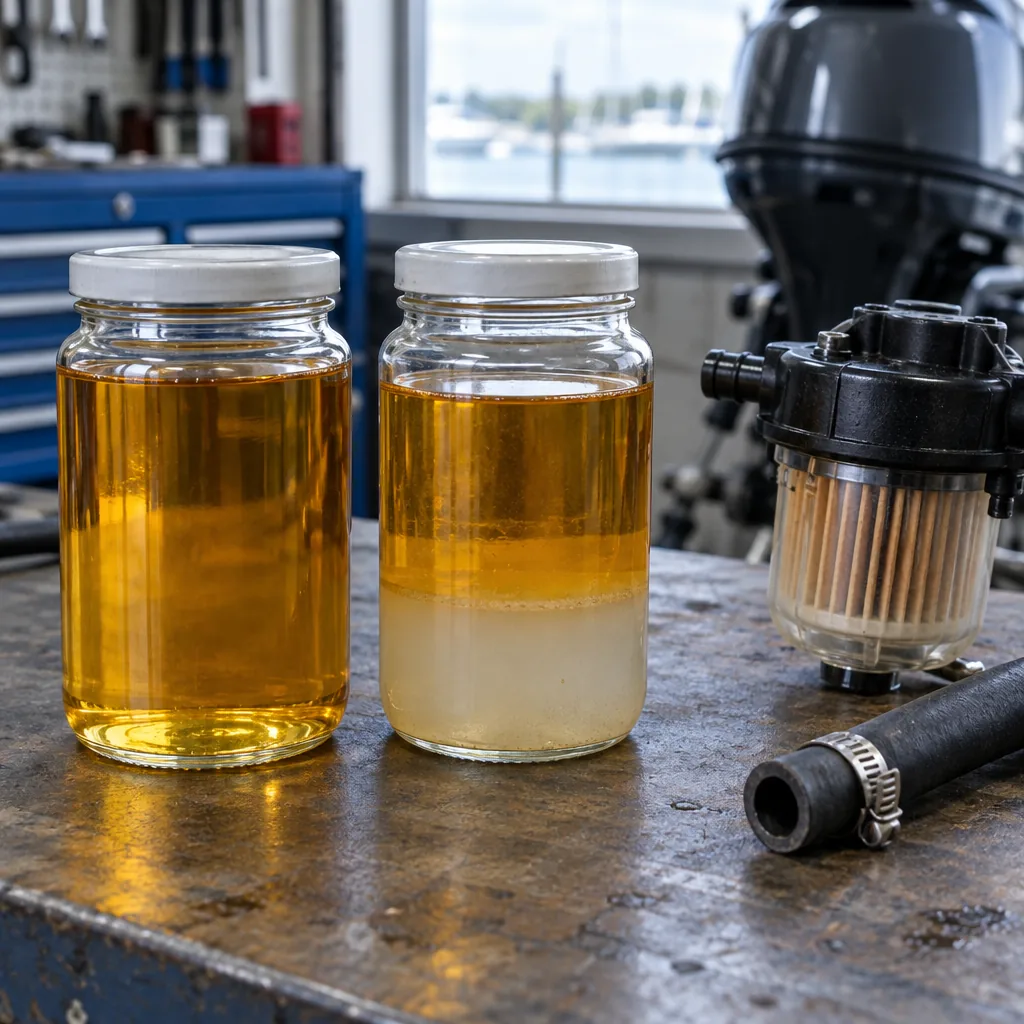
Phase-separated fuel shows up as a distinct cloudy or milky layer under clearer gasoline when you pull a sample from the tank bottom into a clear jar. Once it separates, no amount of stabilizer puts it back together. The only fix is to drain the tank, clean the lines, and replace the fuel.
What Ethanol Does to Rubber, Aluminum, and 2-Stroke Oil
Ethanol is a solvent. It softens and dissolves older rubber fuel lines, primer bulbs, and carb float needles that were specified before ethanol blends became standard. Dissolved rubber ends up as black sludge in the carb bowl or clogs the inlet screen on the fuel pump.
The water that ethanol drops out corrodes aluminum carb bodies, fuel pump housings, and fuel rails. White, powdery corrosion inside a carb bowl is a classic sign of an outboard that sat on E10 too long. In outboard engine repair, the size of the carb cleaning job usually tracks how long the fuel sat unburned.
Two-stroke owners face a third problem. Premix oil stays with the gasoline, not with the water and ethanol layer that drops out. If the engine draws from that bottom layer, it gets fuel with little or no oil in it. Running even briefly under-lubricated is a direct path to a scuffed cylinder.
Why Miami Humidity Makes It Worse
How fast ethanol picks up water depends on the humidity of the air moving through the vent and how often the tank breathes. South Florida air stays humid most of the year, and a tank sitting in the sun warms by day and cools at night. Every one of those cycles pushes air out and draws moist air back in.
That is why fuel goes bad faster on a boat docked in Miami than in a dry inland climate. It is also why the common marine guidance to use E10 within about 90 days is worth taking seriously here. Treat that window as a ceiling, not a target.
The problem compounds in Fort Lauderdale slips, where many boats sit between weekend trips through the summer. Fuel that was fine when you parked it in spring can be suspect by midsummer if you did not run it or stabilize it.
What Non-Ethanol (E0) Fuel Actually Protects
Non-ethanol gasoline, sold as E0 or marked rec-90 or pure-gas, has no alcohol in it. It does not absorb water through the vent. Any water that gets in sits at the bottom of the tank as a visible slug you can drain, instead of silently separating out of the fuel on top.
E0 still ages. It oxidizes and loses volatility over time, so it needs stabilizer for storage too.
It just does not add the water-absorption problem on top. The downsides are price and availability. E0 costs more per gallon than E10, and only some stations and fuel docks carry it.
Availability changes as stations switch suppliers, so check a current directory such as pure-gas.org for E0 pumps near your ramp before you head out. For a boat you only run on weekends, the price difference over a season is usually far smaller than one fuel-system cleanout.
What a Marine Fuel Stabilizer Can and Cannot Do
A good marine stabilizer slows the oxidation that turns gasoline into varnish, and the marine formulas add corrosion inhibitors to protect metal parts in the fuel system. Those two jobs are real and worth paying for on a boat that sits.
What no stabilizer can do is reverse phase separation. Once water and ethanol have dropped out as a bottom layer, adding a bottle to the tank does not mix them back in. Stabilizer prevents problems in fuel that is still good. It does not rescue fuel that already went bad.
Pick a product labeled for marine use and E10, dose it at the fill-up rather than weeks later, and follow the label rate. Then run the boat. A correctly dosed stabilizer plus regular use is the combination that keeps a fuel system clean between weekend trips.
Signs Your Fuel Is Already Bad
Hard starts after a weekend sitting at the dock are the first symptom. The engine cranks longer than usual, catches, dies, and finally runs rough until it clears the first bad slug. Hesitation on acceleration is the next stage - the engine stumbles when you throttle up because the fuel-air ratio is off.
Popping or backfiring through the intake means the engine is running lean on water-contaminated fuel. Varnish buildup shows up as a sticky amber film on carb bodies, injector tips, and inside the fuel bowl. Pull a sample into a clear jar and let it sit for 20 minutes - a visible cloudy layer at the bottom is phase separation.
Our mobile marine mechanics can pull a sample at your slip, drain the tank if needed, and check the fuel pump and filter in one visit. On computer-controlled engines, we run OEM diagnostics to catch lean codes before they turn into a melted piston.
The 90-Day Rule and the 100-Hour Service
The common marine rule of thumb for E10 in a vented tank in a humid climate is about 90 days. If you have not burned it or replaced it in that window, treat it as suspect and pull a sample before you trust it. Stabilized non-ethanol fuel holds up longer, but it still deserves a sample check before a long run.
Build fuel system inspection into your service calendar. A proper 100-hour boat service covers fuel filter replacement, water-separator drain, carb or injector inspection, and a sample check from the tank bottom. If you only run the boat occasionally, do a fuel check every 90 days regardless of hours.
When you store the boat, keep the tank nearly full, around 95 percent, so there is still room for the fuel to expand in the heat. Less air above the fuel means less humid air cycling in and out through the vent, which means less water absorbed into the ethanol.
Flush and Inspect Your Fuel System Before the Next Trip
If your boat has sat more than 90 days, has hard starts, backfires at low throttle, or shows a cloudy layer in a jar sample, do not just add stabilizer and hope. The water layer at the bottom of your tank will not re-mix, and the varnish buildup in the carb bodies will not clear on its own.
Call (305) 290-2701 or request a fuel system inspection online. We pull a sample from the tank bottom and show you what came out. If the fuel has separated, we flush the lines and get you back on clean E0 or correctly stabilized E10 before the next trip.
Frequently Asked Questions
How long does ethanol fuel last in a Miami boat tank?
Plan on about 90 days for E10 in a vented boat tank in Miami. Ethanol draws water in through the vent, and humid air speeds that up. Past that window, pull a sample from the tank bottom before you trust the fuel.
Can a fuel stabilizer fix phase-separated fuel?
No. Once ethanol and water drop out of gasoline as a bottom layer, no stabilizer mixes them back in. Drain the tank, clean the lines, replace the filter, and refill with fresh fuel. Stabilizer prevents problems in good fuel, it does not rescue bad fuel.
Is non-ethanol gas worth the extra cost for my boat?
Yes, for most weekend boats in South Florida. The price difference over a season is usually far smaller than a carb cleanout or a damaged engine from water contamination. Check a current directory such as pure-gas.org for E0 pumps near your ramp.
What does phase-separated fuel look like?
It's a distinct cloudy or milky layer under clearer gasoline. Pull a sample from the tank bottom into a clear jar and let it settle for 20 minutes. Any separate layer at the bottom is water and ethanol that dropped out of the fuel.
Why does ethanol attack rubber fuel lines?
Because ethanol is a solvent that softens rubber compounds not rated for it. Older primer bulbs, fuel lines, and carb float parts made before ethanol blends were common break down into sludge that clogs filters, pump screens, and carb inlets.