Raw Numbers Tell Half The Story in Miami
Boat reupholstery costs hit different in Miami. The salt air, brutal sun, and year-round boating season add up to real saltwater damage over time on marine vinyl. Basic seats might run $200-300 each, but full interior jobs often push past $5,000.
That's just the start.
The real cost depends on what's hiding under those cushions. Pulling back that first layer of vinyl often reveals the true scope of work needed. Water damage, rotted foam, and corroded frames change everything.
Material Choices Shape The Bill
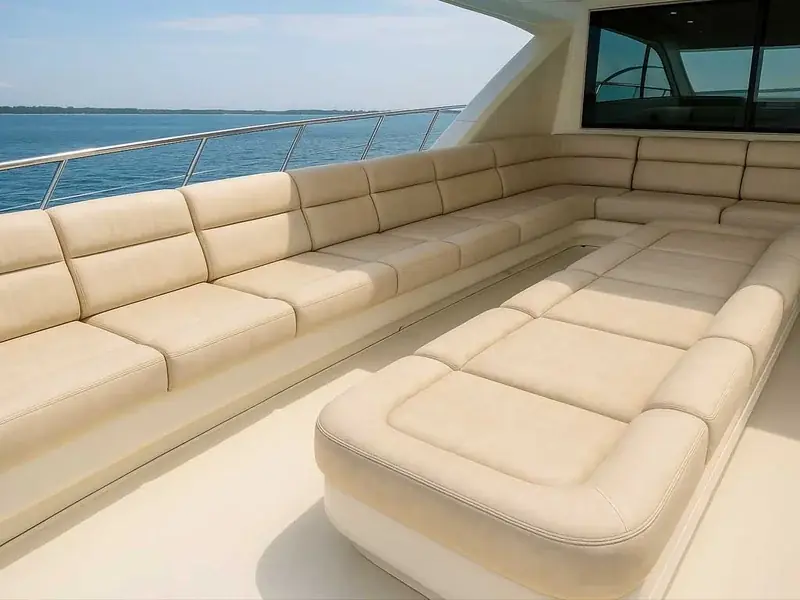
Marine-grade vinyl isn't like the stuff covering your kitchen chairs. It fights UV rays, resists mildew, and handles constant abuse. Quality matters here - cheap vinyl fails fast in Miami's harsh conditions, which is why working with a dedicated marine upholstery shop pays off.
Premium marine vinyl starts at $30 per yard. High-end options with special coatings or textures can hit $75 per yard. A typical center console needs 15-20 yards minimum. The math adds up fast.
- Basic marine vinyl: $30-45 per yard
- Premium UV-resistant vinyl: $45-75 per yard
- Foam replacement: $20-40 per square foot
- Thread and supplies: $100-300 per project
- Labor: $75-125 per hour
Labor Makes The Difference
Skilled marine upholstery work requires specific expertise. This isn't car seats or home furniture. Every piece must be waterproof, UV-resistant, and built to handle constant motion. Many owners pair reupholstery with new SeaDek EVA flooring while the interior is already torn down. Good shops charge accordingly.
Labor typically runs 60-70% of total project costs. A complete reupholstery job on a 25-foot boat often needs 40-60 hours of work. Do the math - that's $3,000-7,500 in labor alone.
Common Projects Break Down Like This
- Basic seat cushions: $200-400 each
- Complete helm seating: $800-1,500
- Full interior cabin: $3,000-8,000
- Custom work with design changes: $5,000-12,000
- Pattern matching and piping: Add 20-30%
Cheap Work Costs More Later
Low-ball quotes mean corners get cut. Maybe the shop uses automotive vinyl instead of marine grade. Maybe they skip the foam density needed to prevent mold on boat cushions. The results show up three months later when seams split and colors fade.
Quality marine upholstery should last 7-10 years in Miami conditions. Cheap work might not make it through a single season. The real expense isn't the initial job - it's having to do it twice.
Smart Money Follows These Rules
Professional marine upholsterers follow specific steps that affect final costs. Understanding these helps explain why quality work costs what it does:
- Pattern matching across multiple pieces
- Double-stitched seams with UV-resistant thread
- Proper foam density for each use case
- Waterproof backing on all surfaces
- Reinforced stress points and corners
The True Cost Shows Up In Time
Quality marine upholstery pays for itself through longevity. Owners protecting larger investments often combine new cushions with boat detailing to keep gelcoat, vinyl, and trim looking sharp together. Paired with year-round boat maintenance in Miami, good upholstery means fewer repairs and better resale value. When you factor in the cost of doing it twice, premium materials and skilled labor start looking like bargains.
Miami's marine environment demands proper materials and installation. The water's always salty, the sun's always strong, and there's no off-season. Your upholstery needs to handle it all. Pay for quality now or pay more for repairs later - those are the only real options.
Don't Settle for Cheap Upholstery That Fails Fast
When it comes to marine upholstery in Miami, quality saves money in the long run. Our team uses premium marine-grade materials and expert craftsmanship for results that last. Learn more about our marine upholstery service or request a quote. Call 305-290-2701 to discuss your reupholstery project.
Frequently Asked Questions
How much does it cost to reupholster boat seats in Miami?
Pricing depends heavily on the project. Basic seat cushions run $200 to $400 each, while complete helm seating typically costs $800 to $1,500. A full interior cabin reupholstery falls in the $3,000 to $8,000 range, and custom work with design changes can run $5,000 to $12,000. Pattern matching and piping add another 20 to 30% on top. The real cost depends on what's hiding under the cushions, since pulling back that first layer of vinyl often reveals water damage, rotted foam, or corroded frames that change the scope of work and bump the bill higher than the original quote.
Why is marine vinyl more expensive than regular upholstery vinyl?
Marine-grade vinyl isn't like the stuff covering kitchen chairs. It fights UV rays, resists mildew, and handles constant abuse from salt air and sun. Cheap vinyl fails fast in Miami's harsh conditions, while quality marine vinyl is engineered to last. Basic marine vinyl starts at $30 to $45 per yard, and premium UV-resistant vinyl runs $45 to $75 per yard. A typical center console needs 15 to 20 yards minimum, so material costs add up quickly. Foam replacement runs $20 to $40 per square foot, and thread plus supplies add another $100 to $300 per project on top of the vinyl.
How much of a boat upholstery quote is labor versus materials?
Labor typically runs 60 to 70% of total project costs. A complete reupholstery job on a 25-foot boat often takes 40 to 60 hours, which works out to $3,000 to $7,500 in labor alone at typical Miami rates of $75 to $125 per hour. Skilled marine upholstery requires specific expertise that has nothing to do with car seats or home furniture. Every piece must be waterproof, UV-resistant, and built to handle constant motion, which is why good shops charge accordingly. Pattern matching, double-stitched seams, proper foam density, and reinforced stress points all require time and craftsmanship.
How long should quality boat upholstery last in Miami?
Quality marine upholstery should last 7 to 10 years in Miami conditions when paired with regular maintenance. Cheap work might not make it through a single season. Low-ball quotes mean corners get cut. Maybe the shop uses automotive vinyl instead of marine grade, or skips the foam density needed to prevent mold. The results show up three months later when seams split and colors fade. The real expense isn't the initial job but having to do it twice. Premium materials and skilled labor look like bargains once you factor in the cost of repeating the work every season.