



Running aground isn't a question of if—it's a question of when. Sandbars shift. Tides drop. Charts lie. One minute you're cruising, the next you're high and dry with your prop chewing mud. The difference between a minor inconvenience and a catastrophic repair bill comes down to what you do in the next sixty seconds.
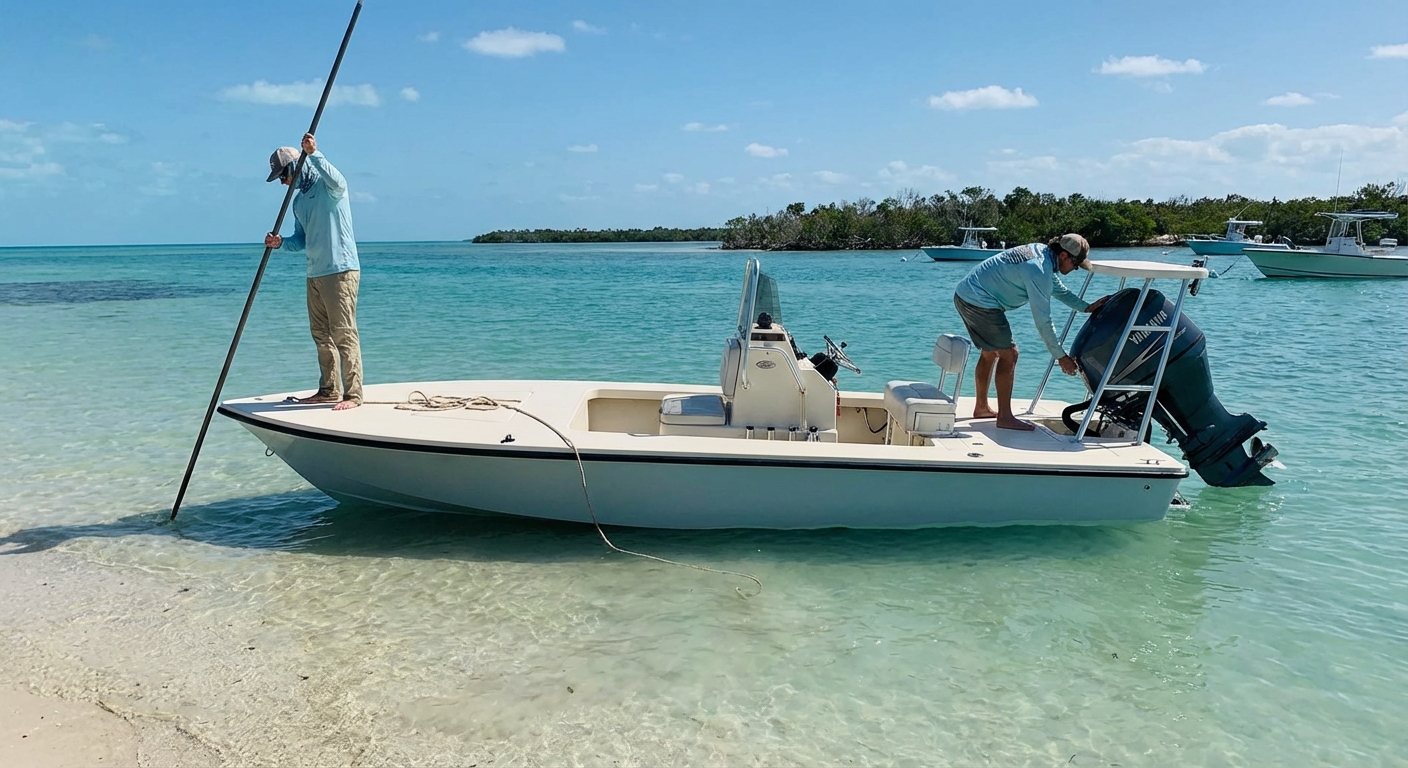
Most boaters make the situation worse before they make it better. They gun the throttle, hoping momentum will save them. They panic and start making decisions that compound the damage. They turn a simple grounding into a lower unit replacement and a weekend in the shop. The reality? Getting unstuck is less about brute force and more about understanding physics, patience, and knowing when to stop digging.
Kill the Engine Before You Wreck It
The moment you feel that sickening thud or hear the prop start grinding, your hand should already be reaching for the key. Every second that engine runs while you're aground is another second of potential destruction. Props aren't designed to chew through sand, rocks, or mud. Lower units aren't built to absorb impact while spinning at full RPM. The cooling system isn't meant to suck up debris.
Shut it down. Immediately. Lift the outdrive or tilt the outboard if you can. The goal is to stop all contact between your running gear and whatever you just hit. This single action will save you more money than anything else on this list. We've seen boaters turn a $200 tow into a $4,000 repair because they kept the engine running for thirty seconds too long.
Figure Out What You're Dealing With
Not all groundings are created equal. Sometimes you're barely kissing the bottom. Other times you're sitting so high the hull's out of the water. The first step after killing the engine is understanding the severity. Grab a push pole, a paddle, or even a boat hook and start probing the water around you. Check all four corners. See where the depth drops off and where it stays shallow.
This reconnaissance matters because your next move depends entirely on what you find. If you're in six inches of water with a two-foot draft, you're not backing out under your own power. If you're in eighteen inches and just barely touching, a weight shift might be all you need. Don't guess. Know what you're working with before you start making moves.
Boats don't sit level when they're stuck. Usually, the bow is up and the stern is down, or one side is lower than the other. Your job is to shift the weight in a way that reduces draft where you need it most. If the bow is stuck, move everyone to the stern. If one side is hung up, shift weight to the opposite side. If you're stuck dead center, get people off the boat entirely if it's safe to do so.
This isn't theory—it's physics. Every hundred pounds you move changes your waterline. Every person who steps off the boat gives you another inch of clearance. We've seen boats float free just by having three people wade into knee-deep water. The key is being deliberate about it. Don't just shuffle people around randomly. Think about where the boat is stuck and move weight accordingly.
Here's what works when redistributing weight:
- Move passengers to the stern if the bow is aground
- Shift everyone to one side if you're listing
- Have people step off into the water if it's shallow and safe
- Remove heavy gear like coolers, anchors, and fuel tanks if needed
- Use the trim tabs or tilt the engine to adjust the hull angle
Backing Out Beats Powering Through
If you've shifted weight and you're still stuck, the next move is trying to reverse out the way you came in. This is where most people screw up. They drop the engine, fire it up, and slam it into reverse at full throttle. The prop digs in. The hull settles deeper. The situation gets worse. Instead, you need to be surgical about it.
Lower the engine slowly. Start in neutral. Ease into reverse at idle speed. If you feel resistance, stop immediately. The goal is to float backward, not blast backward. If the boat doesn't move within a few seconds, you're not getting out this way. Trying harder won't help—it'll just chew up your prop and impeller. Accept that and move to the next option.
Push Poles and Paddles Do the Real Work
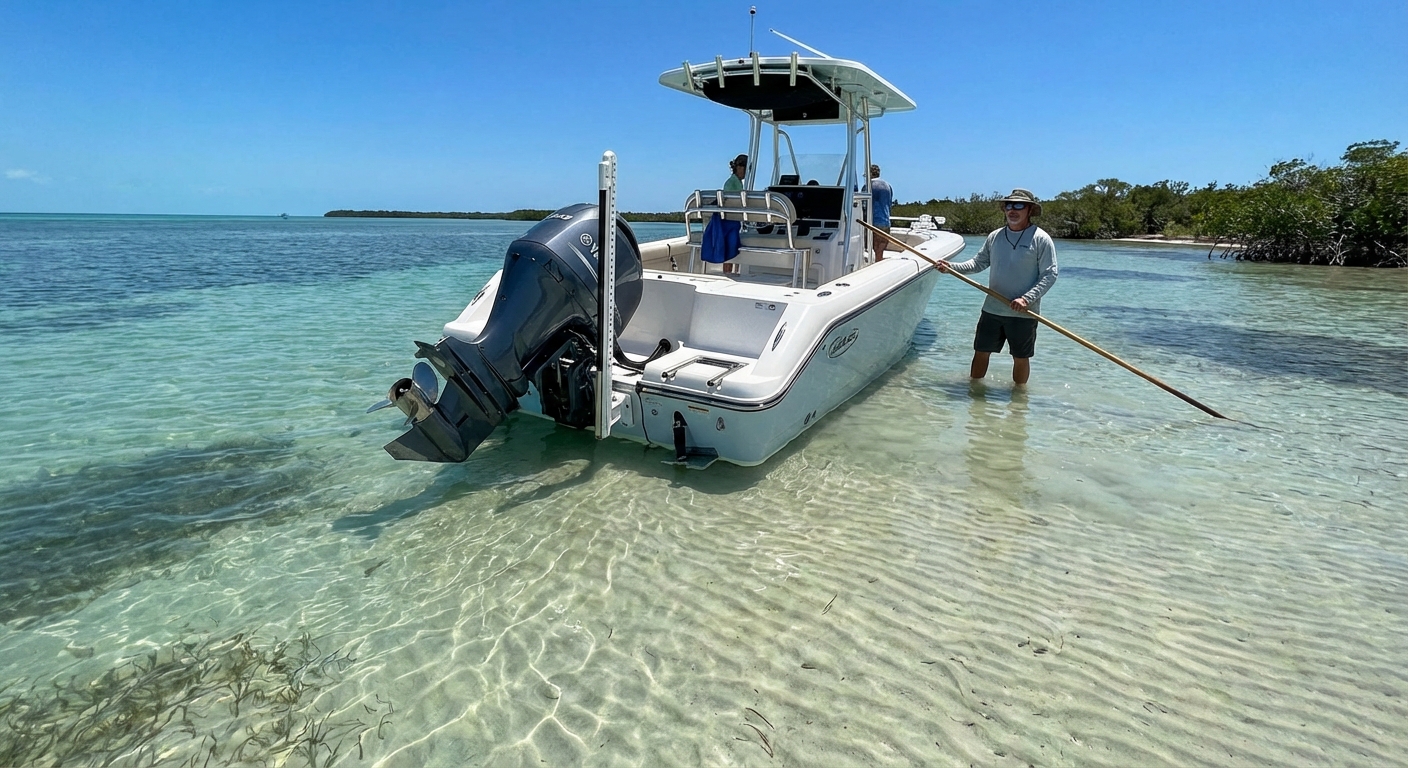
Forget the engine for a minute. The most effective tool for getting unstuck is often the simplest: a long pole and some leverage. A push pole, a paddle, or even an oar can generate enough force to move a boat in shallow water. The trick is using it correctly. Plant the pole firmly into the bottom, angle it toward the stern, and push with your legs, not your arms.
This method works because you're applying force directly to the hull without relying on a prop that's already compromised. You're also not stirring up more sediment or risking further damage to your running gear. It's slow, it's manual, and it works. If you've got multiple people on board, coordinate the effort. One person on each side, pushing in sync, can move a surprising amount of boat.
Here's how to maximize your push pole effectiveness:
- Plant the pole at a 45-degree angle toward the stern
- Push with your legs and core, not just your arms
- Work in short, controlled bursts rather than one long push
- Coordinate with other crew members for synchronized effort
- Reposition the pole after each push to maintain leverage
Tides and Currents Are Either Your Enemy or Your Ally
If you're stuck in tidal water, time becomes a factor. A falling tide means you're getting more stuck by the minute. A rising tide means you might float free without doing anything. Check the tide chart if you have one. Look at the water level relative to nearby pilings or rocks. Figure out whether you're working with the clock or against it.
If the tide is rising, sometimes the smartest move is to do nothing. Secure the boat, make sure it's not going to drift into something worse, and wait. Trying to force your way out when the water's coming up anyway is a waste of energy and risk. If the tide is falling, you need to act fast. Every minute you wait makes the problem harder to solve. This is when you call for help, not two hours later when you're sitting on dry sand.
Calling for a Tow Isn't Admitting Defeat
There's a point where DIY stops being smart and starts being stubborn. If you've tried shifting weight, backing out, and pushing with poles, and you're still stuck, it's time to call someone with a bigger boat and more experience. TowBoatUS, Sea Tow, or a local marina can get you unstuck without damaging your boat. Yes, it costs money. So does a new prop, a new lower unit, and a weekend in the shop.
When you call for a tow, be specific about your location and situation. Use GPS coordinates if you have them. Describe what you're stuck on—sand, mud, rock—and how long you've been there. The more information you provide, the faster they can get to you and the better prepared they'll be. Don't downplay the situation or try to sound like you've got it under control if you don't. The goal is to get help, not to protect your ego.
Here's what to have ready when calling for assistance:
- Your exact GPS coordinates or a clear landmark description
- The type of bottom you're stuck on (sand, mud, rock)
- How long you've been aground and whether the tide is rising or falling
- The size and type of your boat
- Any damage you've already noticed
Inspect Everything Before You Start the Engine Again
Once you're free—whether you got out on your own or with help—don't just fire up the engine and take off. You need to check for damage. Look at the prop for bent blades or missing pieces. Check the lower unit for cracks or leaks. Inspect the hull for gouges or punctures. Run your hand along the bottom if you can reach it. Look for anything that seems off.
Start the engine in neutral and watch the gauges. Listen for unusual sounds. Check the water pump stream to make sure it's flowing properly. If anything seems wrong—strange noises, weak water flow, vibration—shut it down and call for a tow. Running a damaged engine or lower unit will turn a minor repair into a major one. We've seen people limp home on a compromised lower unit only to have it seize up completely halfway back to the dock.
The Prop and Skeg Take the Worst of It
When you hit bottom, the prop and skeg are the first casualties. A bent prop will cause vibration, reduce performance, and put stress on the entire drivetrain. A damaged skeg affects steering and can lead to more serious lower unit problems. Even if everything looks okay at first glance, you might have damage that only shows up under load.
Get the prop checked by a professional after any grounding. A bent blade that looks minor can throw off the balance enough to damage seals and bearings over time. If the skeg is cracked or broken, it needs to be addressed before you take the boat out again. These aren't cosmetic issues—they're structural ones that affect how your boat handles and how long your lower unit lasts. Understanding boat propeller damage can help you identify issues early before they become catastrophic failures.
Cooling Systems Suffer in Silence
One of the most overlooked consequences of running aground is what happens to your cooling system. When you're stuck and the prop is churning through sand or mud, that debris gets sucked into the water intake. It clogs the impeller, scratches the housing, and reduces flow. You might not notice it immediately, but the next time you run the engine hard, it overheats.
After any grounding, flush the cooling system thoroughly. If you have a raw water system, run fresh water through it for at least ten minutes. Check the impeller for damage or debris. Look at the water pump housing for scratches or scoring. If you're not comfortable doing this yourself, have a mechanic do it. An impeller replacement costs a fraction of what an overheated engine costs.
Here's what to check in your cooling system after a grounding:
- Water pump impeller for torn or missing blades
- Intake screen for clogs or debris
- Water pump housing for scratches or damage
- Thermostat operation and flow rate
- Exhaust water stream strength and consistency
Hull Damage Isn't Always Obvious
Fiberglass doesn't always crack in a way you can see from the outside. Sometimes the damage is internal—delamination, stress fractures, or compromised core material. If you hit hard enough to stop the boat suddenly, you need to inspect more than just the surface. Look inside the hull for cracks in the gelcoat, feel for soft spots, and check stringers and bulkheads for movement.
Aluminum hulls dent and bend. A small dent might not seem like a big deal, but it can create a stress point that leads to cracking later. If you've got a pontoon boat, check the tubes for punctures or leaks. Even a slow leak can sink a pontoon if it goes unnoticed. Don't assume that because the boat is still floating, everything is fine. Damage has a way of showing up later when you're miles from shore. Knowing how to check for hidden water damage can prevent costly surprises down the line.
Prevention Beats Reaction Every Time
The best way to deal with running aground is to not run aground in the first place. That means using charts, watching your depth finder, and paying attention to the water. Light-colored water is shallow water. Dark water is deep water. Birds standing in the water mean it's shallow enough to stand in. These aren't secrets—they're basics that too many boaters ignore.
Slow down in unfamiliar areas. Use your electronics. Mark hazards on your GPS so you don't hit them again. If you're in tidal water, know when high and low tide occur and plan your route accordingly. The five minutes you spend checking a chart can save you hours of being stuck and thousands in repairs. We've built our approach to boating around this exact principle: preparation eliminates problems. Understanding what to check before every boat ride ensures you're prepared for whatever conditions you encounter.
Here's what actually prevents groundings:
- Using updated charts and GPS with marked hazards
- Watching your depth finder constantly in shallow areas
- Slowing down when water color changes or birds appear
- Knowing tide schedules and planning routes around them
- Marking previous groundings or hazards in your GPS
Local Knowledge Trumps Technology
Charts are great. GPS is useful. But neither one beats talking to someone who runs that water every day. Marina staff, local guides, and other boaters know where the sandbars shift, where the channels narrow, and where the rocks hide. They know which markers are accurate and which ones are off. They know what the tide does to certain areas and when it's safe to cut through.
Ask questions before you head out. Find out where the trouble spots are. Get specific directions, not just general advice. If someone tells you to stay east of a certain marker, find out why. If they say to avoid an area at low tide, ask what happens there. This information is free, it's accurate, and it's based on real experience. Use it. If you're operating in Key Biscayne or other South Florida waters, local knowledge becomes even more critical due to constantly shifting sandbars and tidal patterns.
Running Aground Teaches You What Matters
Every boater runs aground eventually. The ones who learn from it become better boaters. The ones who ignore it keep making the same mistakes. The difference isn't talent or experience—it's whether you treat the incident as a lesson or an inconvenience. Pay attention to what went wrong. Was it speed? Inattention? Bad information? Figure it out and adjust.
The boats that last are the ones operated by people who respect the water and understand that mistakes have consequences. Running aground isn't the end of the world, but it's a reminder that the water doesn't care about your schedule, your ego, or your excuses. It operates on physics and geography. Your job is to work within those constraints, not against them. The boaters who get this spend less time stuck and more time on the water where they belong. When damage does occur, knowing how to find a reliable mobile boat repair service means you can get back on the water quickly without compromising on quality repairs.
Need help after running aground or want to make sure your boat is still seaworthy? We provide comprehensive boat repair services throughout South Florida, including thorough post-grounding inspections, prop and lower unit repairs, and hull damage assessment. Our mobile marine mechanics come to you, whether you're stuck at the dock or need emergency repairs. Call us today and let's get your boat checked out the right way—before a small problem becomes a big one.
Let’s Get You Back on the Water
Every grounding is a story, but it doesn’t have to end with costly repairs or lost weekends. We’re here to help you recover quickly and safely, so you can focus on what matters—enjoying your time on the water. If you need a professional inspection or fast repairs after running aground, let’s connect. Call us at 305-290-2701 or Request Boat Repair or Service and we’ll make sure your boat is ready for your next adventure.


.png)