



Most boats don't come with sound systems. Smaller vessels, older models, and budget-friendly rigs skip the stereo entirely. That leaves you with two choices: accept the silence or bring your own audio. Bluetooth speakers have changed the game. They're portable, they're tough, and they don't require drilling holes or running wires. The right setup can turn a quiet afternoon on the water into something worth remembering.
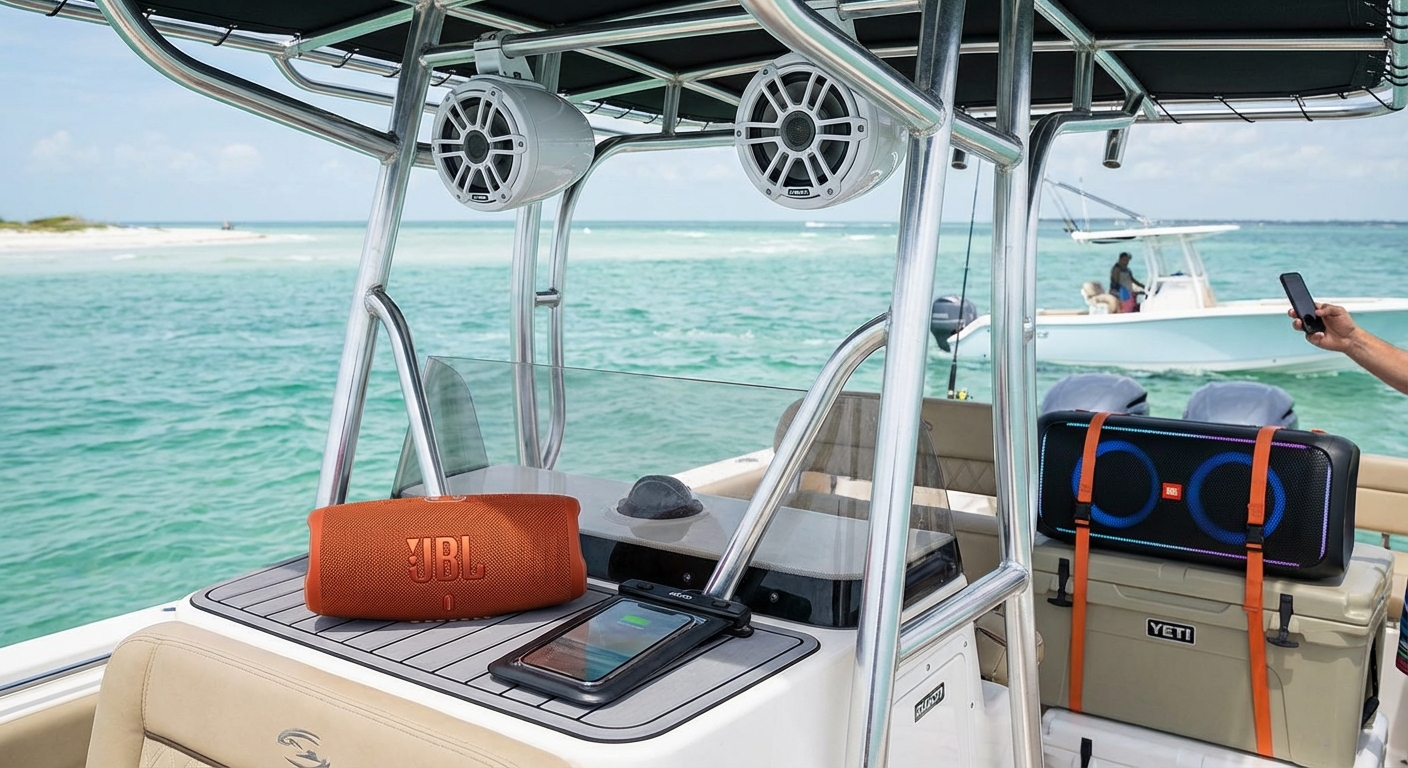
The challenge isn't finding a speaker. It's finding one that survives saltwater, sun, and the occasional rogue wave. It's about getting enough volume to cut through wind and engine noise without draining the battery before you dock. And it's about choosing a setup that fits your boat, your budget, and how you actually use the thing. Execution matters here. A great speaker in the wrong spot is useless. A cheap one that dies halfway through the day is worse.
Waterproofing Isn't Negotiable
Water and electronics don't mix. That's not news. But the difference between a speaker that's "water-resistant" and one that's actually waterproof can cost you hundreds of dollars. IPX ratings exist for a reason. IPX4 means it can handle splashes. IPX7 means it can survive being submerged for up to 30 minutes. On a boat, you want IPX7 at minimum. Anything less is a gamble.
Saltwater makes it worse. Freshwater is forgiving. Saltwater corrosion clogs and destroys. If you're running in the ocean or brackish bays, the speaker needs to be sealed tight. Look for rubberized ports, reinforced seams, and materials that won't degrade under UV exposure. The best speakers are built like they expect to get dunked. Because eventually, they will.
- IPX7 or higher is the baseline for marine use
- Sealed ports and rubberized casings protect against corrosion
- UV-resistant materials prevent cracking and fading
- Floating designs make recovery easier if the speaker goes overboard
Battery Life Separates the Winners
A speaker that dies after four hours is a paperweight. Most boaters are out for six, eight, or ten hours at a stretch. You need a battery that lasts. The best Bluetooth speakers deliver 12 to 20 hours of playtime on a single charge. That's enough for a full day without worrying about power banks or cutting the music short.
Volume drains batteries faster. If you're cranking it to compete with wind and waves, expect shorter runtimes. Some speakers include power-saving modes or adjustable EQ settings that extend battery life without sacrificing too much sound. Others let you check the charge level via an app, so you're not caught off guard. Plan for the worst-case scenario. If the spec sheet says 15 hours, assume you'll get 10 under real conditions.
- Look for 12+ hours of rated playtime
- Higher volumes reduce battery life significantly
- Power-saving modes and EQ adjustments help extend runtime
- App-based battery monitoring prevents surprises
- Bring a portable charger for multi-day trips
Volume and Clarity Beat Everything Else
Open water is loud. Wind, waves, engines, and other boats create a wall of noise. A speaker that sounds great in your living room might disappear on the water. You need wattage, driver size, and smart tuning. The best marine speakers push 20 to 50 watts or more, with bass that doesn't distort and highs that stay crisp even at max volume.
Clarity matters as much as volume. A muddy, distorted speaker at full blast is worse than a quieter one that stays clean. Look for speakers with multiple drivers—separate woofers and tweeters—that handle different frequencies without overlap. Some models include passive radiators for deeper bass without adding bulk. Test the speaker at high volume before you buy. If it crackles or loses definition, keep looking.
- 20 to 50 watts minimum for open-water use
- Multiple drivers improve clarity across frequencies
- Passive radiators add bass without extra weight
- Test at max volume to check for distortion
Mounting Options Keep Speakers Where You Need Them
A loose speaker is a lost speaker. Boats move. Waves hit, wakes roll, and sudden turns send unsecured gear sliding. The best setups include mounts, straps, or built-in attachment points. Some speakers come with suction cups, carabiners, or rail clamps. Others are designed to sit in cup holders or wedge into tight spaces. Figure out where the speaker will live before you buy it.
Permanent mounts work for boats you own and use regularly. Marine-grade Bluetooth speakers with bracket systems can be bolted to rails, dashboards, or T-tops. They stay put, they're always ready, and they don't take up storage space. Portable setups are better for renters or multi-boat owners. A speaker with a carabiner or strap can move from boat to boat, kayak to paddleboard, without tools or hassle.
- Built-in mounts, straps, or carabiners prevent loss
- Suction cups and rail clamps work for temporary setups
- Permanent brackets suit boats you own long-term
- Cup holder designs fit most center consoles and pontoons
- Non-slip bases reduce sliding on smooth surfaces
Pairing Multiple Speakers Expands Coverage
One speaker works for small boats. Larger vessels need more. Pairing two or more Bluetooth speakers creates stereo sound or broader coverage. Many brands support wireless pairing—connect two units and they sync automatically. Place one at the bow and one at the stern, or cluster them in a seating area for surround-style audio.
Not all speakers pair well. Some brands limit pairing to identical models. Others support cross-model compatibility within the same product line. Check the specs before you buy. The best systems let you control volume, EQ, and playback from a single device. Mesh networks take it further, linking multiple speakers across the boat with seamless handoff and synchronized playback.
- Stereo pairing improves sound quality and immersion
- Multi-speaker setups cover larger boats more evenly
- Brand-specific pairing limits mixing and matching
- Mesh networks sync multiple units without lag
- App control simplifies management of paired speakers
Single Rugged Units Handle Small Boats
Kayaks, dinghies, and small fishing boats don't need a full sound system. A single rugged Bluetooth speaker does the job. Models like the JBL Charge 5 or Ultimate Ears BOOM 3 are compact, waterproof, and loud enough for close quarters. They fit in dry bags, clip to gear loops, and charge via USB. Simple, effective, and hard to kill.
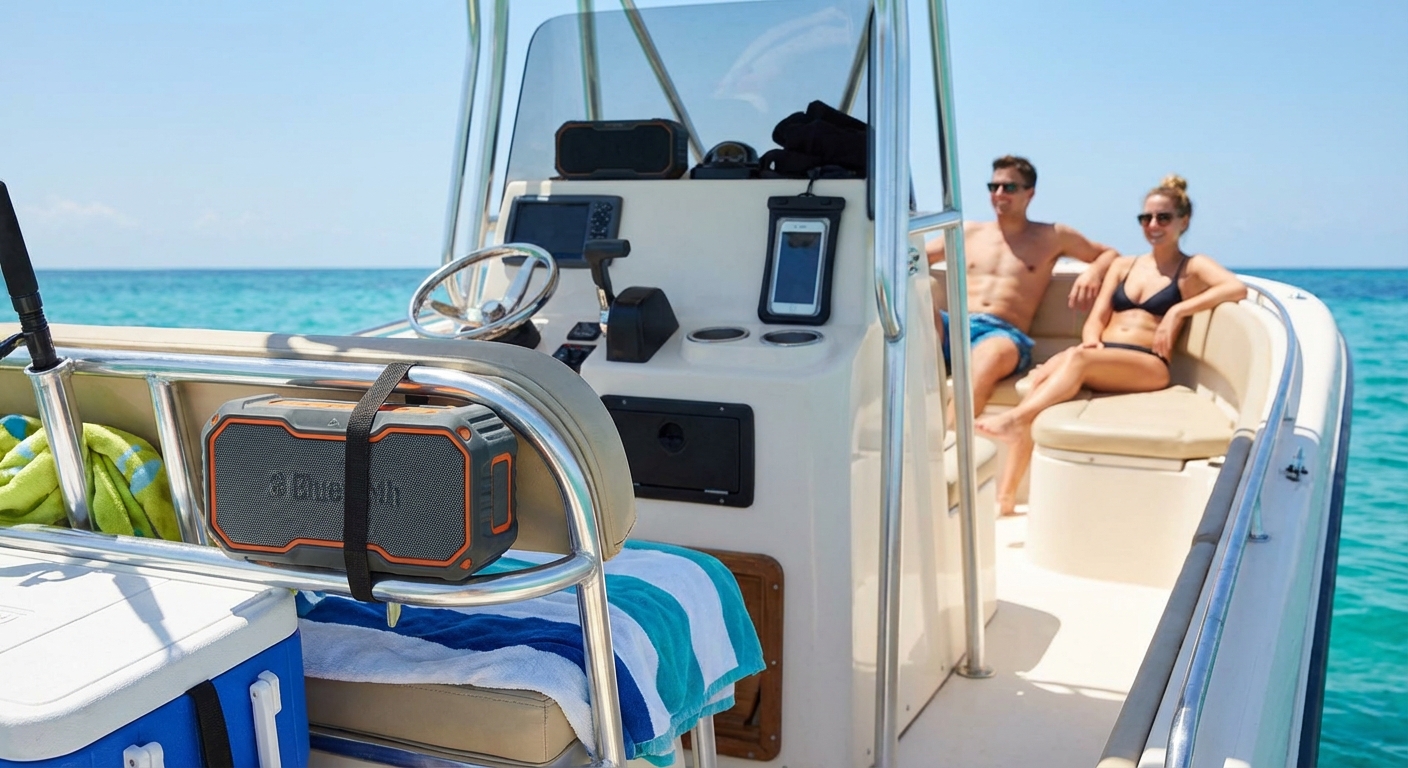
These speakers excel at portability. Toss one in a backpack, throw it in a hatch, or strap it to a cooler. They're light enough to carry all day and tough enough to survive drops, splashes, and rough handling. Battery life typically hits 12 to 15 hours, and sound quality punches above the size. For solo boaters or small crews, this is the sweet spot.
Dual Speaker Stereo Pairs Deliver Richer Sound
Stereo separation makes music sound fuller. Two speakers placed apart create a wider soundstage, with instruments and vocals spread across the space instead of coming from a single point. Brands like Bose, Sonos, and JBL support wireless stereo pairing. Connect two units, place them at opposite ends of the boat, and the difference is immediate.
This setup works best on pontoons, center consoles, and bowriders where you have room to spread the speakers out. The farther apart they are, the better the stereo effect. Keep them within Bluetooth range of your phone or music source—usually 30 to 50 feet. Some systems let you adjust the balance between left and right channels, fine-tuning the sound to match your seating layout.
Party Speakers Bring the Bass
Big boats and big crowds need big sound. Portable party speakers like the JBL PartyBox or Soundcore Rave deliver high wattage, deep bass, and features like LED light shows and microphone inputs. They're heavier—often 20 to 30 pounds—but they're built to fill open spaces with music. Perfect for raft-ups, sandbar hangouts, or dockside gatherings.
These speakers aren't subtle. They're designed to dominate. Most include handles or wheels for transport, and many are splash-proof rather than fully waterproof. Keep them under a Bimini top or in a covered area to avoid direct exposure. Battery life varies, but expect 8 to 12 hours at moderate volume. Bring a power bank or plan to recharge between sessions.
Marine-Grade Speakers with Mounts Are Built to Stay
Some Bluetooth speakers are designed specifically for boats. Brands like Fusion, Ecoxgear, and Wet Sounds offer marine-grade units with mounting brackets, reinforced housings, and saltwater-resistant components. These speakers bolt to rails, T-tops, or dashboards, staying put no matter how rough the ride gets.
Marine-grade speakers cost more, but they last longer. They're built to handle UV exposure, saltwater spray, and constant vibration. Many include integrated controls, so you don't need to pull out your phone to adjust volume or skip tracks. Installation is straightforward—most mounts use stainless steel hardware and require only basic tools. Once installed, they're always ready.
- Marine-grade construction resists saltwater and UV damage
- Mounting brackets keep speakers secure in rough conditions
- Integrated controls reduce reliance on phone access
- Stainless steel hardware prevents rust and corrosion
- Higher upfront cost pays off in durability
Mesh Systems Cover Every Corner
Large boats with multiple seating areas benefit from mesh speaker systems. These setups link several Bluetooth speakers into a single network, controlled from one device. Ultimate Ears, Bose, and Sonos all offer mesh-capable models. Place speakers throughout the boat—cabin, cockpit, flybridge—and they sync automatically, playing the same music at the same time.
Mesh systems eliminate dead zones. No more cranking the volume to reach the back of the boat. Each speaker operates at a reasonable level, and the combined output covers the entire vessel. You can adjust individual speaker volumes or group them by zone. The downside? Cost. Outfitting a boat with four or five mesh speakers adds up fast. But for serious boaters who want seamless audio everywhere, it's worth it.
Securing Speakers Prevents Loss
Unsecured speakers end up overboard. It happens more often than you'd think. A sudden wake, a sharp turn, or a careless guest, and your $200 speaker is sinking. Prevent it. Use straps, carabiners, or mounts. Some speakers include built-in attachment points. Others require aftermarket accessories like bungee cords or adhesive mounts.
Non-slip mats help on flat surfaces. Place a speaker on a dashboard or cooler lid, and a rubber mat keeps it from sliding. For speakers without mounting options, consider a mesh bag or cargo net. Secure the bag to a cleat or rail, and the speaker stays put even if the boat gets tossed around. It's a small step that saves big headaches.
- Straps and carabiners attach speakers to rails or gear loops
- Non-slip mats prevent sliding on smooth surfaces
- Mesh bags or cargo nets secure portable speakers
- Adhesive mounts work for semi-permanent placement
- Always double-check attachments before leaving the dock
Protecting Your Phone Matters Too
Your phone is the music source. If it gets wet, the music stops. Waterproof pouches or cases are cheap insurance. Brands like Lifeproof and Pelican make cases that seal out water while keeping touchscreens functional. Dry bags work too, though they're less convenient for changing songs or adjusting volume.
Keep the phone charged. Streaming music over Bluetooth drains batteries faster than you'd expect. Bring a portable charger or a solar-powered battery pack. Some boats have USB ports or 12V outlets for charging on the go. Plan ahead. A dead phone means no music, no navigation, and no way to call for help if something goes wrong.
Charging Before You Go Saves the Day
Dead batteries kill the vibe. Charge every speaker fully before you leave. Don't assume a partial charge will last. If you're running multiple speakers, charge them all overnight. Bring a portable power bank as backup. USB-C charging is faster and more efficient than older micro-USB standards, so prioritize speakers with modern ports.
Some speakers include pass-through charging, letting you charge your phone while the speaker is plugged in. Others support solar charging via compatible panels. For extended trips, a small solar panel and a power bank can keep everything topped off without needing shore power. It's overkill for day trips, but essential for multi-day cruises or remote anchorages.
Volume Etiquette Keeps the Peace
Loud music carries across water. What sounds reasonable on your boat might be obnoxious to someone anchored 100 yards away. Be mindful. Keep the volume at a level where you can still hear other boats, horns, and radio calls. If you're in a crowded anchorage or near a no-wake zone, dial it back.
Wildlife doesn't appreciate the noise either. Nesting birds, marine mammals, and fish all react to sound. Blasting music in sensitive areas disrupts ecosystems and draws complaints. Save the party speakers for open water or designated recreation zones. Respect the environment and other boaters, and everyone has a better time.
The Right Setup Depends on Your Boat
Small boats need simple solutions. A single rugged speaker handles kayaks, inflatables, and skiffs. Mid-sized boats benefit from stereo pairs or marine-grade mounted units. Large vessels with multiple decks or seating areas call for mesh systems or party speakers. Match the setup to the boat, the crew size, and how you use the water.
Budget matters, but so does durability. A cheap speaker that dies after one season costs more in the long run than a quality unit that lasts five years. Prioritize waterproofing, battery life, and sound quality. Everything else is secondary. The best Bluetooth speaker setup is the one that works when you need it, survives the conditions you throw at it, and delivers sound that makes the trip better. Execution beats features. Choose wisely, secure it properly, and enjoy the water with a soundtrack that actually lasts.
If you need help with boat electrical systems, troubleshooting electrical problems, or pre-trip boat checks, professional boat repair services can keep your vessel running smoothly. Whether you're dealing with battery issues
Let’s Get Your Boat Outfitted for Sound
We know how much the right audio setup can transform your time on the water. If you’re ready to upgrade your boat’s sound or need help with any electrical or repair needs, let’s make it happen together. Give us a call at 305-290-2701 or Request Boat Repair or Service and we’ll help you enjoy every trip with the music and reliability you deserve.


.png)