



Hull scratches are part of the game. You dock, you trailer, you navigate tight channels, and eventually, your boat picks up marks. Some owners panic at the first sign of a scratch. Others ignore everything until it's too late. The truth sits somewhere in between. Not every scratch demands immediate action, but some will cost you big if you let them slide. Right now, knowing the difference is the only thing that matters.
We've spent years at the intersection of boat ownership, maintenance, and real-world use. We've seen hulls that looked trashed but ran fine for decades. We've also seen boats that looked pristine from a distance but were rotting from the inside out because someone ignored a scratch that mattered. The lesson? Execution beats intention. You can't just hope your hull stays intact. You have to know what to fix and what to leave alone.
Material Dictates Everything
Before you can judge a scratch, you need to understand what you're working with. Hull materials behave differently under stress, and what's harmless on one boat can be catastrophic on another. Most recreational boats fall into three categories: fiberglass, aluminum, or wood. Each one has its own rules.
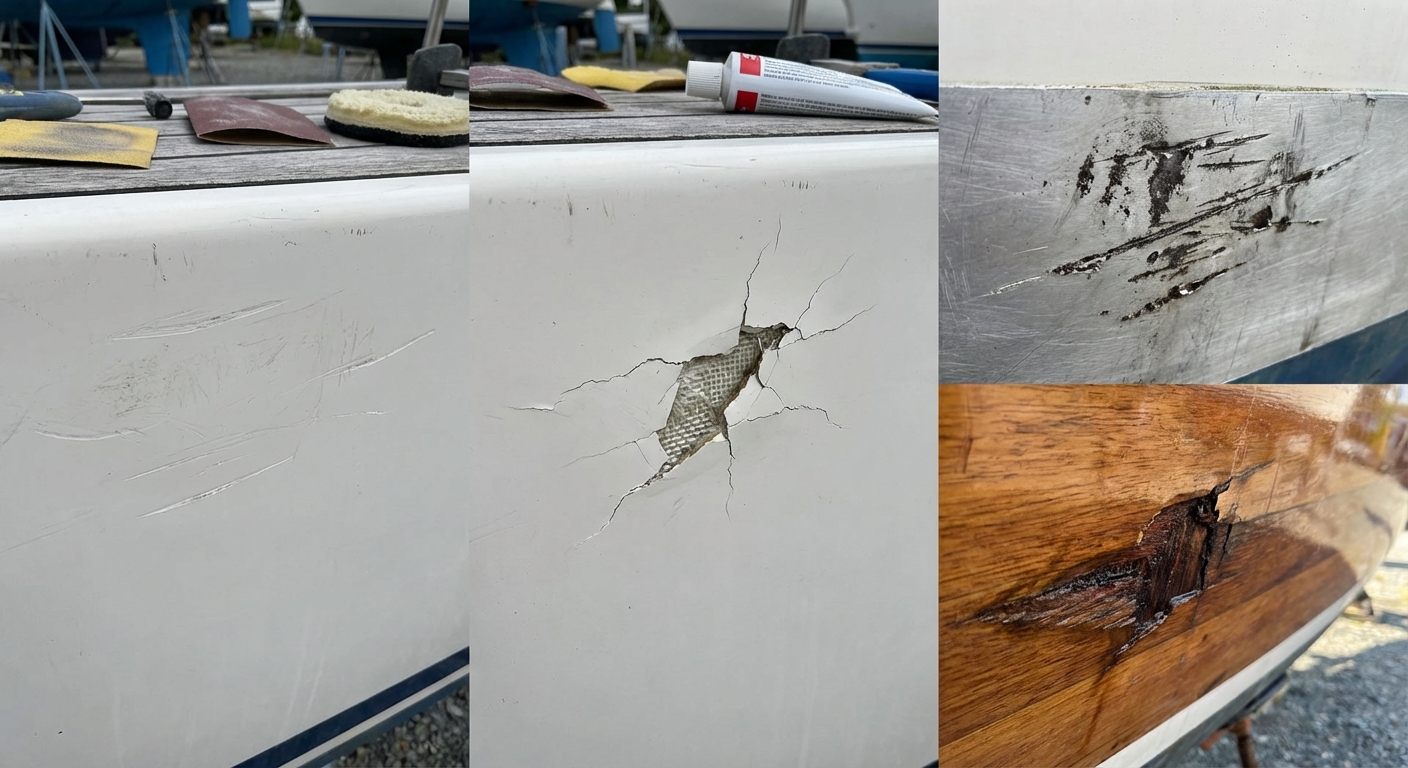
Fiberglass hulls dominate the market. They're built with layers of resin and matting, then topped with a gelcoat that gives the boat its shine and color. That gelcoat is your first line of defense. Scratch it, and you might just have a cosmetic issue. Go deeper, and you're exposing the structural layers underneath. Aluminum hulls are tougher in some ways. They resist punctures better than fiberglass, but they show every mark. A scratch on aluminum might look ugly without being dangerous. Wood hulls are rare now, but if you own one, every scratch is a potential entry point for water. The material isn't just a detail. It's the foundation of every decision you make about repairs.
Surface Marks That Don't Matter
Most scratches fall into the "ignore it" category. These are the marks that look worse than they are. They're the result of normal use, and they don't threaten your boat's performance or longevity. Here's what you can safely walk away from:
- Gelcoat scratches that don't penetrate to the fiberglass layer
- Scuff marks from fenders, dock lines, or bumpers
- Light surface scratches on aluminum that don't expose bare metal
- Marks that disappear or lighten after a wash and polish
- Scratches that don't catch your fingernail when you run it across them
These scratches are cosmetic. They might bother you if you're obsessive about appearance, but they won't compromise the hull. A good polish or some touch-up paint can make them vanish if you care enough. Otherwise, let them be. Your boat isn't a showroom piece. It's a tool. Tools get used, and use leaves marks.
When Cosmetic Becomes Structural
The line between harmless and harmful isn't always obvious. A scratch that looks minor can hide deeper damage. The key is knowing what to look for. Depth matters. Location matters. Material matters. Miss any of these, and you're gambling with your boat's integrity.
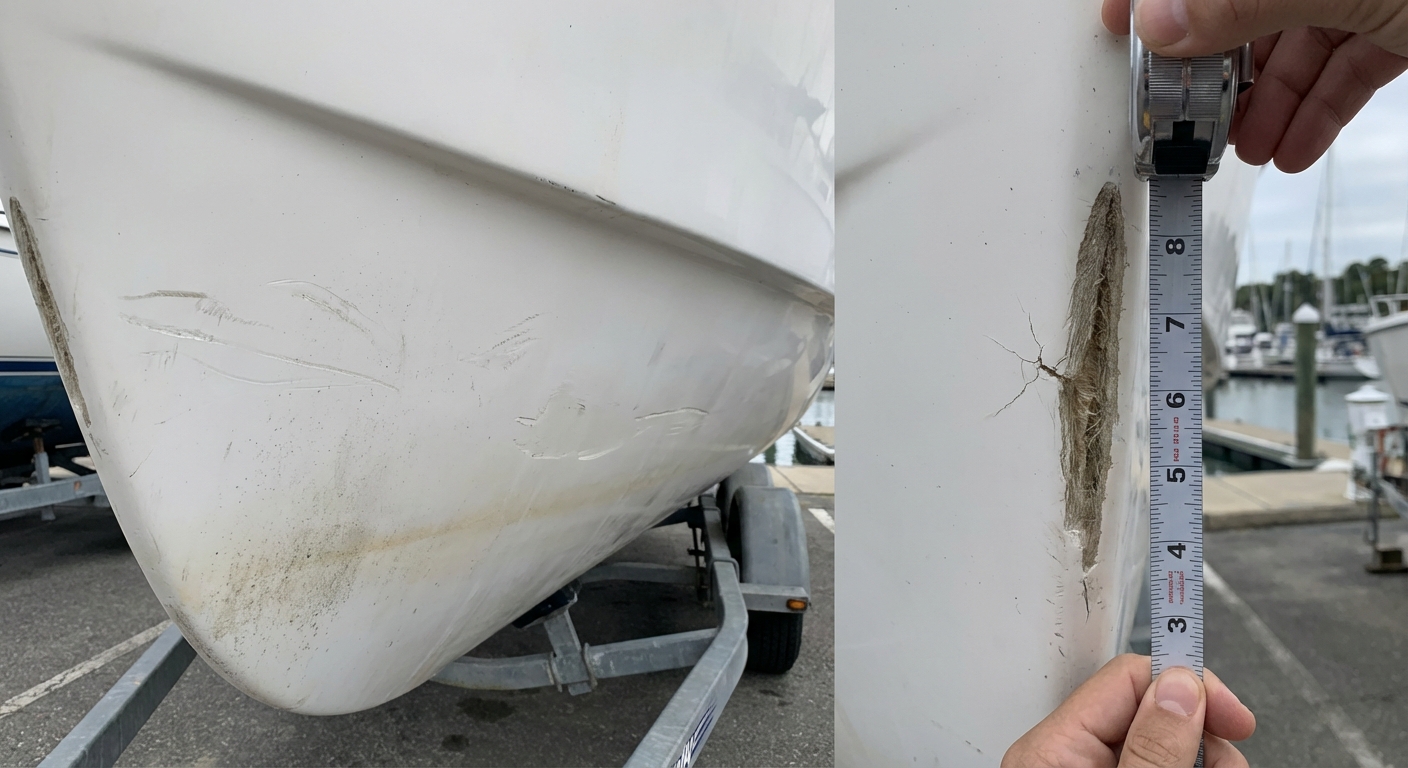
Deep scratches that penetrate the gelcoat and expose fiberglass are a problem. Water can seep into the layers, causing delamination. Once that starts, the damage spreads. What began as a single scratch becomes a weak spot that grows over time. Cracks that radiate outward from an impact point are even worse. That spiderwebbing pattern signals structural stress. The hull absorbed a hit, and now it's compromised. These aren't scratches you can buff out. They need fiberglass damage repair, and they need it soon.
Aluminum Shows Its Weakness
Aluminum hulls are built to take a beating, but they have one major vulnerability. Corrosion. A scratch that goes through the paint and exposes bare aluminum is an invitation for oxidation. In freshwater, the process is slow. In saltwater, it accelerates. Left unchecked, a small scratch becomes a corroded patch, and a corroded patch becomes a structural failure.
The fix is straightforward. Clean the area, apply a corrosion inhibitor, and touch up the paint. The problem is that most people don't do it. They see a small scratch, assume it's fine, and forget about it. Months later, they're dealing with pitting and metal degradation. The scratch didn't kill the boat. The neglect did.
Wood Demands Immediate Action
Wooden hulls are beautiful, but they're unforgiving. Any scratch that breaks through the varnish or paint is a threat. Wood absorbs water, and water causes rot. Once rot starts, it spreads. A single ignored scratch can compromise an entire section of hull.
If you own a wooden boat, you already know this. You're either meticulous about maintenance, or you're watching your investment decay. There's no middle ground. Every scratch gets sealed. Every chip gets repaired. The best wooden boat owners don't wait for problems to appear. They inspect constantly and act immediately.
Location Changes the Equation
Not all scratches are created equal, even when they're the same depth. A scratch on the flat bottom of the hull might be harmless. The same scratch near a seam, joint, or through-hull fitting is a different story. These areas are already vulnerable. They're where different materials meet, where fasteners penetrate the hull, where water pressure is highest. A scratch in one of these zones can compromise the watertight integrity of the entire boat.
We've seen boats take on water because someone ignored a scratch near a transducer mount. The scratch itself wasn't catastrophic, but it created a pathway for water to reach the sealant. Once the sealant failed, the leak began. The repair was simple, but it never should have been necessary. The owner saw the scratch, assumed it was cosmetic, and moved on. That assumption cost them a haul-out and a few hundred dollars in labor.
Testing Depth Without Guessing
The fingernail test is crude, but it works. Run your nail across the scratch. If it catches, the scratch is deeper than the surface. If it glides over, you're probably fine. This isn't a perfect diagnostic, but it's a starting point. For anything that catches, take a closer look. Clean the area thoroughly. Dirt and oxidation can make a scratch look worse than it is. Once it's clean, assess the material underneath. Is it gelcoat, fiberglass, bare aluminum, or wood? That tells you what you're dealing with.
For deeper scratches, especially on fiberglass, you can use a moisture meter to check for water intrusion. If the reading is high, the scratch has already allowed water into the laminate. At that point, you're not just fixing a scratch. You're repairing delamination. The longer you wait, the worse it gets.
Repair Priorities That Actually Work
Not every scratch needs immediate attention, but some do. Here's how we prioritize repairs based on risk and impact:
- Scratches exposing fiberglass or wood get fixed first
- Cracks and spiderwebbing get inspected by a professional immediately
- Scratches near seams, fittings, or joints get sealed before the next launch
- Bare aluminum scratches get touched up within a week
- Cosmetic gelcoat scratches get addressed when convenient
This isn't about perfection. It's about triage. You can't fix everything at once, and you don't need to. But you do need to know what matters. The scratches that threaten structural integrity or watertight seals come first. Everything else can wait.
Prevention Beats Reaction Every Time
The best scratch is the one that never happens. That sounds obvious, but most boat owners don't act on it. They dock carelessly, trailer without padding, and navigate tight spaces without a spotter. Then they're surprised when the hull picks up damage. Prevention isn't complicated. It just requires consistency.
Fenders and dock bumpers are cheap insurance. Use them every time you tie up. When trailering, inspect the bunks and rollers for sharp edges or debris. A single piece of gravel stuck to a roller can gouge your hull on the way up the ramp. In shallow water, slow down. Hitting a rock at speed can crack your hull. Hitting it at idle might just leave a scratch. The difference is execution. You either take the time to do it right, or you pay for it later.
Inspection Cadence That Catches Problems Early
We inspect our hulls monthly during the season and before every haul-out. That's not overkill. It's standard. Most damage starts small and grows over time. Catch it early, and the fix is simple. Miss it, and you're looking at major repairs. Here's what we check:
- Hull bottom for new scratches, gouges, or cracks
- Gelcoat condition around high-wear areas like the waterline and chines
- Seams and joints for signs of separation or water intrusion
- Through-hull fittings for scratches or damage near the mounting points
- Aluminum hulls for oxidation or corrosion starting at scratch sites
This takes fifteen minutes. That's it. Fifteen minutes to spot a problem before it becomes expensive. Most people skip it because they assume their boat is fine. Then they haul out and discover damage that's been growing for months. The inspection isn't optional. It's the difference between a quick touch-up and a major repair bill.
Products and Techniques That Actually Deliver
The marine market is flooded with scratch repair kits, polishes, and coatings. Some work. Most don't. We've tested dozens, and the ones that deliver results share a few traits. They're designed for marine environments, they match the hull material, and they're applied correctly. A great product used wrong is worthless. A mediocre product used right can save your hull.
For gelcoat scratches, we use a two-step process. First, a rubbing compound to level the surface. Then, a polish to restore the shine. For deeper scratches, gelcoat paste matched to your hull color fills the void. Sand it smooth, polish it out, and the scratch disappears. On aluminum, we clean the scratch with acetone, apply a corrosion inhibitor, then touch up with marine-grade paint. The key is prep work. Skip the cleaning and degreasing, and nothing will bond properly.
When DIY Stops Being Smart
Some repairs are beyond the average owner's skill set. Structural cracks, delamination, and damage near critical fittings require professional attention. Trying to fix these yourself can make the problem worse. We've seen owners apply gelcoat over cracks without addressing the underlying damage. The crack reappears within weeks, and now they've wasted time and money on a repair that never had a chance.
If you're not sure whether a scratch is cosmetic or structural, get it checked. A marine surveyor or qualified technician can assess the damage in minutes. That consultation might cost you a hundred dollars, but it could save you thousands. Understanding hidden water damage requires expertise that most owners don't have. The best boat owners know their limits. They handle what they can and delegate what they can't. That's not weakness. It's smart execution.
The Long Game on Hull Maintenance
Hull scratches are inevitable. You can't avoid them entirely, no matter how careful you are. But you can control how you respond. Ignore the wrong scratch, and you're looking at delamination, corrosion, or rot. Panic over every mark, and you'll waste time and money on repairs that don't matter. The middle path is where competence lives. You assess, prioritize, and act based on risk.
The boats that last decades aren't the ones that never get scratched. They're the ones whose owners know which scratches matter. They inspect regularly, repair strategically, and prevent damage where possible. That's the playbook. It's not glamorous, but it works. Your hull is the foundation of your boat. Treat it like one, and it'll carry you for years. Ignore it, and you'll pay the price when it matters most.
If you're dealing with hull damage, structural concerns, or need expert assessment of scratches and cracks, contact Boat Repair Miami FL for professional fiberglass repair in Miami. We serve boat owners throughout Miami FL, Fort Lauderdale, and surrounding areas with mobile repair services that come to your dock or marina.
Let’s Keep Your Boat Ready for the Water
We know how important it is to have a boat you can count on, whether you’re heading out for a weekend cruise or prepping for the next big fishing trip. If you’ve spotted hull scratches or damage you’re unsure about, let’s tackle it together before it turns into a bigger problem. Give us a call at 305-290-2701 or Request Boat Repair or Service and we’ll help you get back on the water with confidence.


.png)