



The secondhand marine electronics market is a minefield. One wrong move and you're stuck with a dead chartplotter, a corroded VHF radio, or a fishfinder that hasn't worked since 2018. But when you play it smart, you can score serious upgrades without draining your wallet. The difference between a steal and a disaster comes down to execution. Most boaters skip the homework, trust the wrong sellers, and end up paying twice—once for the broken gear, and again for the replacement.
We've spent enough time in this space to know what separates a smart buy from a costly mistake. The used electronics game rewards those who dig deeper, ask harder questions, and refuse to settle for vague answers. If you're willing to put in the work upfront, you'll walk away with gear that performs without the new-price premium. If you're not, you'll learn the hard way why shortcuts don't pay off.
Know What You're Actually Looking For
Walking into the used market without a clear target is like fishing without bait. You'll waste time, get distracted by shiny features you don't need, and probably overpay for something that doesn't fit your boat or your budget. The first step is nailing down exactly what you need—not what looks cool, not what your buddy swears by, but what your vessel actually requires to function better.
Start by identifying the gaps in your current setup. Do you need better navigation? More accurate sonar? Reliable communication? Once you know the mission, research the models that deliver. Read user reviews, check forums, and compare specs across brands. Understand the difference between last year's flagship and this year's entry-level model. Know the market value for both new and used versions so you can spot a fair price versus a rip-off. The more you know before you start shopping, the less likely you are to get burned by a smooth-talking seller or a too-good-to-be-true listing.
- Identify the specific function you need—navigation, fish-finding, communication, or radar.
- Research models that fit your boat size, usage, and budget.
- Compare new versus used pricing to establish a baseline.
- Read reviews and forums to learn about common failures or issues.
- Make a list of must-have features versus nice-to-haves.
Source Matters More Than Price
Where you buy used electronics will determine whether you end up with a reliable tool or an expensive paperweight. Online marketplaces are flooded with listings, but not all sellers are created equal. Some are legitimate boaters upgrading their gear. Others are flipping stolen equipment or dumping broken units on unsuspecting buyers. The platform doesn't protect you—your judgment does.
Whenever possible, buy from established marine dealers, consignment shops, or certified refurbishers who stand behind their inventory. These sources typically offer some form of warranty, return policy, or at least a reputation they care about protecting. If you're buying from a private seller, vet them hard. Check their history, read their reviews, and ask for proof of purchase. A seller who hesitates to provide documentation or answer basic questions is a red flag you can't afford to ignore. The extra time spent verifying the source is the difference between a smart purchase and a regrettable one.
- Prioritize reputable marine dealers and certified refurbishers.
- Check seller ratings, reviews, and transaction history on online platforms.
- Ask for proof of purchase and original receipts.
- Avoid sellers who are vague, evasive, or unwilling to provide details.
- Consider consignment shops that inspect and test gear before resale.
Inspect Like Your Money Depends on It
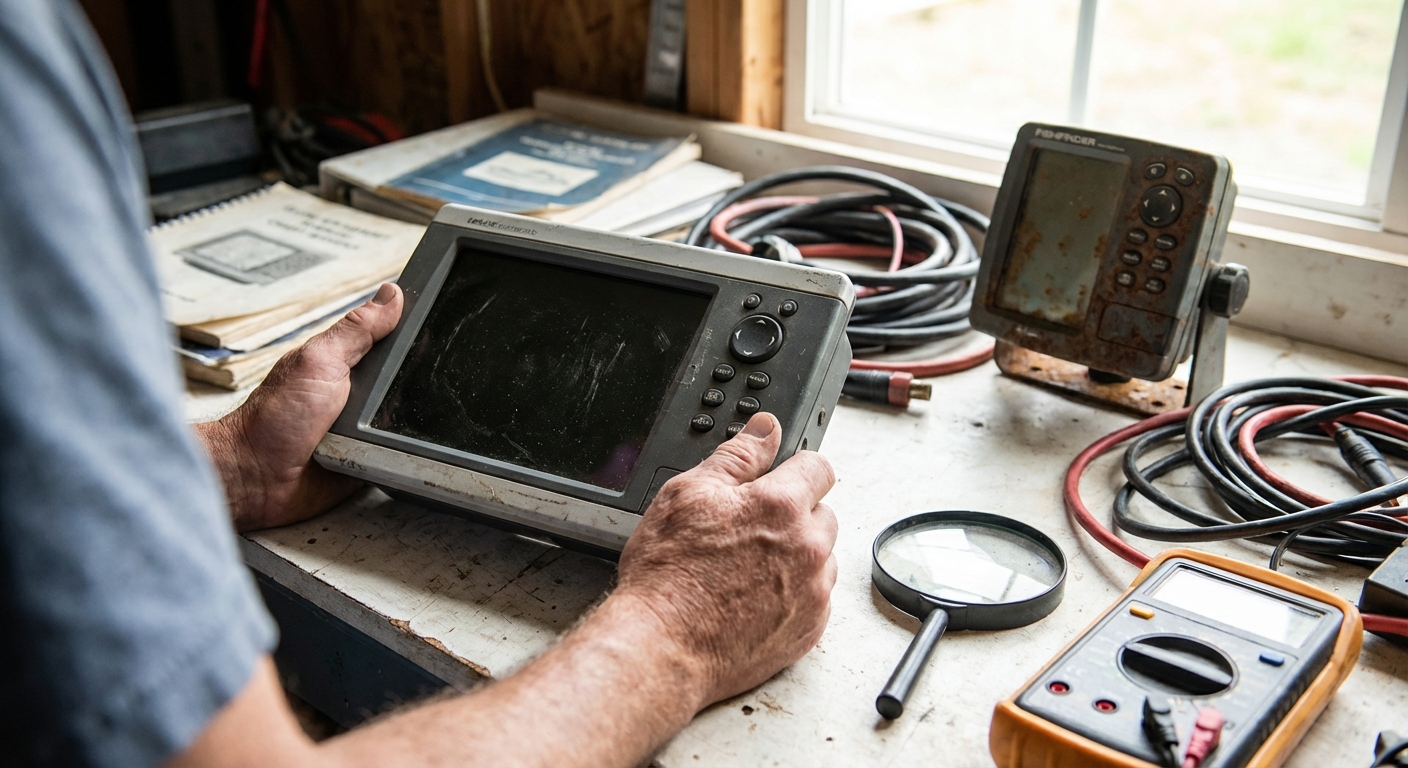
Photos and descriptions only tell part of the story. If you're serious about buying used electronics, you need to see the unit in person and put it through its paces. Corrosion, water damage, and worn connectors don't always show up in listing photos, but they'll show up the first time you try to use the gear on the water. A visual inspection is your first line of defense against buying junk.
Look for obvious signs of neglect—rust on connectors, cracks in the housing, discoloration from water intrusion. Ask the seller to power up the device and demonstrate its core functions. For a chartplotter, that means loading maps and showing GPS accuracy. For a fishfinder, it means displaying sonar readings. For a VHF radio, it means transmitting and receiving clearly. If the seller can't or won't demonstrate functionality, walk away. If you're not confident in your ability to assess the condition, bring someone who is. A marine technician or experienced boater can spot issues you might miss, and their expertise is worth the cost of their time.
- Inspect connectors, housing, and circuit boards for corrosion or damage.
- Ask the seller to power up the device and demonstrate key functions.
- Test GPS accuracy, sonar display, or radio transmission as applicable.
- Bring a knowledgeable friend or marine technician if you're unsure.
- Walk away if the seller refuses to demonstrate functionality.
Dig Into the Backstory
Every piece of used gear has a history, and that history matters. A unit that spent five years in saltwater will have different wear patterns than one used exclusively in freshwater. A device that was professionally maintained will outlast one that was neglected. The seller holds the answers, but only if you ask the right questions.
Find out how old the unit is, why it's being sold, and whether it's ever been repaired or refurbished. Ask about the environment it was used in—saltwater accelerates corrosion and shortens lifespan. Inquire about included accessories like mounting brackets, power cables, transducers, or antennas. Missing parts can add unexpected costs and delay installation. A seller who provides clear, detailed answers is more likely to be honest about the condition. A seller who dodges questions or provides vague responses is someone you should avoid.
- Ask how old the unit is and why it's being sold.
- Find out if it was used in saltwater or freshwater.
- Inquire about any repairs, refurbishments, or modifications.
- Confirm what accessories are included—cables, mounts, transducers, etc.
- Evaluate the seller's transparency and willingness to provide details.
Software and Compatibility Can Make or Break the Deal
Marine electronics aren't just hardware—they're software-driven systems that require updates, compatibility checks, and sometimes manufacturer support. A unit that's no longer supported by the manufacturer is a ticking time bomb. You might get it working initially, but when something breaks or you need an update, you're out of luck.
Before you buy, verify that the device is still supported and that software or firmware updates are available. Check compatibility with your boat's existing systems, wiring, and network. For networked devices like multifunction displays or integrated sonar systems, confirm they'll communicate properly with your other electronics. Outdated or orphaned devices may function for a while, but they're a dead end. When they fail, you'll have no recourse and no path forward. Compatibility isn't a nice-to-have—it's a dealbreaker.
- Verify the device is still supported by the manufacturer.
- Check if software or firmware updates are available.
- Confirm compatibility with your boat's existing electronics and wiring.
- Test network communication for integrated or multifunction systems.
- Avoid orphaned devices with no manufacturer support or update path.
Stolen Gear Is a Real Problem
Marine electronics theft is more common than most boaters realize, and stolen gear frequently ends up on the used market. Buying stolen equipment isn't just unethical—it can leave you without recourse if the original owner reports it or if law enforcement gets involved. Protecting yourself starts with asking for the serial number and doing your homework.
Request the serial number from the seller and verify it with the manufacturer or online databases that track stolen marine equipment. Legitimate sellers won't hesitate to provide this information. If a seller refuses, gets defensive, or offers a deal that seems too good to be true, that's your cue to walk away. The risk isn't worth the savings, and you don't want to be the person who unknowingly funds theft or ends up losing the gear you just paid for.
- Ask the seller for the device's serial number.
- Verify the serial number with the manufacturer or stolen equipment databases.
- Avoid deals that seem too good to be true or lack documentation.
- Walk away from sellers who refuse to provide serial numbers or proof of ownership.
- Understand that buying stolen gear can result in loss of the equipment and legal issues.
Installation and Support Aren't Free
Scoring a great deal on used electronics is only half the battle. If you can't install it properly or get support when something goes wrong, you've just bought yourself a headache. Installation costs can add up quickly, especially for complex systems like radar, multifunction displays, or integrated sonar networks. If you're not comfortable doing the work yourself, you'll need to budget for professional help.
Before you commit to a purchase, assess whether you have the skills, tools, and time to handle the installation. If not, get quotes from marine technicians or dealers to understand the full cost. Also, check whether the manufacturer or local dealers offer support for older models. Some companies discontinue support after a certain number of years, leaving you on your own if you run into trouble. Factor these costs and limitations into your decision. A cheap unit that requires expensive installation or lacks support isn't the bargain it appears to be.
- Assess your ability to install the electronics yourself.
- Get quotes from marine technicians if professional installation is needed.
- Check if the manufacturer or local dealers support older models.
- Budget for installation costs, wiring, and any required adapters or accessories.
- Factor support availability into your purchase decision.
Document Everything
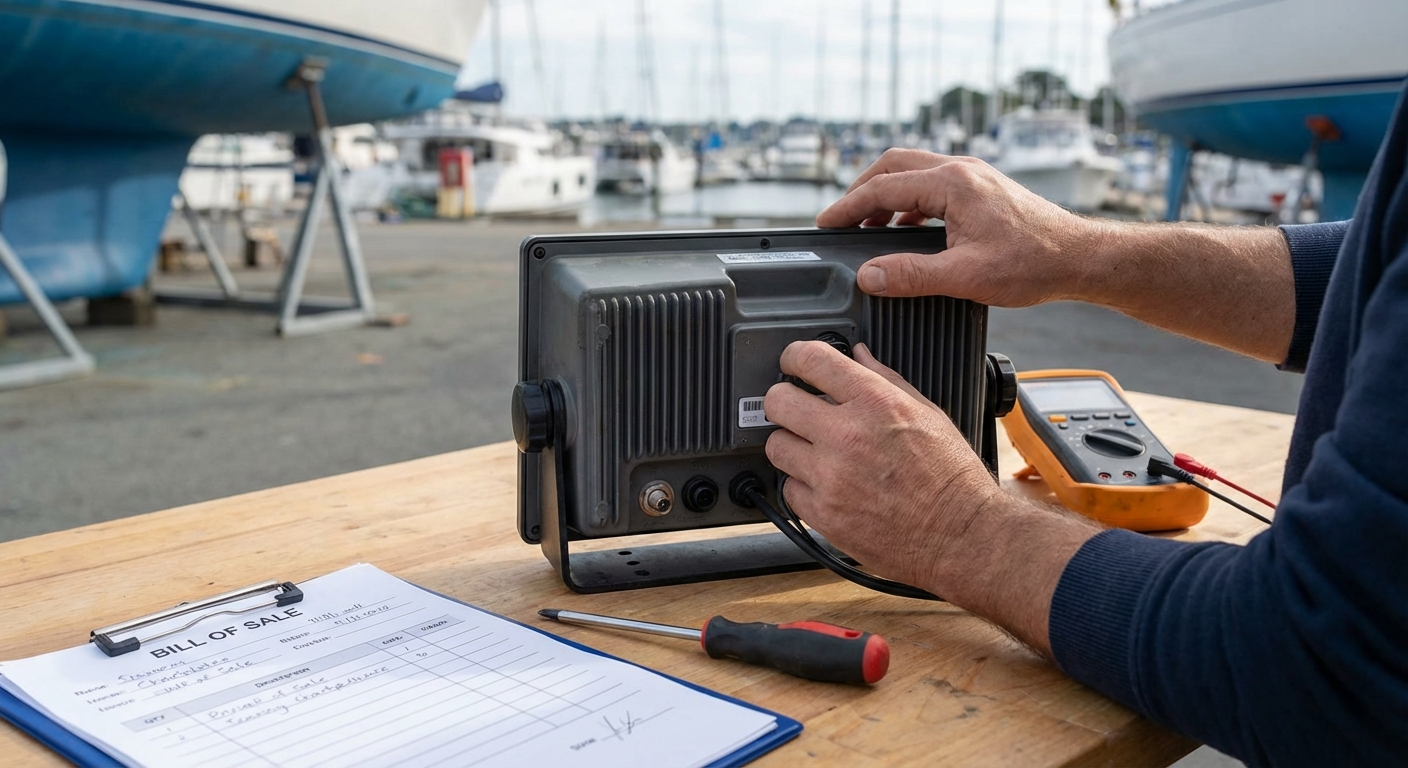
When you're buying from a private seller, documentation is your insurance policy. Without a clear record of the transaction, you have no recourse if the gear fails, turns out to be stolen, or doesn't match the seller's description. A bill of sale isn't just a formality—it's proof of what you bought, from whom, and under what terms.
Make sure the bill of sale includes the item's make, model, serial number, condition, and the agreed-upon price. If the seller offers any kind of warranty, return period, or guarantee, get it in writing. Verbal promises mean nothing if a dispute arises. Keep copies of all correspondence, photos, and receipts. This documentation protects you legally and financially, and it's the difference between resolving a problem and eating the loss.
- Create a bill of sale with make, model, serial number, and price.
- Get any warranties, return policies, or guarantees in writing.
- Keep copies of all correspondence, photos, and receipts.
- Document the condition of the item at the time of purchase.
- Use this documentation to protect yourself in case of disputes or issues.
The Long Game Pays Off
Buying used boat electronics isn't a shortcut—it's a calculated move that rewards diligence and punishes laziness. The boaters who score reliable gear at fair prices are the ones who do the research, ask the hard questions, and refuse to compromise on quality or transparency. The ones who get burned are the ones who rush, trust blindly, or chase deals that are too good to be true.
The used market is full of opportunity, but it's also full of risk. The difference between the two comes down to execution. If you're willing to put in the work—vetting sellers, inspecting gear, verifying compatibility, and documenting transactions—you'll walk away with electronics that perform without the premium price tag. If you're not, you'll learn why cutting corners costs more in the long run. The choice is yours, but the outcome is predictable. Merit wins, and in this market, merit means doing the homework that most people skip.
If you need help with boat electrical systems or troubleshooting electrical problems, don't hesitate to reach out. We're here to help you keep your boat running smoothly, whether you're upgrading electronics or dealing with unexpected issues on the water.
Let’s Get Your Boat’s Electronics Right
We know how important it is to have reliable electronics every time you head out on the water. If you want expert advice, installation, or repairs for your boat’s electrical systems, let’s talk. Call us at 305-290-2701 or Request Boat Repair or Service and we’ll help you get the most out of your time on the water.


.png)