



Battery disconnection isn't optional maintenance. It's the difference between firing up your boat next season and dealing with a dead cell, corroded terminals, or worse — a fried electrical system that could've been avoided in ten minutes.
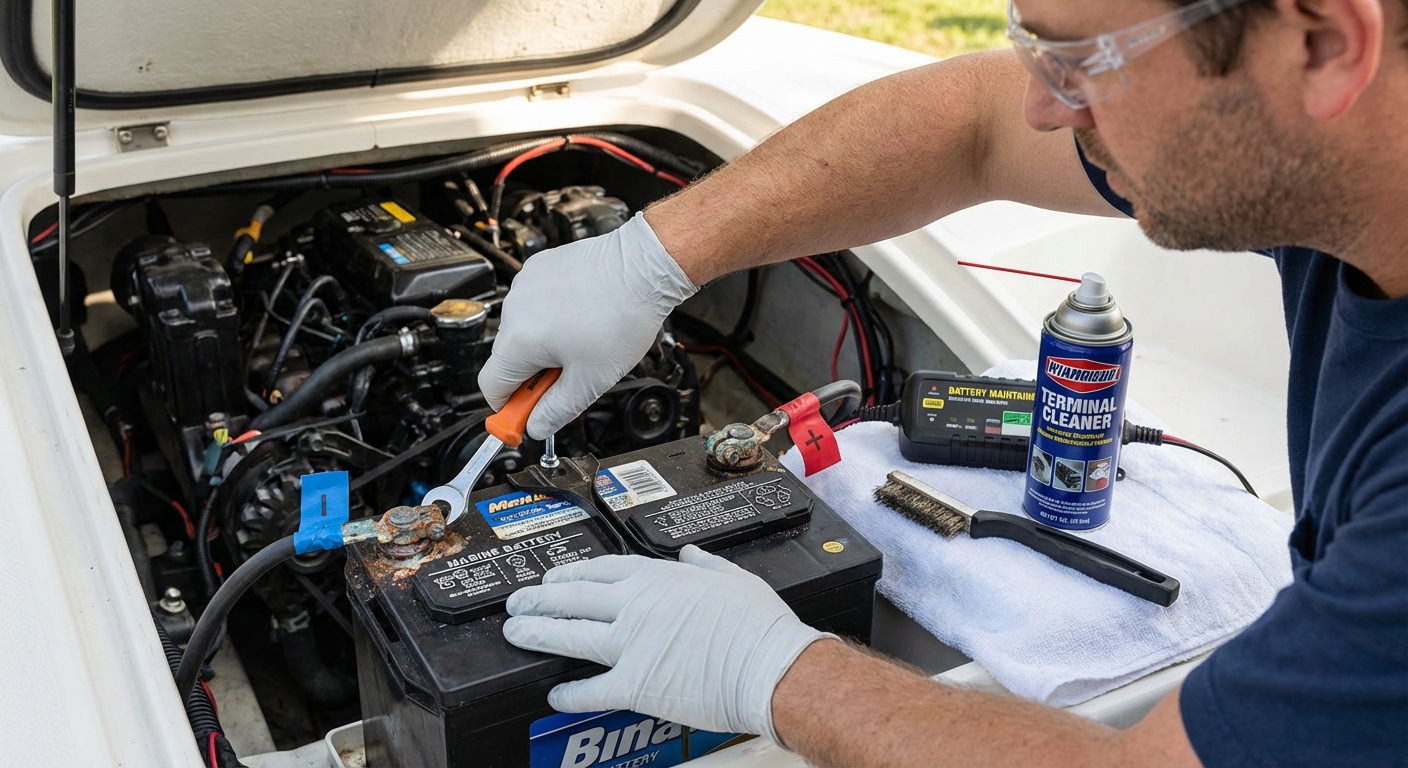
Most boaters treat battery prep like an afterthought. They yank cables, skip the cleaning, and wonder why their starter clicks instead of cranks come spring. The reality? A battery left connected during storage is slowly draining itself, building corrosion, and creating conditions for electrical failure. Even when everything's "off," parasitic draws from electronics, bilge pumps, and onboard systems are pulling power. Add temperature swings and humidity, and you've got a recipe for sulfation, freezing, or terminal damage that shortens battery life by years.
Parasitic Draw Doesn't Sleep
Your boat's electrical system never fully shuts down. Even with the key out and switches off, small draws persist. GPS memory, stereo presets, alarm systems, automatic bilge pumps — they're all sipping power power in the background. Over weeks or months, that trickle becomes a flood. A fully charged battery can drop to dangerously low levels, and once it crosses that threshold, sulfation kicks in.
Sulfation is the silent killer. Lead-acid batteries form crystals on the plates when they sit discharged, and those crystals harden over time. Once that happens, the battery loses capacity permanently. You can't reverse it with a charger. You can't wish it away. The battery's done. Disconnecting stops the draw, preserves the charge, and keeps sulfation from taking root. It's not about being cautious — it's about not throwing money away on replacements that could've lasted another five seasons.
Corrosion Builds While You're Not Looking
Terminals don't corrode overnight, but they don't need much time either. Moisture, salt air, and battery gases create the perfect environment for that white or green crust to form. Once it starts, it spreads. Corrosion increases resistance, which means your starter has to work harder, your charging system struggles, and eventually, connections fail altogether.
Leaving cables connected during storage accelerates this process. The connection points stay energized, and any moisture in the air becomes a conductor. Disconnecting breaks that circuit and removes the conditions that let corrosion thrive. It's a small step that prevents a big headache. Clean terminals before storage, and you'll reconnect to smooth starts and reliable power. Skip it, and you'll be scraping crud and replacing cables before you even leave the dock.
Temperature Swings Punish Connected Batteries
Cold kills batteries. Heat degrades them. Storage conditions rarely stay stable, and a connected battery takes the full brunt of every temperature shift. In freezing conditions, a discharged battery can freeze solid, cracking the case and destroying the cells. In heat, the electrolyte evaporates faster, plates warp, and internal resistance climbs.
A disconnected battery fares better because it's not fighting parasitic loads while also battling the elements. You can move it to a controlled environment, keep it on a maintainer, and ensure it stays in the optimal charge range. Connected batteries don't get that luxury. They sit in the bilge or engine compartment, exposed to whatever the weather throws at them, slowly degrading with every degree change. The longer they stay connected, the worse the damage compounds.
The Right Sequence Prevents Sparks and Shorts
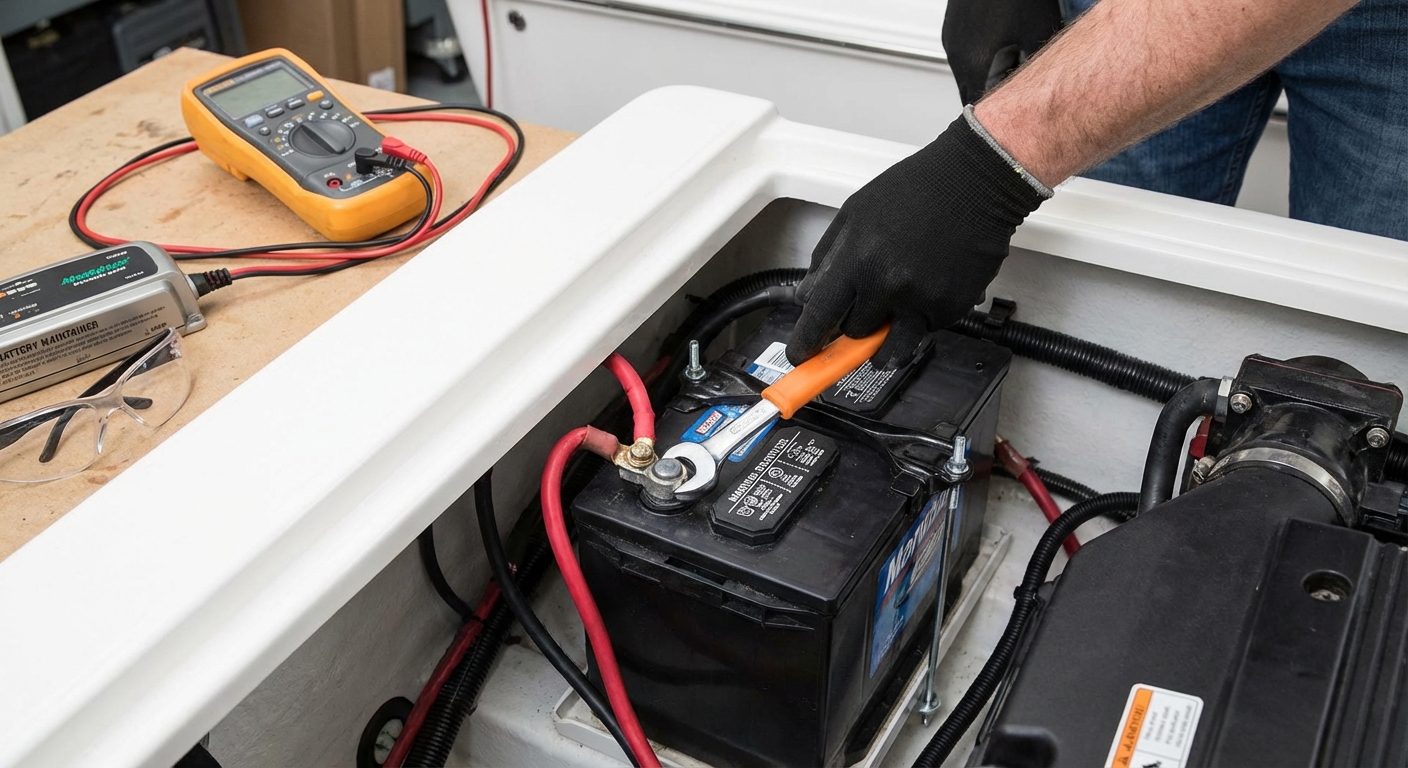
Order matters when you're pulling cables. Disconnect the negative terminal first, always. The negative cable is grounded to the boat's frame, and if you pull the positive terminal first, your wrench becomes a potential short circuit. One slip, one accidental contact with metal, and you've got sparks, burns, or a blown fuse at minimum. At worst, you've started an electrical fire.
Pulling the negative first eliminates that risk. Once the ground is disconnected, the positive terminal is isolated. You can work without worrying about accidental contact. When it's time to reconnect, reverse the process — positive first, then negative. This sequence isn't superstition or preference. It's basic electrical safety that prevents injuries and equipment damage. Follow it every time, no exceptions.
Here's the breakdown for safe disconnection:
- Kill all electrical systems before touching anything. Lights, pumps, electronics — everything off.
- Locate the battery compartment and inspect for leaks, cracks, or swelling before you start.
- Wear gloves and eye protection. Battery acid burns, and sparks don't care about your reflexes.
- Loosen the negative terminal first using an insulated wrench. Tuck the cable away from the battery.
- Remove the positive terminal next, securing the cable so it can't swing back and make contact.
Terminal Cleaning Isn't a Bonus Step
Once the cables are off, inspect the terminals and cable ends. If there's any buildup, clean it now. A wire brush works for light corrosion. For heavier deposits, a paste of baking soda and water neutralizes acid and breaks down the crud. Scrub, rinse with fresh water, and dry completely before applying terminal protectant spray.
This step matters because dirty terminals create resistance. Resistance means heat, poor connections, and unreliable starts. You can have a fully charged battery and still struggle to crank the engine if the terminals are coated in corrosion. Cleaning them during disconnection ensures you're reconnecting to clean metal, which means maximum conductivity and zero surprises when you turn the key next season.
Removal Beats Leaving It in Place
If your storage location sees extreme temperatures, pull the battery out entirely. Leaving it in the boat exposes it to conditions you can't control. A battery stored in a climate-controlled garage or basement stays healthier than one sitting in a freezing hull or a sun-baked cabin.
When you remove the battery, place it on a non-conductive surface. Wood works. Cardboard works. Concrete doesn't — it can accelerate self-discharge in older batteries, though modern designs are less susceptible. Either way, keep it off the ground, away from direct sunlight, and out of areas with temperature extremes. A stable environment extends battery life and keeps the charge from dropping too low.
Storage best practices include:
- Store in a cool, dry location away from heat sources and open flames.
- Keep the battery upright to prevent acid leaks or spills.
- Label your cables before removal so reconnection is foolproof.
- Check the charge level before storage and top it off if needed.
- Use a battery maintainer or trickle charger to keep the charge stable over long periods.
Charge Level Determines Survival
A fully charged battery survives storage. A discharged one doesn't. Before you disconnect, check the voltage. A healthy 12-volt battery should read around 12.6 volts or higher when fully charged. Anything below 12.4 volts means it's partially discharged, and below 12 volts, you're in the danger zone.
Charge it before storage if it's low. A discharged battery is vulnerable to sulfation and freezing. A charged battery resists both. If you're storing for months, a maintainer keeps the charge topped off without overcharging. These devices monitor voltage and deliver a trickle charge only when needed, preventing the slow drain that kills batteries during long layups. It's a small investment that pays off in extended battery life and reliable performance.
Maintainers Aren't Just for Convenience
A battery maintainer isn't a luxury — it's insurance. Self-discharge happens even when a battery is disconnected and stored properly. Over time, the charge drops, and once it falls too low, damage begins. A maintainer prevents that drop by delivering just enough current to offset self-discharge without overcharging.
Modern maintainers are smart. They monitor voltage, adjust output, and shut off when the battery is full. You can leave them connected for months without worry. They're especially useful for boats stored in locations where you can't easily check the battery every few weeks. Plug it in, walk away, and know your battery will be ready when you are. It's the difference between a strong start and a jump-start scramble on launch day.
Inspection Catches Problems Early
Disconnection is also your chance to inspect. Look for cracks in the case, bulging sides, or leaks around the terminals. Check the electrolyte level in flooded batteries — if the plates are exposed, top them off with distilled water. Sealed batteries don't need water, but they still need a visual check for damage.
If the battery is more than three to five years old, consider load testing it before storage. Age and use degrade capacity, and a battery that struggles now won't improve over the winter. Testing reveals weak cells and gives you time to replace the battery on your schedule, not when you're trying to launch. Catching a failing battery during storage prep saves you from dead-in-the-water situations later.
Key inspection points include:
- Case condition — no cracks, swelling, or leaks.
- Terminal integrity — no excessive corrosion or loose connections.
- Electrolyte level in flooded batteries — plates should be covered.
- Voltage reading — should be 12.4 volts or higher before storage.
- Age — batteries older than five years are candidates for replacement.
Reconnection Requires the Same Care
When storage ends and it's time to reconnect, reverse the disconnection process. Positive terminal first, then negative. This sequence keeps the system safe and prevents shorts. Before you tighten the terminals, inspect them again. Clean any new corrosion, check cable condition, and ensure connections are snug but not over-torqued.
Once reconnected, test the system. Turn the key and check for smooth cranking. If the starter hesitates or clicks, recheck your connections. Loose terminals create resistance, and resistance creates problems. A solid connection means reliable starts and a charging system that works as designed. Don't assume everything's fine just because the cables are back on — verify it.
Batteries are dangerous if mishandled. They contain sulfuric acid, produce hydrogen gas, and can deliver enough current to cause serious burns or start fires. Always work in a ventilated area. Never smoke or use open flames near a battery. Wear gloves and eye protection every time you handle terminals or cables.
If a battery is damaged, leaking, or swollen, don't try to disconnect it yourself. Contain the area, ventilate if possible, and call a professional. Damaged batteries can vent toxic gases or leak acid that burns skin and corrodes metal. Disposal must be done through certified recycling centers — never throw a battery in the trash or leave it in the environment. The lead and acid inside are hazardous, and proper disposal protects both you and the ecosystem.
Non-negotiable safety rules:
- Work in well-ventilated spaces to disperse hydrogen gas.
- Keep sparks, flames, and cigarettes away from the battery area.
- Use insulated tools to prevent accidental shorts.
- Never lean over a battery while connecting or disconnecting terminals.
- Dispose of old or damaged batteries at certified recycling facilities only.
The Tools You Need Are Simple
You don't need a full workshop to disconnect a battery safely. An insulated wrench or socket set handles the terminals. Gloves and safety glasses protect you from acid and sparks. A wire brush or terminal cleaner removes corrosion. Terminal protectant spray prevents future buildup. A battery maintainer keeps the charge stable during storage.
Optional but useful: a battery terminal puller for stubborn connections, a multimeter to check voltage, and a hydrometer for flooded batteries to measure electrolyte specific gravity. These tools aren't expensive, and they make the job faster and safer. Invest in them once, and you'll use them every season. Skipping proper tools leads to stripped terminals, damaged cables, and injuries that could've been avoided with five dollars' worth of equipment.
Labeling Saves Time and Mistakes
Before you pull cables, label them. Positive and negative are usually obvious, but if you have multiple batteries or a complex electrical setup, labels eliminate guesswork. Use tape, tags, or a marker to note which cable goes where. When it's time to reconnect, you won't have to trace wires or second-guess yourself.
This step is especially important for boats with dual battery systems, house and starter banks, or custom electrical configurations. Mixing up connections can damage electronics, blow fuses, or create dangerous shorts. A few seconds spent labeling prevents hours of troubleshooting and potential equipment damage. It's a small detail that makes a big difference.
Storage Duration Changes the Approach
Short-term storage — a few weeks — might not require full disconnection if you're using a maintainer and the boat is in a stable environment. Long-term storage — months — demands full disconnection, removal, and proper charging protocols. The longer the layup, the more critical every step becomes.
For extended storage, check the battery monthly if possible. Verify the charge level, inspect for leaks or damage, and ensure the maintainer is functioning. Batteries left unattended for six months or more can develop issues that aren't immediately obvious. Regular checks catch problems early and give you time to address them before they become failures.
Approach adjustments based on storage length:
- Short-term (under one month) — disconnect negative terminal, use a maintainer if available.
- Medium-term (one to three months) — disconnect both terminals, clean and protect, charge before storage.
- Long-term (over three months) — remove battery, store in controlled environment, use maintainer, check monthly.
- Seasonal (six months or more) — full removal, professional load testing, maintainer required, inspect every four to six weeks.
- Emergency storage (unplanned) — disconnect immediately, charge as soon as possible, inspect before reconnection.
Execution Beats Intention Every Time
Knowing how to disconnect a battery doesn't matter if you don't do it. The boaters who skip this step are the ones calling for jump-starts, replacing batteries every two years, and dealing with corroded terminals that could've been prevented. The ones who follow through? They're launching on time, starting reliably, and getting more life out of every battery they buy.
Battery maintenance isn't glamorous. It doesn't make your boat faster or look better. But it's the foundation of a reliable electrical system, and reliability is what separates a good season from a frustrating one. Disconnection takes ten minutes. Replacement takes hours and costs hundreds. The math isn't complicated. Do the work now, or pay for it later. Merit doesn't care about your intentions — it rewards execution. Disconnect your batteries, store them right, and you'll be the one turning the key without hesitation when the water calls again.
Need help with electrical problems on your boat? Looking for guidance on what to check before every boat ride? Wondering why your boat battery keeps dying? Concerned about hidden damage saltwater does to your boat? Trying to figure out what to do if your boat engine won't start? Need to understand
Let’s Keep Your Boat Ready for the Water
We know how important it is to have a boat that’s ready to go when you are. If you want peace of mind before storage or need help with battery maintenance, let’s make sure your next launch is hassle-free. Give us a call at 305-290-2701 or Request Boat Repair or Service and we’ll help you keep your boat in top shape all year long.


.png)