



Most boaters don't think about their propeller until something breaks. That's a mistake. The prop is doing all the heavy lifting—converting engine power into forward motion, absorbing every impact, and taking a beating from debris, rocks, and whatever else lurks beneath the surface. When it starts to fail, it doesn't always announce itself with a loud bang. Sometimes it whispers. A slight vibration. A drop in top speed. A weird hum that wasn't there before.
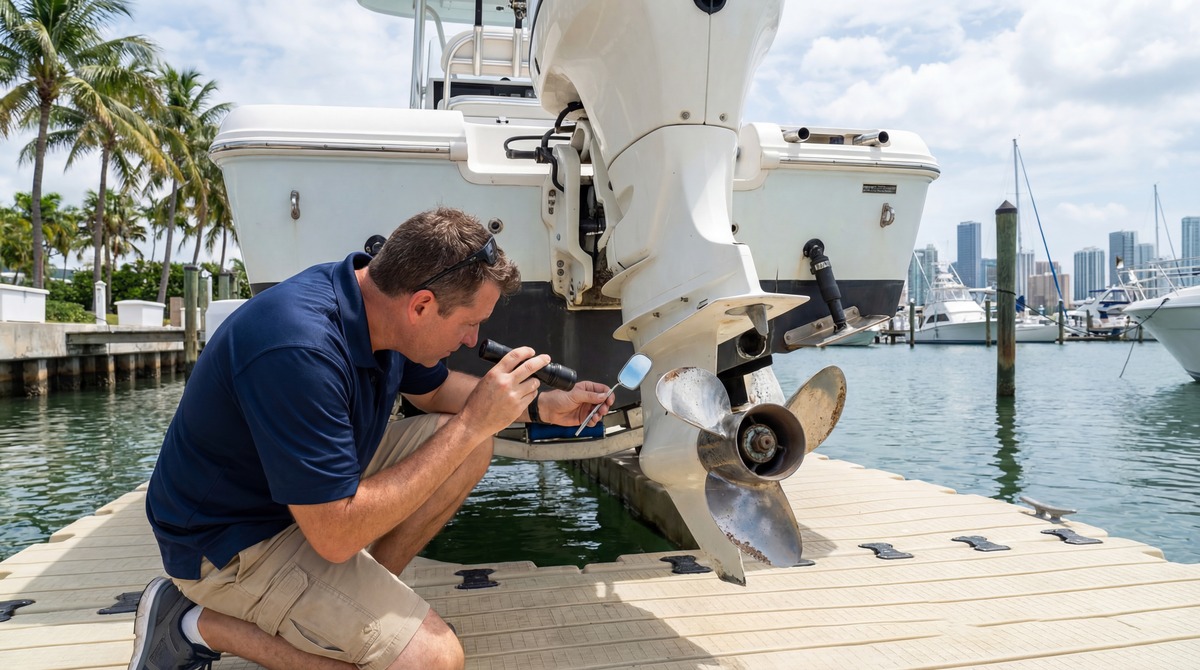
Catching propeller damage early isn't just about avoiding a breakdown. It's about protecting your engine, your fuel economy, and your safety. A compromised prop puts stress on the entire drivetrain. It burns more fuel. It creates imbalance that can damage seals, bearings, and shafts. And if it fails at the wrong moment—say, when you're navigating a narrow channel or trying to outrun a storm—you're in real trouble.
We've seen too many boaters ignore the early signs, only to end up stranded or facing a repair bill that could've been avoided. The good news? Most propeller damage is detectable if you know what to look for. You don't need specialized tools or a marine engineering degree. You just need to pay attention.
Small Cracks Turn Into Big Problems
Hairline fractures are the silent killers of propellers. They start small—so small you might miss them on a casual glance. But every time that prop spins, those cracks grow. Water pressure, centrifugal force, and repeated stress all work together to widen the fracture until one day, a blade snaps off entirely.
These cracks often form after an impact—hitting a submerged log, clipping a rock, or even just years of hard use. Aluminum props are especially prone to this. Stainless steel holds up better, but it's not immune. The tricky part is that these fractures don't always show up on the surface. Sometimes they start deep inside the blade, where you can't see them without removing the prop and inspecting it under good light.
Run your fingers along every edge. Feel for ridges, bumps, or anything that doesn't belong. Use a flashlight and look at the blade from multiple angles. If you spot a crack—no matter how small—don't ignore it. That prop is on borrowed time.
Bent Blades Throw Everything Off Balance
A bent propeller blade doesn't have to be obvious to cause problems. Even a slight warp—something you might not notice with the naked eye—can create vibrations that ripple through your entire boat. Those vibrations aren't just annoying. They're destructive.
When a prop is out of balance, it puts uneven stress on the shaft, the bearings, and the lower unit. Over time, that stress leads to premature wear. Seals start leaking. Bearings grind down. The engine works harder to compensate, burning more fuel and generating more heat. All because one blade is a few millimeters off.
To check for bends, remove the prop and place it on a flat surface. Spin it slowly and watch how it moves. Does it wobble? Does one blade sit higher than the others? If so, you've got a problem. Some bends can be repaired by a prop shop, but if the damage is severe, replacement is the only safe option.
Cavitation Eats Away at Performance
Cavitation happens when air bubbles form on the surface of the propeller blades, then collapse with enough force to erode the metal. Over time, this creates pitting, rough patches, and a surface that looks like it's been sandblasted. It's not just cosmetic. Cavitation damage reduces efficiency, increases drag, and accelerates wear.
You'll often see cavitation burns near the leading edge of the blades or around areas where the prop has been dinged. The rough surface disrupts water flow, which creates more bubbles, which causes more damage. It's a vicious cycle.
If you catch it early, a prop shop can smooth out the surface and restore some performance. But if the pitting is deep, the structural integrity of the blade is compromised. At that point, you're better off replacing it than trying to patch it up.
Corrosion Doesn't Wait for Permission
Saltwater is relentless. It doesn't care how expensive your prop was or how well you maintain your boat. If you're running in saltwater and not rinsing your lower unit after every trip, corrosion is already at work.
Aluminum props are especially vulnerable. Galvanic corrosion—caused by the interaction between dissimilar metals—can eat through a prop in a matter of months if conditions are right. Stainless steel fares better, but it's not invincible. Pitting, discoloration, and rough patches are all signs that corrosion is taking hold.
Check the hub, the blade edges, and any areas where the prop has been repaired or welded. Those spots are weak points. If you see white powder, flaking metal, or deep pits, the damage is already advanced. Corrosion doesn't reverse itself. Once it starts, it only gets worse.
The Hub Can Fail Without Warning
The rubber hub inside your propeller is designed to absorb shock and protect your engine from sudden impacts. It's a sacrificial component—it's supposed to fail before your lower unit does. But when it starts to deteriorate, it doesn't always give you a clear signal.
Hub slippage is the most common symptom. You'll feel it as a sudden loss of power, like the engine is revving but the boat isn't accelerating. Sometimes it happens under load—when you're pulling a skier or pushing through rough water. Other times it's intermittent, making it hard to diagnose.
To check the hub, remove the prop and inspect the rubber insert. Look for cracks, separation from the metal, or any signs of melting or deformation. If the rubber feels soft or spongy, it's on its way out. Replacing a hub is cheaper than replacing a lower unit, so don't wait until it fails completely.
Vibrations Are Your First Warning
If your boat starts vibrating more than usual, the propeller is the first place to look. Vibrations mean something is out of balance, and an out-of-balance prop is a ticking time bomb.
Sometimes the vibration is subtle—a low hum you feel through the steering wheel or the deck. Other times it's aggressive, rattling everything loose and making the boat uncomfortable to operate. Either way, it's a sign that something is wrong.
Don't assume it's just "normal wear." Vibrations accelerate damage to every component in the drivetrain. They loosen bolts, crack welds, and fatigue metal. The longer you ignore them, the more expensive the fix becomes.
Performance Drops Are Easy to Miss
A damaged propeller doesn't always fail catastrophically. Sometimes it just makes your boat slower, less responsive, and harder to handle. You might not notice the change if it happens gradually, but it's there.
Compare your current performance to what you remember from when the prop was new. Are you burning more fuel to hit the same speed? Is your top end lower than it used to be? Does the boat feel sluggish coming out of the hole? These are all signs that your prop isn't doing its job.
Keep a log of your boat's performance—speed, RPM, fuel consumption. When those numbers start to drift, you'll know something has changed. And more often than not, the propeller is the culprit.
Inspection Doesn't Require a Mechanic
You don't need to be a marine technician to inspect your propeller. You just need to be thorough. Pull the prop off the shaft at least once a season—more often if you're running in shallow water or areas with debris.
Clean it completely. Scrub off the barnacles, the algae, and the grime. Once it's clean, you can actually see what you're dealing with. Run your hands over every surface. Look for cracks, bends, pitting, and corrosion. Check the hub for slippage or deterioration. Spin it on a flat surface to check for wobble.
If you find damage, don't try to DIY a fix unless you know what you're doing. A poorly repaired prop is worse than a damaged one. Take it to a prop shop or a marine mechanic who can assess whether it's repairable or needs replacement.
When to Replace Instead of Repair
Not every damaged propeller can be saved. Some damage is too severe, too widespread, or too risky to repair. Here's when replacement is the smarter move:
- Deep cracks that extend into the blade root
- Multiple bent blades or severe warping
- Advanced corrosion that's compromised structural integrity
- Hub failure that's caused damage to the prop body
- Repeated repairs that haven't solved the problem
A new propeller is an investment, but it's cheaper than a new lower unit or a tow back to the dock. And if you're running a damaged prop, you're already paying for it in lost performance and increased fuel costs.
Prevention Beats Reaction Every Time
The best way to deal with propeller damage is to avoid it in the first place. That means being smart about where you run, how you operate, and how you maintain your gear.
Stay out of shallow water when you can. Trim up in areas with debris. Rinse your lower unit after every saltwater trip. Inspect your prop regularly, not just when something feels wrong. And if you do hit something, don't just keep going and hope for the best. Stop, check the prop, and make sure you're not doing more damage.
Most propeller failures are preventable. They happen because someone ignored the warning signs, skipped the inspection, or assumed everything was fine. Don't be that person.
The Cost of Ignoring the Problem
A damaged propeller doesn't just affect the prop itself. It creates a cascade of problems that can take down your entire drivetrain. Vibrations damage seals and bearings. Imbalance stresses the shaft and the lower unit. Reduced efficiency burns more fuel and generates more heat. And if the prop fails while you're underway, you're looking at a tow, a haul-out, and a repair bill that could've been avoided.
We've seen boats sidelined for weeks because a small crack turned into a catastrophic failure. We've seen engines damaged because a bent blade created vibrations that went unchecked. We've seen boaters stranded because they ignored the signs until it was too late.
The propeller is one of the hardest-working parts of your boat. It deserves attention. It deserves maintenance. And it deserves to be replaced when it's no longer doing its job. Execution matters here, too. You can have the best boat, the best engine, and the best intentions—but if your prop is compromised, none of it matters. Check it. Maintain it. Replace it when needed. That's how you stay on the water instead of stuck at the dock.
Stay Ahead of Propeller Problems
We know how quickly a small issue can turn into a day ruined on the water. If you want to keep your boat running at its best, let’s tackle those propeller concerns before they become headaches. Call us at 305-290-2701 or Request Boat Repair or Service and we’ll help you get back to smooth sailing.


.png)