



Most boaters treat their kayak or dinghy like an afterthought. They strap it down with whatever's handy, toss a bungee cord over it, and hope for the best. Then they hit rough water, and suddenly that tender is sliding across the deck, slamming into railings, or worse—going overboard and taking someone's safety with it.
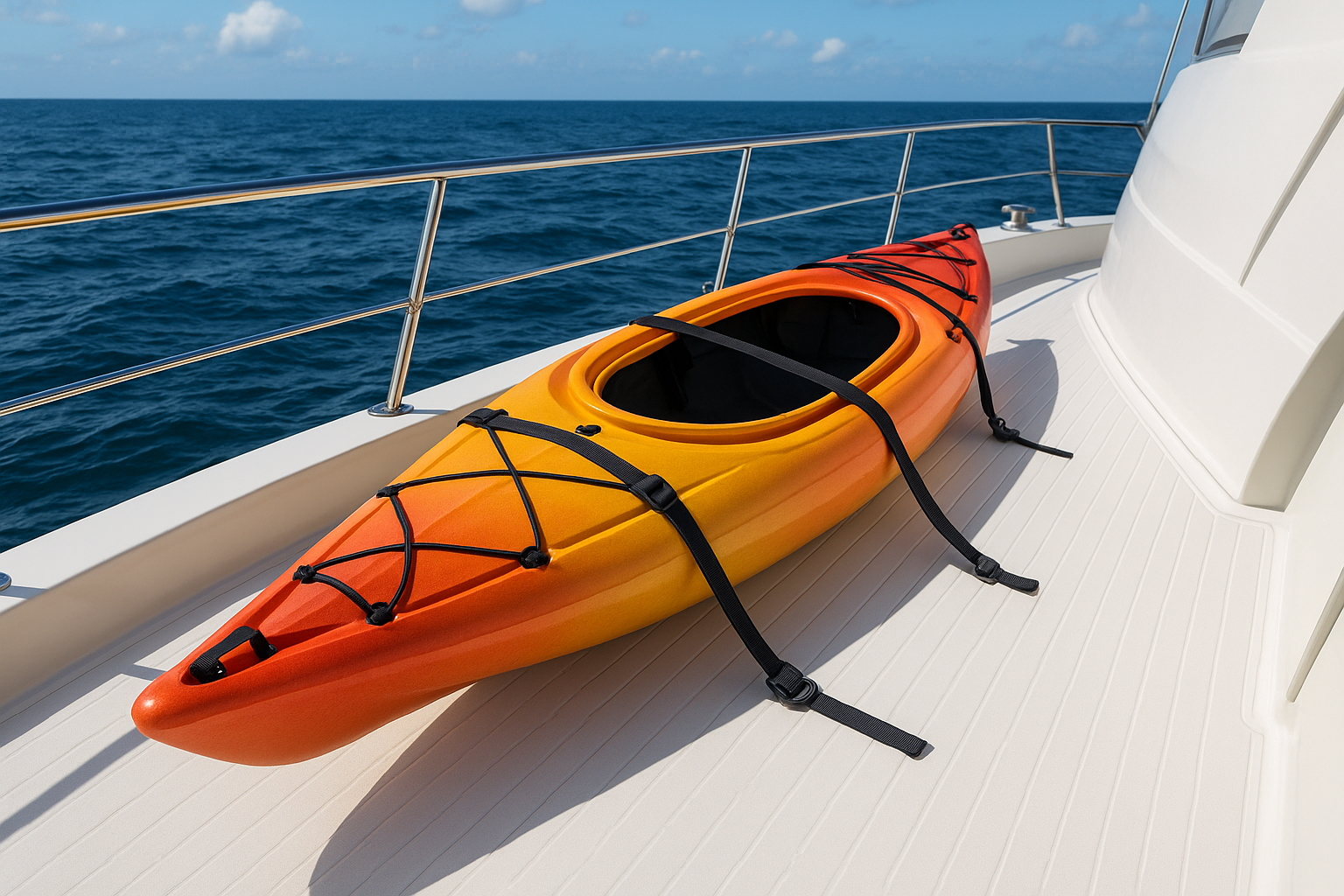
Securing a small craft on your deck isn't just about keeping it in place. It's about protecting your boat, your crew, and your investment. A kayak that shifts mid-voyage can damage gel coat, crack fiberglass, or knock someone off balance. A dinghy that breaks loose becomes a projectile. The difference between a secure setup and a disaster often comes down to execution. You don't need fancy gear or a degree in marine engineering. You need the right approach, the right materials, and the discipline to do it correctly every single time.
Deck Real Estate Matters More Than You Think
Where you place your kayak or dinghy determines everything else. Pick the wrong spot, and you'll fight balance issues, obstruct critical pathways, or create a hazard that compounds with every wave. The best location is flat, stable, and out of the way of foot traffic and operational equipment. Most boats have natural staging areas—along the side rails, on the foredeck, or across the stern—but not all of them are created equal.
Consider weight distribution. A heavy dinghy placed too far forward can affect your boat's trim and handling, especially in choppy conditions. Too far aft, and you risk interfering with engine access or swim platforms. The goal is to find a spot that keeps the craft secure without compromising your vessel's performance or your crew's ability to move freely. Walk the deck before you commit. Visualize how the kayak or dinghy will sit during different sea states. If it blocks access to cleats, winches, or safety gear, keep looking.
Prep Work Prevents Problems
Before you lift anything onto your deck, clear the area completely. Loose lines, stray fenders, and forgotten tools become obstacles that complicate the process and increase the risk of damage. Once the space is clean, lay down protection. Non-slip mats or foam padding create a buffer between your deck and the hull of your kayak or dinghy, preventing scratches, scuffs, and the kind of surface wear that adds up over time.
This step also reduces movement. A kayak sitting directly on a smooth fiberglass deck will slide more easily than one resting on textured padding. The friction matters, especially when you're underway and the boat is pitching. Spend five minutes on prep, and you'll save yourself hours of frustration later. The padding doesn't need to be expensive—marine-grade foam or even repurposed yoga mats work—but it does need to be there.
Lifting Without Breaking Your Back or Your Boat
Getting a kayak or dinghy onto your deck safely requires more than brute strength. It requires planning. If you're working alone with a lightweight kayak, you can usually manage it with careful positioning and a stable stance. But dinghies—especially rigid inflatables or fiberglass models—demand help. Enlist crew members, use lifting slings, or invest in a davit system if you're moving heavy loads regularly.
Improper lifting doesn't just risk injury. It risks damaging your boat. Dragging a dinghy across the deck gouges gel coat. Dropping it onto a hard surface cracks hulls. Lifting it awkwardly can throw you off balance and send both you and the craft into the water. Take your time. Use proper hand placement, bend at the knees, and communicate with anyone helping you. If your boat has davits, use them. They're designed to handle the weight and distribute the load evenly, which protects both the craft and your body.
Positioning Determines Stability
Once the kayak or dinghy is on deck, placement becomes critical. Lay it hull-down with the bow facing forward or aft, depending on your deck layout and the craft's shape. Centering it is non-negotiable. An off-center load creates uneven weight distribution, which affects your boat's handling and increases the likelihood of the craft shifting during transit.
Balance isn't just about left and right. It's about fore and aft as well. A kayak that's too far forward can cause your bow to dig in rough seas. One that's too far aft can make your stern sit lower in the water. Test the positioning before you start securing. Stand back and assess. Does it look balanced? Does it interfere with anything? If the answer to either question is no, adjust before you move forward.
Straps and Tie-Downs Are Your First Line of Defense
The quality of your straps and tie-downs determines whether your kayak or dinghy stays put or becomes a liability. Cheap bungee cords and frayed rope won't cut it. You need UV-resistant straps or marine-grade rope that can handle tension, saltwater exposure, and the constant movement of a boat underway. Ratchet straps are ideal for dinghies because they allow you to apply consistent, adjustable tension. Cam buckle straps work well for lighter kayaks.
Attachment points matter just as much as the straps themselves. Secure your tie-downs to sturdy cleats, pad eyes, or dedicated anchor points on your deck. Avoid using railings or stanchions unless they're specifically designed to handle lateral loads. A railing that bends or breaks under tension creates a bigger problem than the one you were trying to solve. Cross your straps over the kayak or dinghy in an "X" pattern for maximum stability. This distributes the load evenly and prevents the craft from shifting in any direction.
Tension is a balancing act. Too loose, and the kayak or dinghy will slide. Too tight, and you risk cracking the hull or warping the structure. Tighten the straps until the craft is firm but not compressed. You should be able to press down on it with moderate force and feel minimal give. If it moves more than an inch in any direction, add tension or additional straps.
Movement Is the Enemy
After you've secured everything, test it. Grab the kayak or dinghy and try to move it by hand. Push it forward, pull it back, rock it side to side. If it shifts at all, your setup isn't tight enough. Readjust the straps, add more tie-downs, or reposition the craft entirely. This step isn't optional. A kayak that feels secure in calm water can become a hazard the moment you hit chop or wake.
We've seen too many boaters skip this check and pay for it later. A dinghy that slides six inches during a turn can slam into a cleat or railing with enough force to crack fiberglass. A kayak that shifts during a wave can knock someone off their feet. The time you spend testing now saves you from dealing with damage, injury, or worse later. If you're not confident in the setup, start over. There's no shortcut here.
Weather and Elements Will Test Your Work
Sun, salt, and rain are relentless. A kayak or dinghy left exposed on your deck will degrade faster than one that's protected. UV rays break down plastic and fiberglass over time, causing fading, brittleness, and structural weakness. Saltwater accelerates corrosion on metal fittings and hardware. Rain fills cockpits and adds weight, which stresses your tie-downs and increases the risk of movement.
A fitted cover solves most of these problems. It shields your craft from the elements, keeps it clean, and extends its lifespan. Choose a cover that's breathable to prevent moisture buildup and mold growth. Secure it with its own set of tie-downs so it doesn't blow off in high winds. If a cover isn't practical, at least drain any water that accumulates and rinse the craft with fresh water after every outing. The goal is to minimize exposure and reduce wear.
Inspections Aren't Suggestions
Your straps and tie-downs won't last forever. UV exposure, saltwater, and constant tension degrade them over time. A strap that looks fine today might fail tomorrow if it's been weakened by months of use. Inspect your setup regularly—before you leave the dock, after rough weather, and anytime you've been underway for more than a few hours.
Look for fraying, discoloration, or stiffness in your straps. Check the stitching on cam buckles and ratchets. Test the integrity of your attachment points. If anything looks worn or questionable, replace it immediately. The cost of a new strap is negligible compared to the cost of a lost dinghy or a damaged deck. We make it a habit to carry spare straps and tie-downs on every trip. When something fails—and eventually, something will—you'll be ready.
The Setup That Works Keeps Working
Securing a kayak or dinghy on your deck isn't a one-time task. It's a system that requires attention, maintenance, and a commitment to doing it right every single time. The boats that run into problems are the ones where someone got lazy, skipped a step, or assumed "good enough" was actually good enough. The boats that don't have problems are the ones where the crew treats every tie-down like it matters—because it does.
Execution beats intention here. You can have the best straps, the best padding, and the best positioning in the world, but if you don't tighten them correctly or check them regularly, none of it matters. The difference between a secure kayak and one that's sliding across your deck mid-voyage comes down to whether you followed through. Build the habit now, and you'll never have to deal with the consequences of cutting corners later.
Ready for a Smoother Outing?
We know that every detail on your boat matters, especially when it comes to safety and peace of mind. If you want your next trip to go off without a hitch—or if you need help making sure your setup is truly secure—let’s talk. Call us at 305-290-2704 or Request Boat Repair or Service and let’s keep your boat adventure-ready, every time you leave the dock.


.png)