


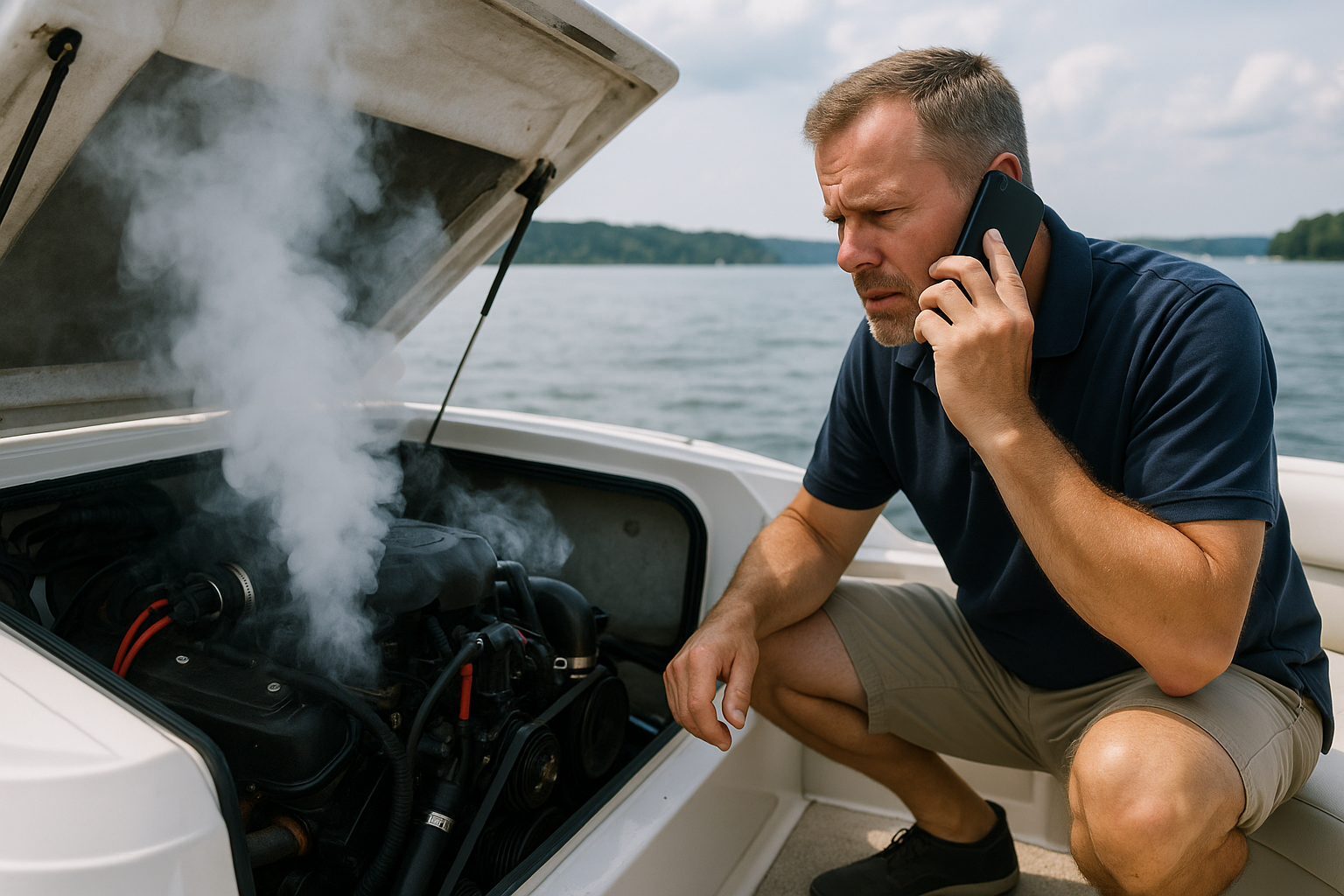
Breakdowns don't wait for convenient timing. One minute you're cruising, the next you're dead in the water with smoke coming from the engine bay or a prop that won't turn. When something goes wrong on the water, speed matters. The difference between a quick fix and a ruined weekend often comes down to how fast you can get the right help to the right place.
Most boaters think emergency repair is just about making a phone call and waiting. It's not. It's about knowing what to say, who to call, and how to cut through the noise when every minute counts. The boats that get back on the water fastest aren't the ones with the smallest problems—they're the ones whose owners know how to move when things go sideways.
Know What You're Dealing With Before You Dial
Panic makes people vague. Vague descriptions waste time. Before you pick up the phone, take thirty seconds to actually look at the problem. Is the engine overheating? Is there water where it shouldn't be? Did something break, crack, or stop responding? The clearer you are about what's wrong, the faster a repair team can decide if they can help you and what they need to bring.
This isn't about diagnosing the issue yourself. It's about giving someone enough information to make a decision. A mechanic who knows you've got coolant leaking from the starboard side can grab the right parts before they leave the shop. A mechanic who just hears "something's wrong with the engine" has to bring everything and hope for the best. One gets you fixed faster. The other gets you waiting longer.
Location Dictates Everything
Where you are changes who can reach you and how fast they can get there. If you're docked at a marina, you've got options. If you're anchored offshore or stuck in a channel, your options narrow. GPS coordinates matter more than you think. Saying "near the inlet" doesn't help when there are three inlets within ten miles. Saying "latitude 28.4158, longitude -80.6076" gets a mobile repair team moving in the right direction immediately.
If you're still mobile, even barely, heading toward a marina or boat ramp can cut response time in half. But don't push a failing engine just to save time. A small problem becomes a catastrophic one when you ignore warning signs. If the engine's overheating, shut it down. If the steering's compromised, anchor and wait. Getting closer to help is only useful if you don't destroy your boat in the process.
Have Your Vessel Details Ready
Repair teams need to know what they're working on before they show up. Make, model, year, engine type—these aren't optional details. A mechanic who works on outboards all day might not have the tools for an inboard diesel. A technician who specializes in older boats might not have the diagnostic equipment for a brand-new model with computerized systems.
If you've got documentation on board, have it ready. Service records, warranty information, and past repair invoices can all speed things up. If the same issue happened before, knowing what was done last time can prevent a mechanic from wasting time retracing steps. The more context you provide, the less guesswork they have to do.
Call the Right People, Not Just Any People
Not all marine repair services handle emergencies. Some shops work by appointment only. Some don't do mobile calls. Some specialize in specific brands or types of boats. Calling the wrong shop wastes time you don't have. Start with services that advertise emergency or mobile repair. If you're in a marina, ask the dockmaster—they usually know who responds fast and who doesn't.
If you're a member of a boating service like BoatUS or Sea Tow, use them. They have networks of repair professionals and can coordinate faster than you can by cold-calling shops. If you're not a member and you boat regularly, that's a gap worth closing. When you're stuck, having someone who can dispatch help immediately is worth every penny of the membership fee.
Mobile Repair Cuts Out the Tow
Towing a boat takes time and costs money. If the repair can be done on-site, mobile service is almost always faster. Mobile mechanics bring tools, parts, and diagnostic equipment directly to you. They work where you are, whether that's a dock, a ramp, or open water if conditions allow.
Not every problem can be fixed on-site, but more can than most people realize. Engine issues, electrical failures, fuel system problems—these are all things a skilled mobile tech can handle without a tow. The key is finding someone who's equipped for mobile work and has experience doing repairs outside a shop. A mechanic who only works in a controlled environment might struggle when they're kneeling on a rocking deck with limited space and no lift.
Be Direct When You Explain the Problem
When you get someone on the phone, don't bury the lead. Start with the emergency, then give details. "My engine overheated and shut down, I'm anchored two miles offshore, and I need someone here as soon as possible" is a strong opener. "So, I was out with my family and we were having a great time, and then I noticed the temperature gauge was climbing…" is not.
Repair services deal with emergencies all the time. They know how to triage. But they can only move as fast as you let them. Give them your location, your vessel type, the problem, and your contact information. Ask how soon they can get to you and what they need from you in the meantime. If they can't help, ask if they know who can. Most professionals in this industry know each other and will point you in the right direction if they're unavailable.
Prepare the Boat While You Wait
Once help is on the way, use the time to make their job easier. Clear the area around the problem. If it's an engine issue, open the engine bay and make sure there's room to work. If it's electrical, locate the breaker panel and battery switches. If it's a prop or lower unit issue, make sure the stern is accessible.
Secure anything that could get in the way. Coolers, fishing gear, life jackets—move it all. A mechanic who has to spend ten minutes clearing space before they can even look at the problem is ten minutes behind before they start. If you're docked, make sure there's room for them to board safely. If you're anchored, have fenders ready and be prepared to help them tie off if they're coming by boat.
Safety Comes Before Speed
Emergencies create pressure to move fast, but not at the expense of safety. If the problem involves fuel, electrical systems, or structural damage, don't take risks while you wait. Shut down systems that aren't essential. If there's a fuel leak, turn off the fuel supply and ventilate the area. If there's water coming in, start pumping and locate the source.
If conditions are deteriorating—weather's turning, seas are building, or you're drifting toward hazards—contact the Coast Guard. Repair services are great for mechanical problems, but they're not rescue operations. If you're in danger, get help from people equipped to handle it. A broken boat can be fixed. Putting yourself or your passengers at risk because you didn't want to call for a tow is a decision you can't undo.
Ask About Parts Availability Up Front
Some repairs can be done with parts a mobile mechanic carries in their truck. Others require ordering parts that might take hours or days to arrive. Ask about this when you first make contact. If the part isn't available locally, find out how long it will take to get it and whether there's a workaround in the meantime.
In some cases, a temporary fix can get you back to the dock safely, even if a permanent repair has to wait. A mechanic might be able to bypass a failed component, patch a leak, or rig something to get you home. It's not ideal, but it's better than being stuck overnight waiting for a part to ship. Be clear about your priorities—do you need to get moving immediately, or can you wait for a proper fix?
Payment and Pricing Won't Be Standard
Emergency service costs more than scheduled maintenance. That's not price gouging—it's reality. A mechanic who drops everything to help you on short notice is giving up other work, often outside normal hours. Mobile service adds travel time and the cost of bringing tools and parts to you. If you're expecting standard shop rates, you'll be disappointed.
Ask about pricing before work starts, but understand that estimates can shift once the mechanic sees the problem firsthand. What looks like a simple fix over the phone might turn into something more complicated once they're hands-on. If cost is a concern, ask what the minimum is to get you safely back to the dock, then decide whether to do the full repair on-site or take it to a shop later.
Document Everything for Insurance
If the damage is significant or if you're filing an insurance claim, document the problem and the repair. Take photos before the mechanic starts work. Get a detailed invoice that lists parts, labor, and what was done. If the failure was caused by something specific—a manufacturing defect, improper maintenance, or an external impact—make sure that's noted.
Insurance companies move slowly, but they move faster when you give them clear documentation. A vague receipt that just says "engine repair" won't cut it. You need specifics. What failed? Why? What was replaced? How much did it cost? The more detail you have, the smoother the claims process will be.
Build a Contact List Before You Need It
The time to find emergency repair services is not when you're already broken down. Build a list of marine repair shops, mobile mechanics, and towing services in the areas where you boat most often. Save their numbers in your phone. Keep a printed copy on the boat in case your phone dies or gets wet.
Talk to other boaters about who they use and who they trust. Reputation matters in this industry. A mechanic who shows up fast but does sloppy work isn't worth calling. A shop that's reliable but takes three days to respond isn't useful in an emergency. You want someone who's both skilled and responsive, and the only way to know that is through experience—yours or someone else's.
Regular Maintenance Reduces Emergency Calls
Most breakdowns aren't random. They're the result of deferred maintenance, ignored warning signs, or systems that were already on the edge. Engines don't just overheat for no reason. Electrical systems don't fail out of nowhere. Props don't shear off unless something was already wrong.
The best way to avoid emergency repairs is to stay ahead of problems before they become emergencies. Regular inspections, fluid changes, and system checks catch issues early. A mechanic who sees your boat twice a year for routine service will spot a failing impeller or a corroded connection before it leaves you stranded. Prevention is cheaper, faster, and far less stressful than emergency repair.
The Faster You Move, the Faster You're Fixed
Breakdowns test how well you handle pressure. The boaters who get back on the water fastest aren't the ones with the easiest problems—they're the ones who know how to act when things go wrong. They assess quickly, communicate clearly, and don't waste time hoping the problem will fix itself.
Emergency marine repair on short notice isn't about luck. It's about preparation, decisiveness, and knowing who to call when the clock is ticking. The boats that sit dead in the water for hours are the ones whose owners hesitated, called the wrong people, or didn't have the information ready when it mattered. The boats that get moving again are the ones whose owners treated the breakdown like the urgent problem it is and moved accordingly.
Get Back on the Water—Fast
When your boat throws you a curveball, you need a team that responds with urgency and expertise. We’re here to help you skip the waiting game and get back to what matters—enjoying the water. If you’re facing a breakdown or need service you can count on, call 305-290-2701 or Request Boat Repair or Service and let’s get you moving again.


.png)