



Sand flats are deceptive. They look calm, inviting, and easy to manage—until your anchor starts dragging and you're drifting toward shallow water or worse. The difference between a secure hold and a slow drift isn't luck. It's execution. Most boaters think anchoring is simple: drop the hook, let out some line, and hope for the best. That approach works until it doesn't. And when it fails on sand flats, you're dealing with a bottom that offers less forgiveness than mud or rock.
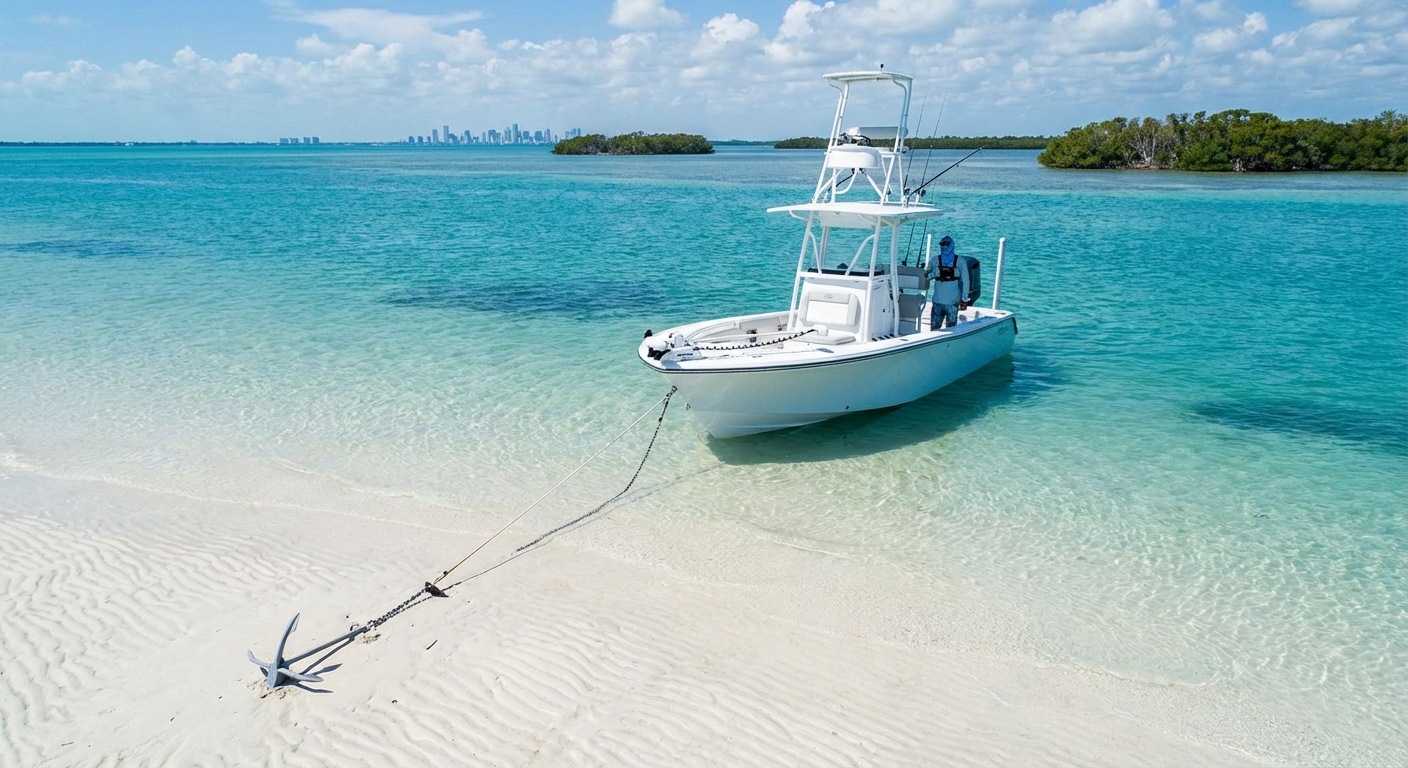
The reality is that sand flats demand a different strategy. The substrate shifts, the tide changes, and wind can turn a peaceful afternoon into a scramble. We've spent enough time on the water to know that the boats that stay put aren't the ones with the most expensive gear—they're the ones operated by people who understand how how anchoring actually works. The principles aren't complicated, but they require attention to detail and a willingness to do things right the first time. Skip a step, and you'll pay for it when your boat starts moving.
The Bottom Matters More Than You Think
Sand flats aren't uniform. Some areas are packed hard, others are loose and silty, and some have patches of grass or shell that change how your anchor behaves. Before you even think about dropping your hook, you need to understand what's beneath you. A fluke-style anchor—often called a Danforth—is the go-to choice for sand because its wide, flat design is built to dig in and hold.. But even the best anchor won't perform if you don't give it the right conditions to work.
The mistake most people make is treating all sand the same. They drop anchor in the first spot that looks good and assume it'll hold. That's not how it works. Loose sand offers weak resistance. Your anchor might set initially, but as soon as wind or current applies pressure, it starts dragging. Harder, more compact sand gives better holding power, but you need to ensure your anchor actually penetrates the surface. This is where technique separates those who stay put from those who drift.
Scope Is the Variable Most People Get Wrong
Scope is the ratio of rode length to water depth, and it's the single most important factor in whether your anchor holds or drags. On sand flats, you need a minimum scope of 7:1. That means if you're anchoring in five feet of water, you're letting out at least thirty-five feet of rode. Most boaters underestimate this. They let out twenty feet and wonder why their anchor won't hold when the wind picks up.
The physics are straightforward. A longer scope creates a flatter angle between the rode and the bottom, which allows the anchor to dig in horizontally rather than pulling upward. When the angle is too steep, the anchor lifts instead of holding. This is especially critical on sand flats where the bottom doesn't offer much natural resistance. You can't cheat scope and expect results. The boats that drag are almost always the ones that didn't let out enough line.
- Calculate depth at high tide, not just current water level
- Factor in your bow height above the waterline when measuring scope
- Add extra rode if wind or current is strong
- Use a scope of 10:1 if conditions are rough or you're staying overnight
Setting the Anchor Isn't a Passive Act
Dropping your anchor and hoping it sets itself is a recipe for dragging. Setting an anchor properly requires deliberate action. Once you've chosen your spot and calculated your scope, approach slowly and come to a complete stop. Lower the anchor—don't throw it—until it touches bottom. Then, as you let out rode, slowly reverse your boat. This backward motion helps the anchor dig into the sand rather than just lying on top of it.
After you've let out the full scope, apply steady reverse throttle for ten to fifteen seconds. You should feel the boat pull against the anchor as it sets. If the rode goes slack or the boat continues moving backward without resistance, your anchor isn't holding. Pull it up and try again. This step is non-negotiable. Skipping it means you're gambling that the anchor set on its own, and that's a bet you'll lose more often than you'd like.
Chain Makes the Difference Between Holding and Dragging
A length of chain between your anchor and rode changes everything. Chain adds weight that keeps the pull on the anchor horizontal, which is exactly what you need for sand. It also resists abrasion better than rope, which matters when your rode is dragging across the bottom. Even ten to fifteen feet of chain can dramatically improve holding power.
If you're using all rope, you're making your anchor work harder than it needs to. The rope's buoyancy creates an upward angle that reduces the anchor's ability to dig in. Chain solves this by keeping the pull flat and adding weight that dampens sudden loads from wind gusts or wakes. It's a simple upgrade that pays off every time you anchor.
- Use at least one foot of chain for every foot of boat length
- Galvanized chain resists corrosion better than untreated steel
- Check chain connections regularly for wear or weak links
- A swivel between chain and rode prevents line twist
Landmarks and GPS Are Your Confirmation Tools
Once your anchor is set, you need to verify it's actually holding. Pick two fixed landmarks on shore that form a range—a tree lined up with a building, for example. If those landmarks stay aligned, your boat isn't moving. If they start to separate, you're dragging. GPS is another reliable tool. Mark your position after setting the anchor, then check it every fifteen minutes. Any movement means you need to reset.
Most boaters skip this step because they assume the anchor is holding. That assumption costs them when they return from swimming or fishing to find their boat fifty yards from where they left it. Checking your position takes seconds and eliminates doubt. If you're dragging, you'll know immediately and can fix it before it becomes a problem.
Tide and Wind Will Test Your Setup
Conditions on sand flats change fast. A rising tide increases water depth, which effectively shortens your scope. A wind shift can swing your boat in a new direction and put pressure on the anchor from a different angle. Both scenarios can cause an anchor that was holding to start dragging. This is why monitoring conditions isn't optional—it's part of the process.
If you're anchoring for more than an hour, check your position regularly. If the tide is rising significantly, let out more rode to maintain proper scope. If wind speed increases, be prepared to reset with a longer scope or move to a more protected spot. The boats that drag are usually the ones whose operators set the anchor and then stopped paying attention.
A Snubber Absorbs Shock and Protects Your Rode
A snubber is a short length of elastic line that connects your rode to a cleat, absorbing sudden loads from wind gusts or wakes. Without one, every shock transfers directly to the anchor, increasing the chance it'll break free. Snubbers also reduce wear on your rode and make your boat ride more comfortably at anchor.
Installing a snubber is simple. Attach it to your rode with a rolling hitch or chain hook, then cleat it off with enough slack that the snubber takes the load instead of the rode. When a gust hits, the snubber stretches and absorbs the energy rather than yanking on the anchor. It's a small addition that makes a measurable difference in holding power.
- Use three-strand nylon line for maximum stretch and shock absorption
- Length should be roughly equal to your boat length
- Inspect the snubber for chafe after each use
- A backup snubber prevents failure if the primary one breaks
Resetting Isn't Failure, It's Smart Seamanship
If your anchor drags, don't try to salvage it by letting out more rode and hoping it catches. Pull it up, move to a new spot, and set it again properly. Dragging means something in your setup isn't working—wrong scope, poor bottom, inadequate technique—and adding more line won't fix the underlying issue. The fastest way to secure your boat is to start over and do it right.
We've seen boaters waste an hour trying to make a bad anchor set work when they could have reset in five minutes and been done. Pride gets in the way of execution. The best operators recognize when something isn't working and adjust immediately. That's the difference between staying put and drifting into trouble.
Gear Quality Reflects in Performance
Cheap anchors and worn rode fail when you need them most. A quality fluke anchor costs more upfront but holds better and lasts longer. The same goes for rode—old, sun-damaged line loses strength and elasticity. If your gear is past its prime, replace it before it fails at the worst possible moment.
Inspect your anchor for bent flukes, cracks, or corrosion. Check your rode for fraying, weak spots, or stiffness. Test your chain connections and shackles for wear. Gear maintenance isn't glamorous, but it's the foundation of reliable anchoring. The boats that drag are often the ones running equipment that should have been replaced seasons ago.
Practice Builds Confidence and Competence
Anchoring well on sand flats isn't instinctive—it's learned. The more you practice setting and checking your anchor, the faster and more reliable you become. Take time in low-stakes situations to experiment with scope, test different techniques, and see how your boat behaves in various conditions. That experience pays off when conditions are challenging and you need to get it right the first time.
Most boaters only anchor a few times a season, which means they never develop real proficiency. The operators who anchor confidently are the ones who've done it dozens of times and learned what works. Execution beats theory every time. You can read about anchoring all day, but until you've set an anchor in shifting wind on a falling tide, you don't really know how it works.
Related Considerations for Miami Boaters
Anchoring is just one aspect of safe boating in South Florida. Regular boat inspections help ensure your equipment is ready for the unique challenges of local waters. If you notice issues with your anchor gear or rode, timely boat repair and maintenance can prevent problems before they escalate. For those using outboard engines, understanding four-stroke outboard repair is essential for reliability when anchoring in remote areas. If you experience electrical issues while at anchor, knowing how to troubleshoot electrical problems can keep your systems running smoothly. And for those who anchor frequently, learning about essential tools and spare parts ensures you're prepared for any situation on the water.
The Boats That Stay Put Are the Ones That Earned It
Anchoring on sand flats isn't about luck or expensive gear. It's about understanding the variables—scope, bottom type, chain, technique—and executing each step correctly. The boats that drag are the ones whose operators cut corners or assumed it would work out. The boats that stay put are operated by people who took the time to do it right.
Merit applies on the water just like it does everywhere else. The best anchoring setup won't save you if you don't use it properly. The most experienced boater can still drag if they ignore conditions or skip steps. What separates those who stay secure from those who drift is simple: execution. Set your anchor with intention, verify it's holding, and monitor conditions. Do that, and you'll stay exactly where you want to be.
Keep Your Boat Ready for the Next Drop
Every successful day on the water starts with a boat you can count on. If you want peace of mind the next time you set anchor—or if you’ve noticed your gear isn’t performing like it used to—let’s make sure you’re set up for success. Call us at 305-290-2710 or Request Boat Repair or Service and we’ll help you stay secure, no matter where you drop the hook.


.png)