



Fuel spills happen. You're topping off the tank, a hose connection fails, or someone knocks over a jerry can. Within seconds, you've got gasoline or diesel pooling on your deck, and the clock is ticking. The fumes are building, the slick is spreading, and if you don't act fast, that fuel is either going overboard or soaking into every crack and seam on your boat.
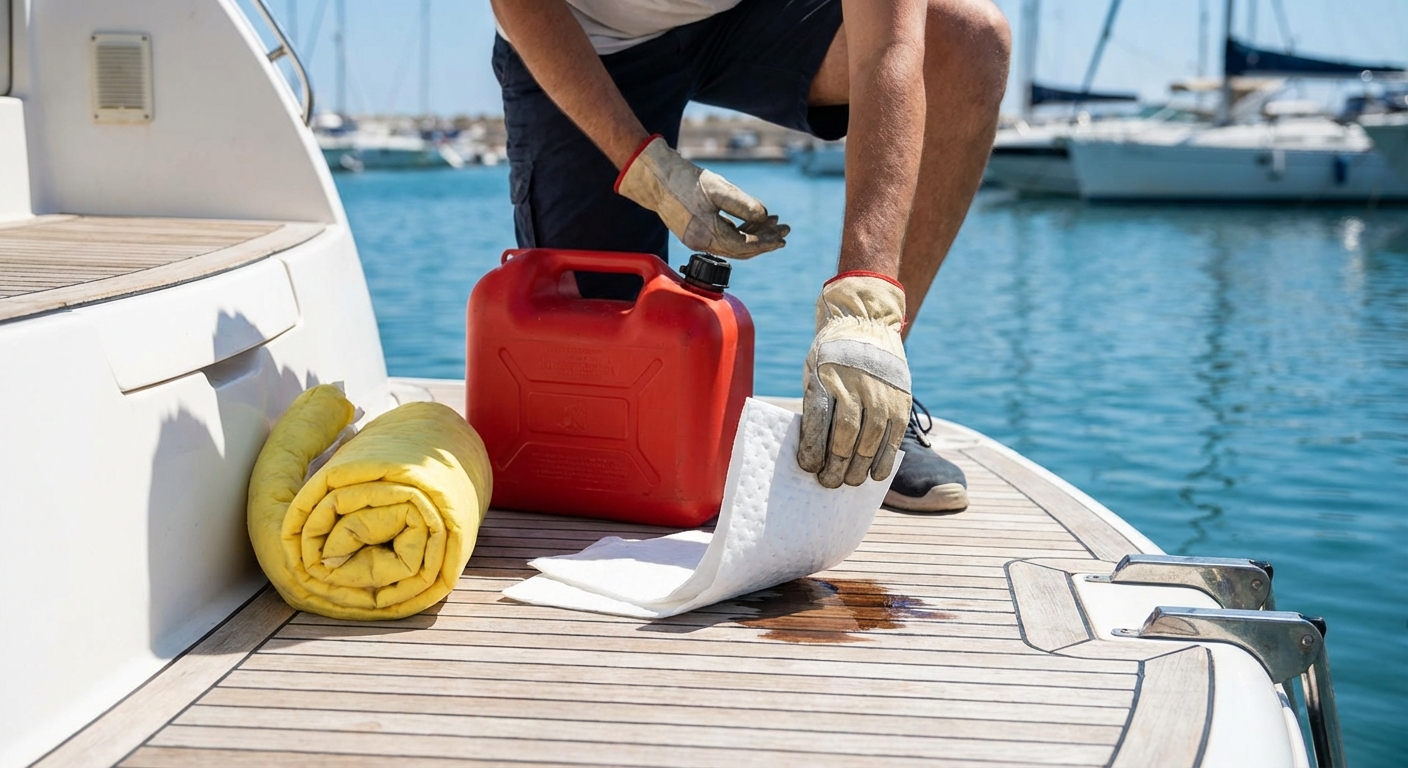
Right now, how you respond is the only thing that matters. The difference between a minor inconvenience and a major environmental violation comes down to execution. Most boaters know fuel spills are bad, but few know exactly what to do when it happens. The ones who do? They move fast, use the right tools, and clean it up without making it worse. The ones who don't end up scrubbing for hours, dealing with stains that won't budge, or worse, watching their mistake wash into the water.
Fumes Build Faster Than You Think
Gasoline vapor is heavier than air, which means it sinks. On a boat, that's a problem. Those fumes settle into bilges, engine compartments, and enclosed spaces where a single spark can turn a spill into a disaster. Diesel is less volatile, but it's still flammable, and the smell alone can make your boat unbearable for days if you don't handle it right.
The moment fuel hits your deck, ventilation becomes critical. Open hatches, turn on blowers, and get air moving through every space where fumes could collect. Kill any ignition sources immediately. That means no engines, no electronics, no smoking, and definitely no trying to start anything until the air is clear. Most people underestimate how fast fumes accumulate, and that hesitation is what gets them in trouble.
Containment Comes Before Cleanup
Your first move isn't to start scrubbing. It's to stop the spread. Fuel moves fast on a deck, especially if there's any slope or texture. It flows toward drains, scuppers, and any opening that leads to the water. Once it's overboard, you've got a whole different problem, one that involves the Coast Guard, fines, and a lot of paperwork.
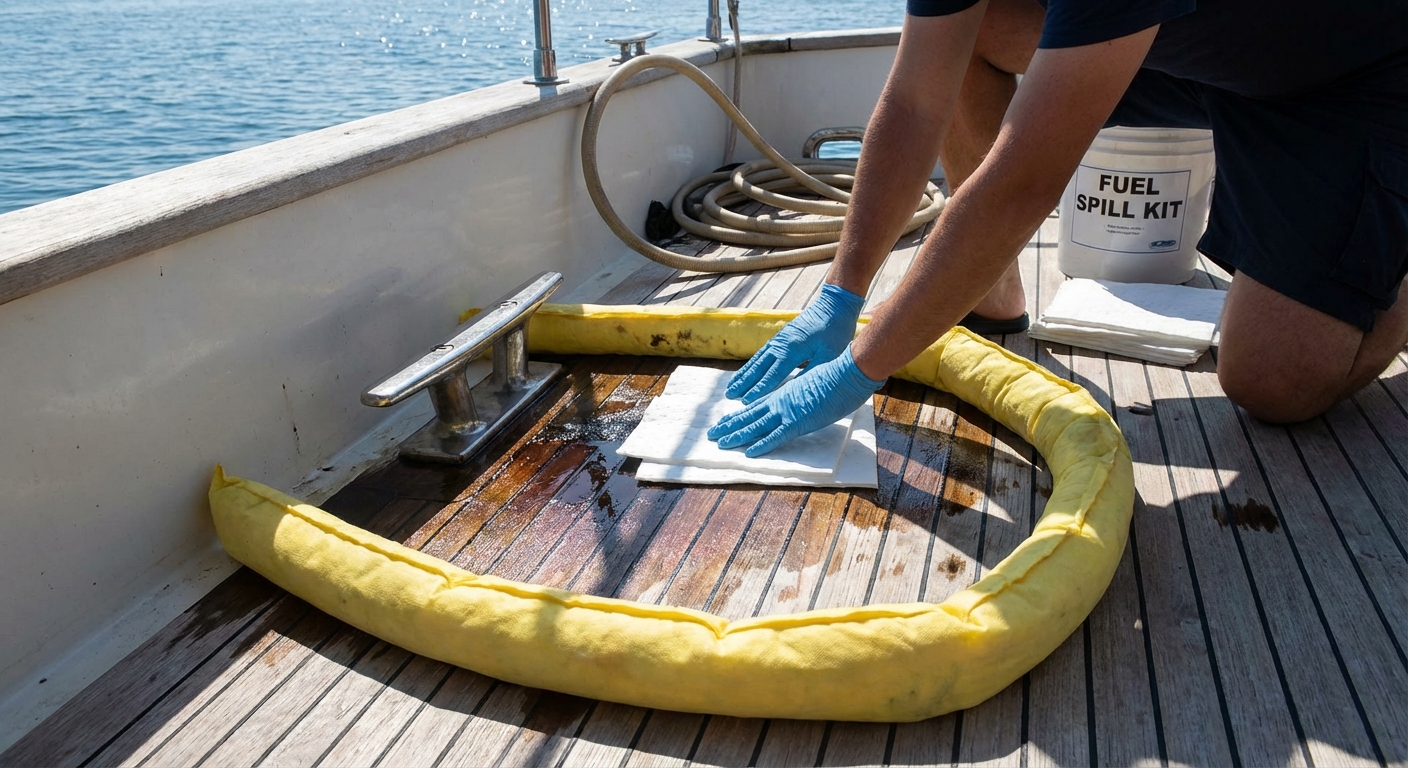
Absorbent booms are your first line of defense. These floating barriers are designed to contain fuel spills on deck and prevent them from reaching the water. Place them around the perimeter of the spill, especially near any deck drains or openings. If you don't have booms on board, you're already behind. Every boat should carry a spill kit, and if yours doesn't, that's a gap you need to close today.
- Deploy absorbent booms around the spill perimeter immediately
- Block deck drains and scuppers to prevent fuel from washing overboard
- Use absorbent pads to soak up pooled fuel before it spreads further
- Work from the outside in to contain the spill without pushing it toward the water
- Keep extra absorbents on hand because one spill can use up your entire kit
Absorbents Do the Heavy Lifting
Once the spill is contained, absorbent pads are what actually pull the fuel off your deck. These pads are engineered to soak up petroleum products while repelling water, which makes them perfect for marine environments. Lay them directly on the spill and let them do the work. Don't rub or scrub at this stage. You're not trying to clean yet. You're trying to remove as much liquid fuel as possible.
The pads will darken as they absorb fuel. When they're saturated, pull them up carefully and replace them with fresh ones. Keep going until the pads come up mostly dry. This process removes the bulk of the spill and prevents fuel from soaking deeper into your deck material or running into places you can't reach. Most people rush this step and end up with fuel residue that's ten times harder to clean later.
- Use marine-grade absorbent pads designed for fuel, not generic shop towels
- Press pads gently onto the spill without rubbing or spreading the fuel
- Replace saturated pads immediately to maintain absorption efficiency
- Store used pads in a sealed, fuel-safe container until proper disposal
- Never wring out or reuse absorbent pads once they've soaked up fuel
Soap Makes It Worse
Here's where most people screw up. They see a fuel stain, grab dish soap or a deck cleaner, and start scrubbing. That soap breaks up the fuel into tiny droplets, which then wash through your deck drains and straight into the water. You've just turned a contained spill into an environmental violation. Detergents and emulsifiers don't make fuel disappear. They just make it smaller and harder to contain.
The only time you use a cleaner is after the fuel is physically removed. Even then, you're using a marine-safe degreaser specifically formulated to break down petroleum without creating runoff that harms aquatic life. Apply it sparingly, scrub gently, and use as little water as possible. If you're rinsing, capture that runoff. Don't let it go overboard. The goal is to lift residual stains and odors, not to wash the problem into someone else's water.
Disposal Isn't Optional
Once you've soaked up the spill, you're left with a pile of fuel-saturated pads, booms, and possibly contaminated rags or towels. These materials are hazardous waste. You can't throw them in a marina dumpster, and you definitely can't toss them overboard. They need to go to a proper disposal facility that handles petroleum-contaminated materials.
Store everything in a sealed container until you can get to a facility. Most marinas have hazardous waste drop-off points, and many municipalities offer collection days for this kind of material. If you're not sure where to take it, call your local environmental services office. Improper disposal isn't just lazy. It's illegal, and the fines are steep. The people who cut corners here are the same ones who complain when regulations get tighter.
- Seal used absorbents in a fuel-safe container immediately after use
- Label the container clearly as hazardous waste containing petroleum products
- Locate the nearest hazardous waste facility before you need it
- Never dispose of fuel-soaked materials in regular trash or recycling bins
- Keep disposal receipts as proof of proper handling if questioned later
Stains and Odors Linger Without the Right Approach
Even after you've removed the liquid fuel, you're often left with a stain and a smell that won't quit. This is where a marine-safe degreaser earns its keep. These products are formulated to break down petroleum residue without the harsh chemicals that damage gelcoat, fiberglass, or teak. Apply the degreaser according to the manufacturer's instructions, let it sit for the recommended time, then scrub with a soft brush.
Rinsing with minimal water is critical, and if possible, capture that rinse water instead of letting it run off the deck. Some boaters use a wet-dry vacuum to pull up the cleaning solution, which keeps everything contained. For stubborn stains, you may need to repeat the process. The key is patience. Aggressive scrubbing or harsh chemicals might remove the stain, but they'll also damage your deck surface, and that repair costs more than the time you saved.
Prevention Beats Cleanup Every Time
The best fuel spill is the one that never happens. Most spills are preventable, and the boaters who avoid them aren't lucky. They're deliberate. They use funnels, spill guards, and fuel collars every time they refuel. They fill tanks slowly and never walk away from the nozzle. They inspect fuel lines, hoses, and connections regularly, catching leaks before they become spills.
We've built our approach to fueling around this exact philosophy. Convenience doesn't win here. Precision does. When you treat every refueling like a procedure instead of a chore, spills become rare. When you keep a spill kit on board and know exactly where it is, response time drops from minutes to seconds. The boaters who execute on prevention don't spend their weekends scrubbing fuel stains. They're out on the water.
- Always use a funnel or spill collar when refueling to catch drips and overflows
- Fill tanks slowly and watch the fuel level to avoid overfilling
- Inspect fuel hoses and connections before every trip for cracks or wear
- Keep a marine spill kit in an accessible location, not buried in a locker
- Train everyone on board to recognize a spill and know the response steps
Deck Material Matters More Than You Think
Not all deck surfaces react to fuel the same way. Fiberglass and gelcoat are relatively non-porous, which makes cleanup easier. Teak and other wood surfaces? They absorb fuel like a sponge. Once fuel soaks into wood grain, it's nearly impossible to remove completely. The smell lingers for weeks, and the stain becomes permanent if you don't act fast.
If you have a teak deck, your response time is even more critical. Use absorbents immediately, and don't let fuel sit for even a few minutes. After the bulk is removed, use a teak-safe cleaner designed to lift petroleum without stripping the wood's natural oils. For non-skid surfaces, fuel can settle into the texture, making it harder to extract. A stiff brush and a quality degreaser are your best tools here, but again, patience wins. Rushing the job leaves residue that attracts dirt and makes your deck look worse over time.
Bilge Contamination Is the Hidden Problem
Fuel spills on deck don't always stay on deck. If your boat has any cracks, seams, or poorly sealed fittings, fuel can seep down into the bilge. Once it's there, it mixes with bilge water, coats surfaces, and creates a smell that's almost impossible to eliminate. Worse, if your bilge pump kicks on, you're now pumping fuel-contaminated water overboard, which is exactly what environmental regulations are designed to prevent.
After cleaning a deck spill, check your bilge. If you see a sheen or smell fuel, you've got contamination. Use bilge absorbent pads to soak up any fuel floating on the water, then clean the bilge surfaces with a degreaser. Run your bilge pump only after you're certain the water is clean. Some boaters install bilge alarms that detect petroleum products, giving them early warning before a small leak becomes a big problem. That's the kind of system thinking that separates boats that stay clean from boats that smell like a gas station.
- Inspect the bilge immediately after any deck spill to check for seepage
- Use bilge-specific absorbent pads that float and soak up fuel on contact
- Clean bilge surfaces with a marine degreaser after removing liquid fuel
- Test bilge water for petroleum sheen before running the pump
- Consider installing a bilge alarm that detects fuel contamination early
Regulatory Consequences Are Real
Fuel spills aren't just a maintenance headache. They're a legal issue. The Clean Water Act makes it illegal to discharge oil or fuel into U.S. waters, and the penalties are serious. Fines start in the thousands and climb fast depending on the volume and environmental impact. If you're caught pumping fuel-contaminated bilge water or letting a spill wash overboard, you're looking at Coast Guard involvement, possible criminal charges, and a permanent mark on your boating record.
The enforcement isn't theoretical. Marinas, other boaters, and even passersby report spills regularly. If someone sees a sheen trailing your boat or smells fuel in your wake, they can and will call it in. The best defense is a clean response. Document your cleanup process, keep disposal receipts, and if a spill does go overboard despite your efforts, report it yourself. Self-reporting often reduces penalties and shows you took the situation seriously. The boaters who try to hide spills are the ones who get hammered hardest when they're caught.
Spill Kits Are Non-Negotiable
Every boat should carry a marine spill kit, and not the cheap version you grabbed on sale. A proper kit includes absorbent pads, booms, disposal bags, gloves, and instructions. It should be stored in a location everyone on board knows about, not shoved in a locker under a pile of fenders and dock lines. When a spill happens, you don't have time to hunt for supplies.
We keep our spill kits in the same spot on every boat we operate. It's part of the pre-departure checklist. If the kit is missing, incomplete, or expired, we don't leave the dock. That's not overkill. That's the standard. The cost of a quality spill kit is a fraction of what you'll pay in cleanup time, environmental fines, or damage to your boat's surfaces. The boaters who skip this step are the same ones scrambling for paper towels when fuel hits the deck, and by then, it's already too late.
- Invest in a marine-grade spill kit with enough capacity for your fuel system size
- Store the kit in a clearly marked, easily accessible location on board
- Include gloves, disposal bags, and printed instructions in the kit
- Check the kit annually and replace any used or degraded materials
- Make sure every crew member knows where the kit is and how to use it
The Merit of Preparation
Fuel spills test execution, not intention. Everyone intends to refuel carefully. Everyone plans to avoid spills. But when the hose slips, the connection fails, or the tank overflows, intention doesn't matter. What matters is whether you have the tools, the knowledge, and the discipline to respond correctly. The boaters who handle spills well aren't lucky. They're prepared. They've thought through the scenario, stocked the right supplies, and practiced the response. Understanding marine fuel handling in Miami conditions is part of that preparation, as is knowing essential tools every boat should have on board. When you're dealing with saltwater and sun damage on top of fuel contamination, the complexity multiplies. Boaters who understand hidden saltwater damage over time know that fuel spills accelerate corrosion and degradation in ways that aren't immediately visible. Those who maintain year-round boat maintenance schedules are the ones who catch fuel system issues before they become deck spills.
The next decade of boating belongs to those who take responsibility seriously. Regulations are tightening, enforcement is increasing, and the margin for error is shrinking. The boaters who bet against preparation will lose. Those who prioritize competence, who keep their boats ready and their crews trained, will win. By definition, clean water has to be earned. The boaters willing to earn it are the ones who'll still be on the water when the rest are tied up in fines and repairs.
Let’s Keep Your Boat Clean and Ready
We know how important it is to keep your boat safe, spotless, and compliant—especially when it comes to fuel spills and the challenges of Miami’s waters. If you want expert help with cleanup, prevention, or any other boat maintenance, let’s make sure you’re always ready for the next trip. Call us at 305-290-2701 or Request Boat Repair or Service and we’ll get you back on the water with confidence.


.png)