


Right now, the condition of your hull matters more than your opinion about it. Most boat owners stare at flaking antifouling and wonder if they can slap another coat on top and call it done. The answer isn't simple, and pretending it is will cost you time, money, and performance on the water.
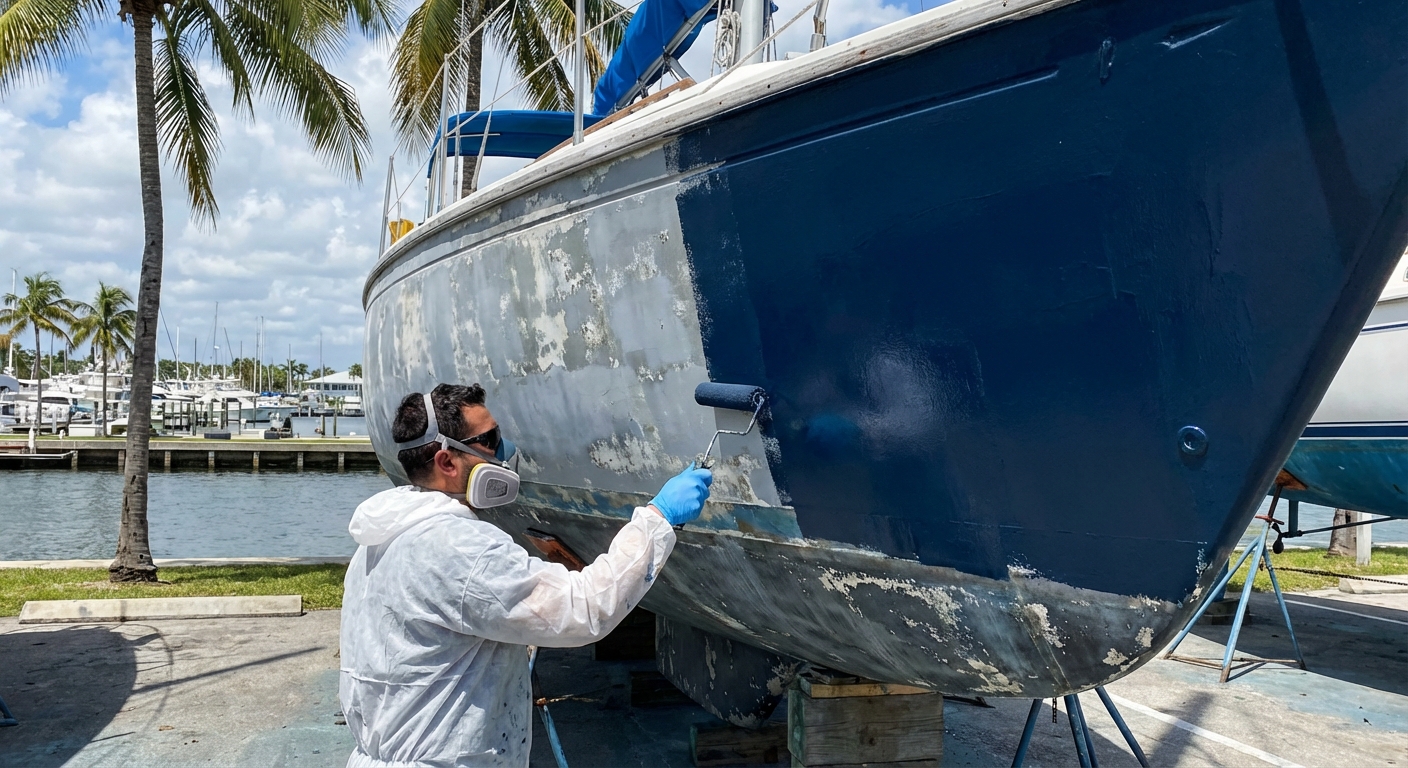
Antifouling isn't decorative. It's a chemical barrier between your hull and everything in the water that wants to attach, grow, and slow you down. When that barrier fails, your boat becomes a floating reef. The question isn't whether you should repaint—it's whether the old paint can support what comes next, or if it's already sabotaging your efforts before you even crack open the can.
The Old Paint Tells You Everything
Walk up to your hull and run your hand across the antifouling. What you feel determines your next move. If the surface is solid, adhered, and relatively smooth, you're in decent shape. If it's chalky, peeling, or coming off in sheets, you're not painting over that—you're building on a foundation that's already crumbling.
The biggest mistake we see is boat owners treating antifouling like house paint. It's not. Antifouling is a biocide delivery system, and when you stack incompatible layers, you don't get double protection—you get chemical reactions, poor adhesion, and a paint job that fails faster than the one you're trying to replace. The old paint isn't just a surface. It's a variable that will either support your work or undermine it.
- Firmly adhered paint with minimal flaking can usually be overcoated after prep
- Thick, multi-layered buildup creates weight and reduces effectiveness
- Blistering or soft spots signal moisture intrusion and deeper problems
- Excessive chalking means the binder has broken down and won't hold new paint
- Peeling edges will continue to peel, taking your new coat with them
Compatibility Isn't Negotiable
Not all antifouling paints play nice together. Hard paints and ablative paints have different chemistries, and mixing them without a tie-coat or primer is asking for trouble. Some manufacturers design their products to work over their own previous formulations, but switching brands or types without checking compatibility is a gamble you'll lose.
We've watched boat owners apply expensive new antifouling over old paint, only to have it peel off in sheets within weeks because they skipped the compatibility check. The paint companies publish this information for a reason. Ignoring it doesn't make you efficient—it makes you someone who has to do the job twice.
- Hard antifouling over ablative often requires a tie-coat to prevent reaction
- Ablative over hard can work, but only if the hard paint is properly prepared
- Copper-based and non-copper formulas may not bond without primer
- Manufacturer datasheets list compatible products and required prep steps
- When in doubt, a sealer coat eliminates most compatibility issues
Preparation Separates Success from Failure
You can't paint your way out of poor prep. The hull needs to be clean, dry, and properly keyed for the new paint to grab. That means removing marine growth, salt residue, and any loose or flaking material. A pressure washer handles most of the heavy lifting, but you'll still need to scrub, inspect, and sand before you're ready to paint.
Sanding old antifouling isn't about making it pretty—it's about creating mechanical adhesion. The new paint needs something to grip, and a smooth, glossy surface won't cut it. We're talking 80 to 120 grit, enough to rough up the surface without gouging the underlying layers. And yes, you need a respirator. Antifouling dust is toxic, and breathing it in because you didn't want to bother with a mask is a decision you'll regret.
- Pressure washing removes growth and loose paint faster than scrubbing alone
- Sanding creates the texture new paint needs to bond properly
- Degreasing with solvent eliminates oils that prevent adhesion
- Dust removal with tack cloths or vacuum prevents contamination
- Dry time matters—painting over damp antifouling traps moisture and causes failure
Thickness Becomes a Problem
Every coat of antifouling adds weight and thickness. After several seasons, you're not maintaining a protective layer—you're building a heavy, ineffective shell that cracks, peels, and slows your boat. At some point, the only smart move is to strip it all off and start fresh.
Thick antifouling doesn't perform better. It performs worse. The biocides in the lower layers have already leached out, leaving inert material that does nothing but add drag. The top layer can't compensate for the dead weight underneath. If your hull has five or more coats, or if the paint is visibly thick and uneven, removal isn't optional—it's overdue.
- Multiple layers reduce hull speed and fuel efficiency
- Thick paint is more prone to cracking and delamination
- Old layers trap moisture, leading to osmotic blistering
- Uneven buildup creates hydrodynamic drag and performance loss
- Stripping resets the system and gives you a clean foundation
Removal Methods That Actually Work
When painting over old antifouling isn't viable, you're left with removal. Chemical strippers, mechanical sanding, and media blasting all have their place, but they're not interchangeable. The method you choose depends on the paint type, hull material, and how much time and money you're willing to invest.
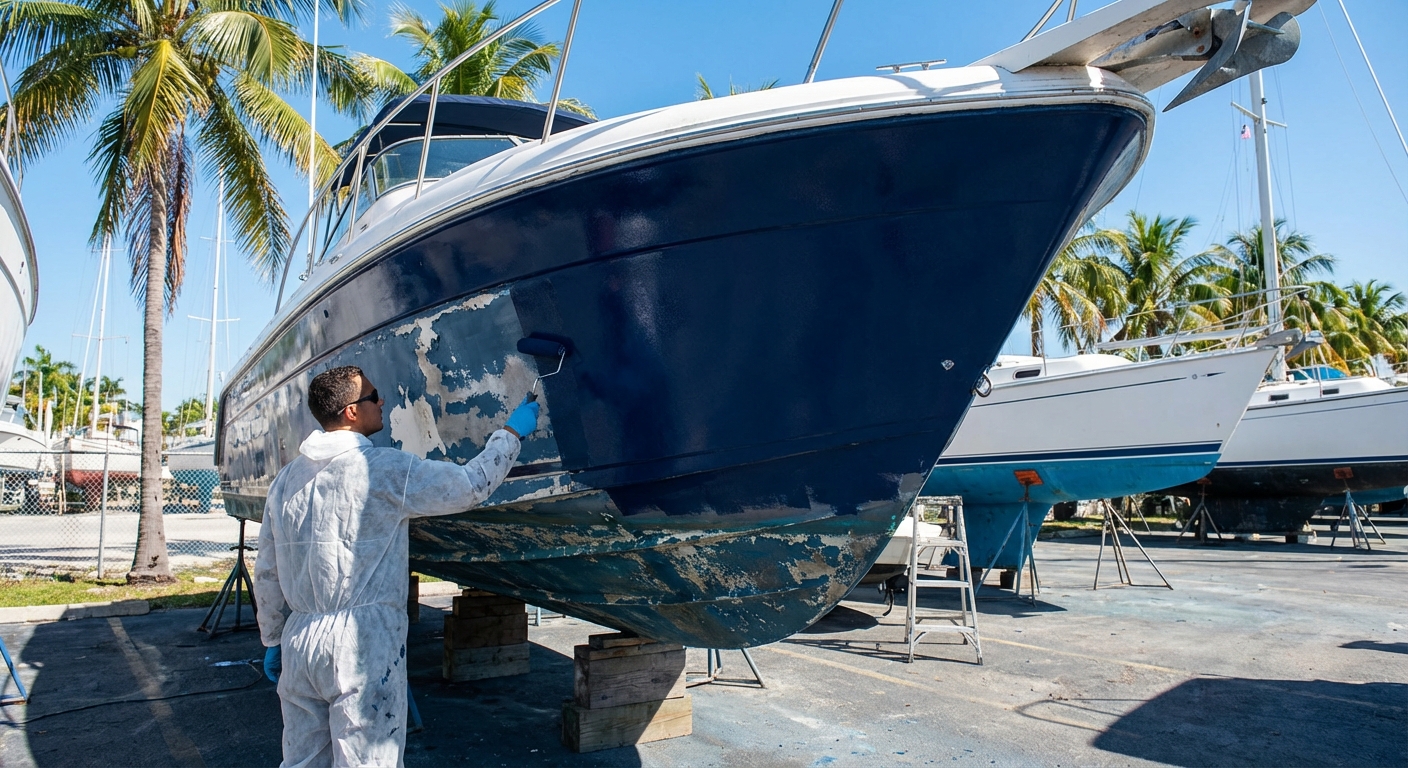
Chemical strippers work well on thick, stubborn paint, but they're messy, require proper disposal, and can damage gelcoat if left on too long. Sanding is labor-intensive and generates toxic dust, but it gives you control and works on almost any surface. Media blasting is fast and thorough, but it requires professional equipment and can damage thin gelcoat if done incorrectly. There's no perfect method—just trade-offs. Understanding antifouling paint removal techniques helps you choose the right approach for your hull condition.
- Chemical strippers dissolve multiple layers quickly but require careful handling
- Sanding with coarse grit removes paint but creates hazardous dust
- Soda blasting is gentler on gelcoat than sand or glass bead
- Scraping works for small areas but is too slow for full hulls
- Professional blasting services save time but add cost
Primer and Tie-Coats Bridge the Gap
When you're switching antifouling types or brands, a primer or tie-coat acts as a neutral layer that prevents chemical incompatibility. It's an extra step, but it's also insurance against paint failure. Skipping it to save a few hours or dollars is a bet that rarely pays off.
Primers designed for antifouling systems are formulated to bond with both the old paint and the new topcoat. They seal the surface, block potential reactions, and provide a consistent base for the final layers. If the manufacturer recommends a primer, use it. If you're unsure, use it anyway. The cost of a primer is nothing compared to the cost of redoing the entire job. Proper use of marine sealants and primers ensures long-lasting adhesion between incompatible paint systems.
Application Technique Matters More Than You Think
Antifouling isn't forgiving. Thin coats dry too fast and don't provide adequate protection. Thick coats sag, run, and take forever to cure. The goal is even coverage at the manufacturer's recommended thickness, applied in the right conditions with the right tools.
Rollers work for most applications, but cheap rollers leave texture and shed fibers into the paint. Foam rollers create a smoother finish but can trap air bubbles. Brushes are useful for edges and tight spots but leave visible strokes if you're not careful. Spraying is fast and produces a professional finish, but it requires proper equipment, ventilation, and overspray control. Choose your method based on the paint type, hull size, and your skill level.
- Rollers should be high-density foam or short-nap for smooth application
- Brushes need to be solvent-resistant and shed-free
- Spraying requires thinning the paint to the correct viscosity
- Multiple thin coats outperform one thick coat every time
- Recoat windows are critical—paint too soon or too late and adhesion suffers
Environmental Conditions Control the Outcome
Temperature, humidity, and air movement all affect how antifouling cures. Paint in conditions outside the manufacturer's specifications, and you're setting yourself up for soft paint, poor adhesion, or extended cure times that leave your boat out of the water longer than planned.
Cold temperatures slow curing and can prevent proper film formation. High humidity traps moisture in the paint, leading to blushing or soft spots. Direct sunlight causes the surface to cure faster than the underlying layers, creating stress and potential cracking. Wind kicks up dust and debris that embeds in wet paint. The ideal conditions are moderate temperature, low humidity, and indirect light with minimal air movement. If you can't get those conditions, wait.
Maintenance Extends the Life of Your Work
Once the new antifouling is on, the job isn't over. How you launch, where you moor, and how often you clean the hull all impact how long the paint lasts. Antifouling is a consumable—it's designed to wear away over time. The question is whether it wears away evenly and effectively, or if it fails prematurely because of poor maintenance.
Boats that sit in warm, nutrient-rich water accumulate growth faster than those in cooler, cleaner environments. Regular bottom cleaning removes slime before it hardens into barnacles, but aggressive scrubbing can remove antifouling faster than necessary. Soft brushes and gentle cleaning extend paint life without sacrificing effectiveness. Hauling out periodically to inspect and touch up problem areas keeps the system working longer. Consistent year-round boat maintenance prevents small issues from becoming expensive repairs.
- Soft brushes or sponges clean without removing excessive paint
- Regular cleaning prevents hard growth that requires aggressive scrubbing
- Inspecting the hull mid-season catches problems before they spread
- Touch-up paint on damaged areas prevents bare spots from expanding
- Proper storage during off-season reduces unnecessary wear
The Cost of Doing It Wrong
Cutting corners on antifouling doesn't save money—it multiplies costs. A failed paint job means hauling out again, stripping the bad work, and starting over. That's double the labor, double the materials, and double the time your boat sits on the hard instead of in the water.
Beyond the immediate costs, poor antifouling impacts performance. Increased drag from marine growth burns more fuel, reduces speed, and strains your engine. Barnacles and algae create pitting and surface damage that requires gelcoat repair. The longer you let it go, the worse it gets. Doing the job right the first time isn't perfectionism—it's basic economics. Understanding saltwater and sun damage helps you anticipate and prevent costly hull deterioration.
When Professional Help Makes Sense
Not every boat owner has the time, tools, or inclination to handle antifouling themselves. Yards and mobile services exist for a reason, and knowing when to hand off the work is part of smart boat ownership. If your hull needs stripping, if you're dealing with compatibility issues, or if you simply don't want to spend days sanding and painting, hiring professionals is a legitimate choice.
The key is finding someone who knows what they're doing. Ask about their prep process, the products they use, and how they handle compatibility and surface issues. A good yard will inspect the hull, recommend the right approach, and stand behind their work. A bad one will slap paint over problems and send you a bill. References, reputation, and clear communication separate the two. When searching for qualified help, knowing how to find a reliable boat mechanic ensures you get competent service.
Execution Beats Excuses
Painting over old antifouling works when the conditions are right and the prep is thorough. It fails when boat owners skip steps, ignore compatibility, or hope that new paint will fix underlying problems. The hull doesn't care about your intentions—it responds to what you actually do.
The boats that stay clean, fast, and protected are owned by people who treat antifouling as a system, not a chore. They inspect, prepare, and apply with precision. They don't cut corners, and they don't assume that last year's paint will hold up another season without attention. Merit in boat maintenance works the same way it works everywhere else—it compounds over time, and those who execute consistently win. The water doesn't reward excuses. It rewards results. Avoiding common pitfalls like DIY boat repair mistakes keeps your vessel performing at its best.
Let’s Get Your Boat Ready for the Water
We know how much you value your time on the water, and a well-maintained hull is the key to making every outing count. If you’re unsure about your antifouling or want the job done right the first time, let’s tackle it together. Give us a call at 305-290-2701 or Request Boat Repair or Service—we’re ready to help you keep your boat performing at its best.


.png)